
The Complete Guide to Wooden Sofas
From selecting the right wood species to understanding joinery, styles, and long-term care — everything you need to know before investing in a wooden sofa
EXPLORE WOOD TYPESPhanMarket Philosophy: A wooden sofa is one of the most significant furniture investments you will make. Understanding wood species, construction methods, and maintenance requirements helps you avoid costly mistakes and choose a piece that lasts for decades. This guide covers every aspect — so when you are ready to buy, you do so with complete confidence.
What Makes a Wooden Sofa Special
A wooden sofa is defined by its structural frame — the skeleton beneath the cushions and upholstery — being constructed primarily from solid wood. While many sofas use some wood in their construction, a true wooden sofa features exposed or partially exposed wood elements that contribute to both its structural integrity and visual character.
Wood has been the primary material for furniture construction for centuries, and for good reason. Unlike metal frames that can feel cold or plastic that can flex unnaturally, wood provides a naturally warm, organic foundation that improves with age when properly maintained.
The appeal of wooden sofas goes beyond aesthetics. A well-built hardwood frame offers exceptional load-bearing capacity, resists warping better than engineered alternatives, and can be repaired when individual components wear — unlike welded metal or molded plastic. This repairability is a major reason why antique wooden furniture retains value while other materials end up in landfills.
For buyers researching their options, understanding the differences in sofa frame materials is essential. The frame accounts for roughly 15-20% of a sofa's total cost but determines 80% of its lifespan. Investing in the right wood type and construction method is the single most impactful decision you will make.
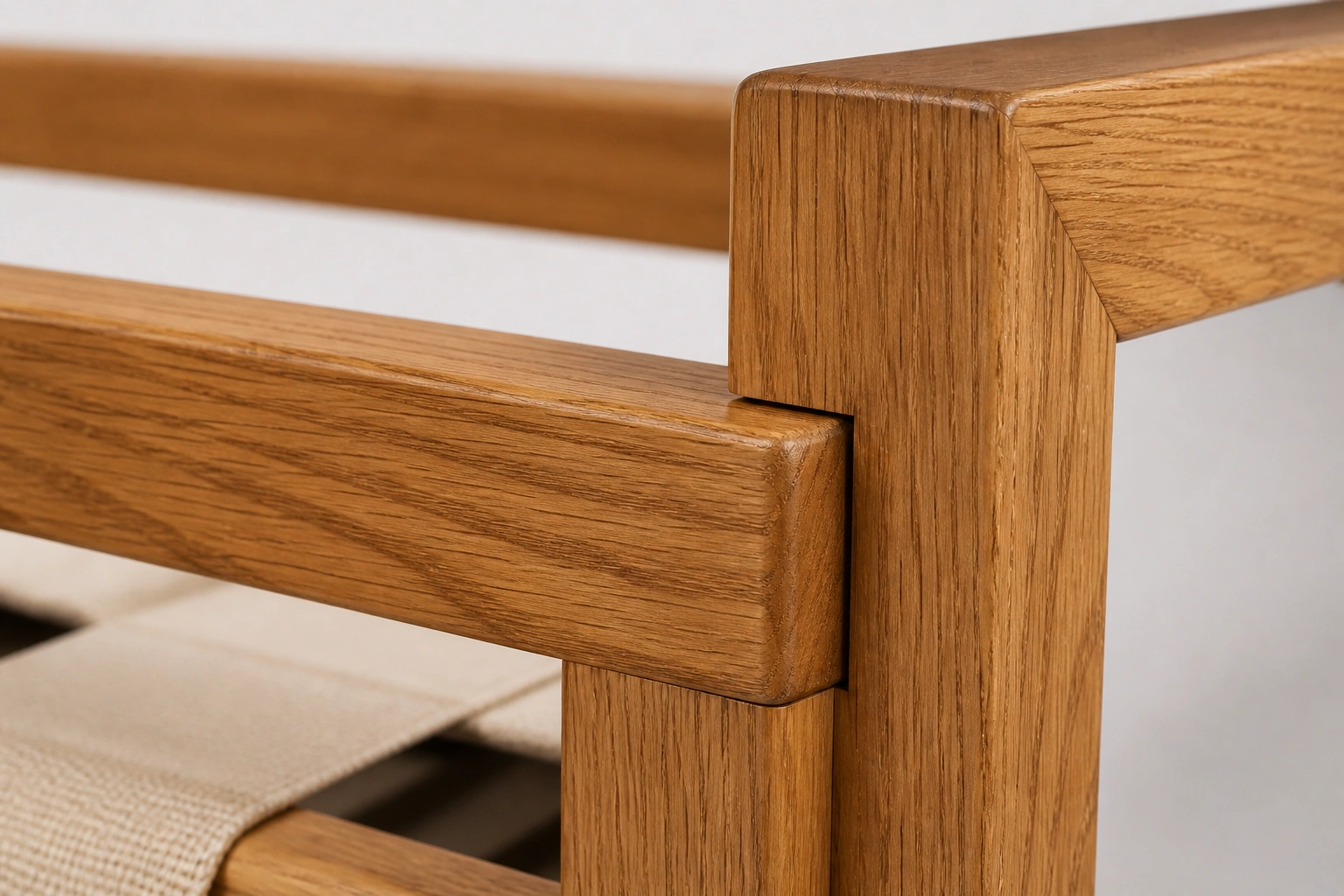
Wooden sofas come in two broad categories: fully upholstered designs where the wood frame is hidden beneath fabric or leather, and exposed wood designs where the arms, legs, back, or base are visible as a deliberate design element. Both types benefit from solid wood construction, but exposed wood sofas require additional attention to finish quality and grain selection since the wood itself becomes part of the visual appeal.
Key Takeaway: Not all "wooden" sofas are equal. Some manufacturers use wood veneer over plywood or particleboard. A genuine solid wood sofa uses lumber cut directly from timber — providing superior strength, repairability, and longevity. Always verify whether a sofa uses solid wood, engineered wood, or a combination before purchasing.
Types of Wood Used in Sofa Frames
The type of wood used in a sofa frame directly impacts its durability, weight, resistance to moisture and insects, and price. Wood species are broadly categorized into hardwoods (from deciduous trees) and softwoods (from coniferous trees), though these terms refer to the tree type rather than actual hardness.
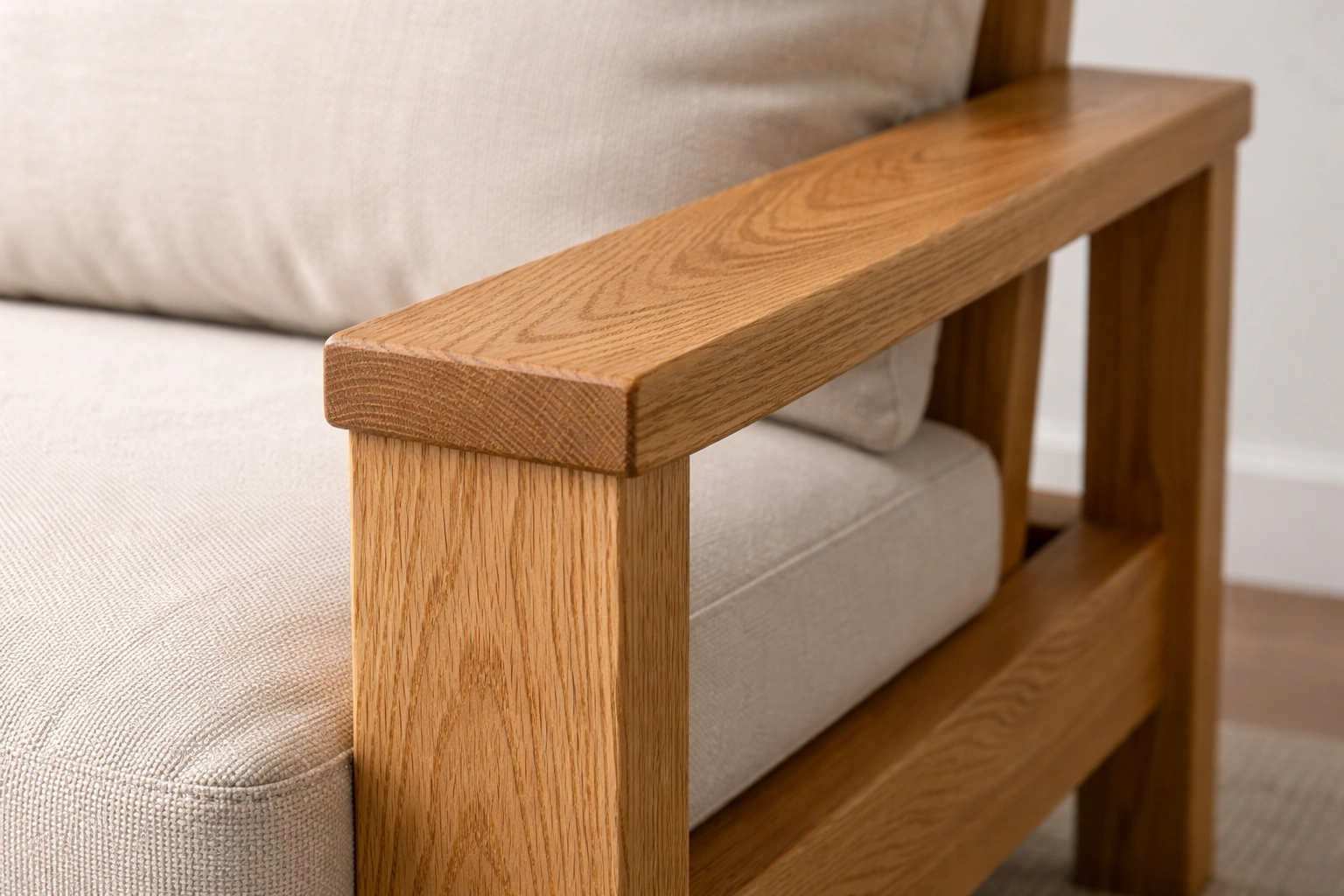
Oak
One of the strongest and most widely used sofa frame woods. Red and white oak offer excellent load-bearing capacity, resist warping, and have a prominent grain that looks attractive when exposed. Oak frames routinely last 20+ years.
Hardwood — Top Tier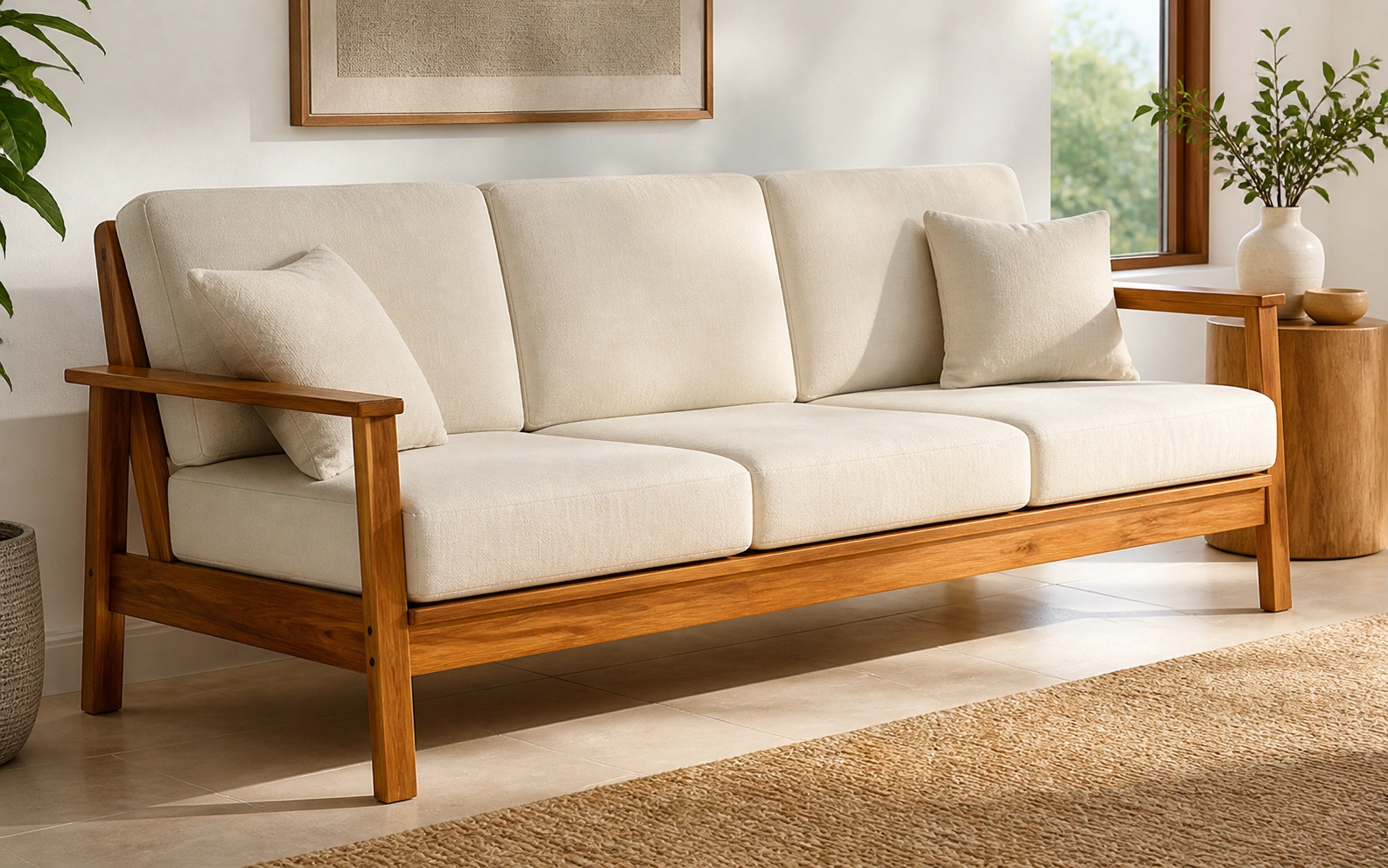
Teak
Premium hardwood with natural oils that repel moisture, insects, and rot. Teak is exceptionally durable both indoors and outdoors. Its density makes it heavy and stable, though the price reflects its quality. A popular choice for teak sofa collections.
Hardwood — Premium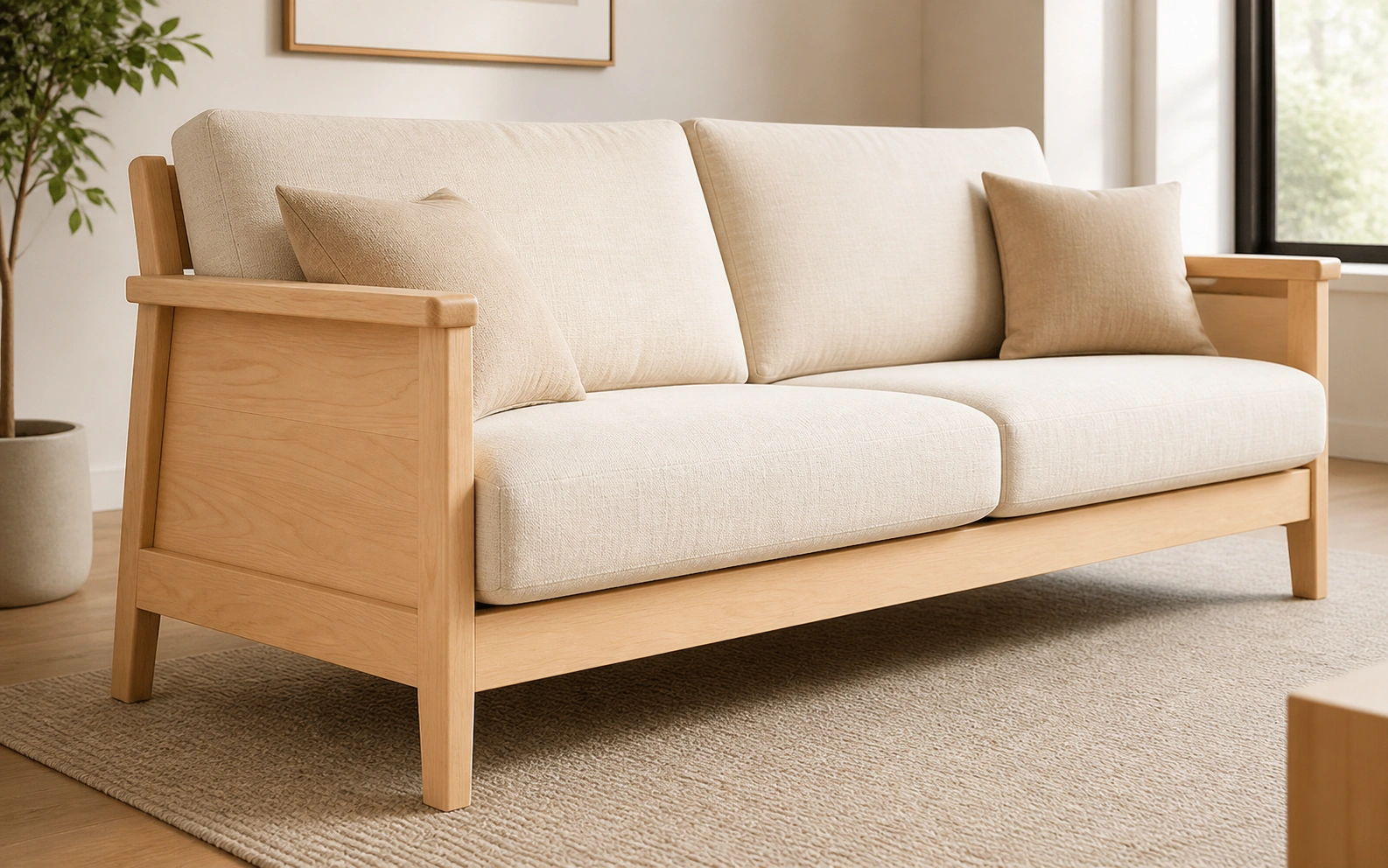
Maple
Extremely dense hardwood with a fine, even grain. Maple is harder than oak and offers outstanding durability for high-traffic furniture. Its lighter color works well in modern and Scandinavian designs. Often used as a hidden frame material due to its strength-to-cost ratio.
Hardwood — Top Tier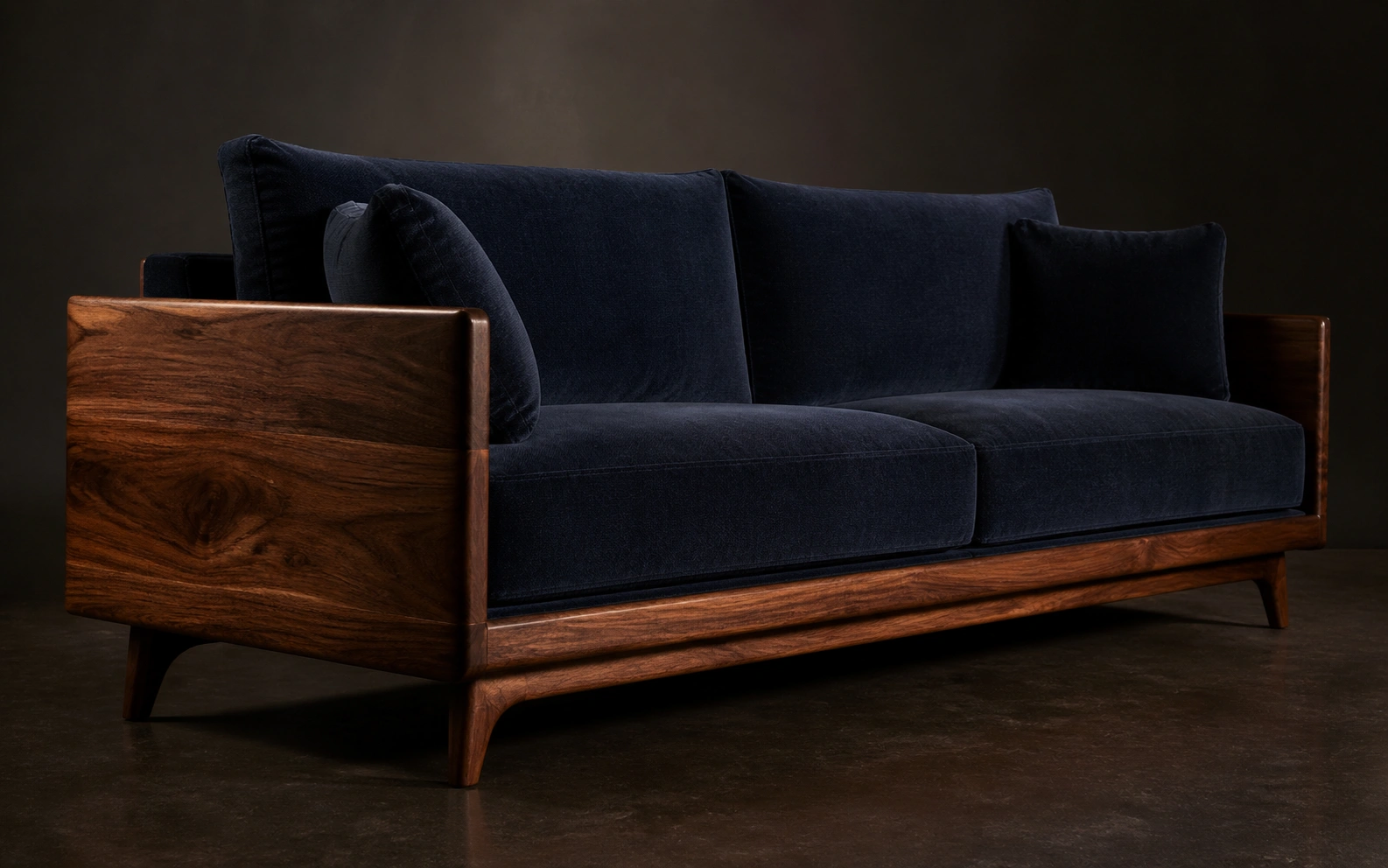
Walnut
Premium hardwood prized for its rich, dark chocolate-brown color and smooth grain. Walnut is moderately hard but offers excellent workability and a luxurious appearance. Best suited for exposed-wood designs where aesthetics matter as much as structure.
Hardwood — Premium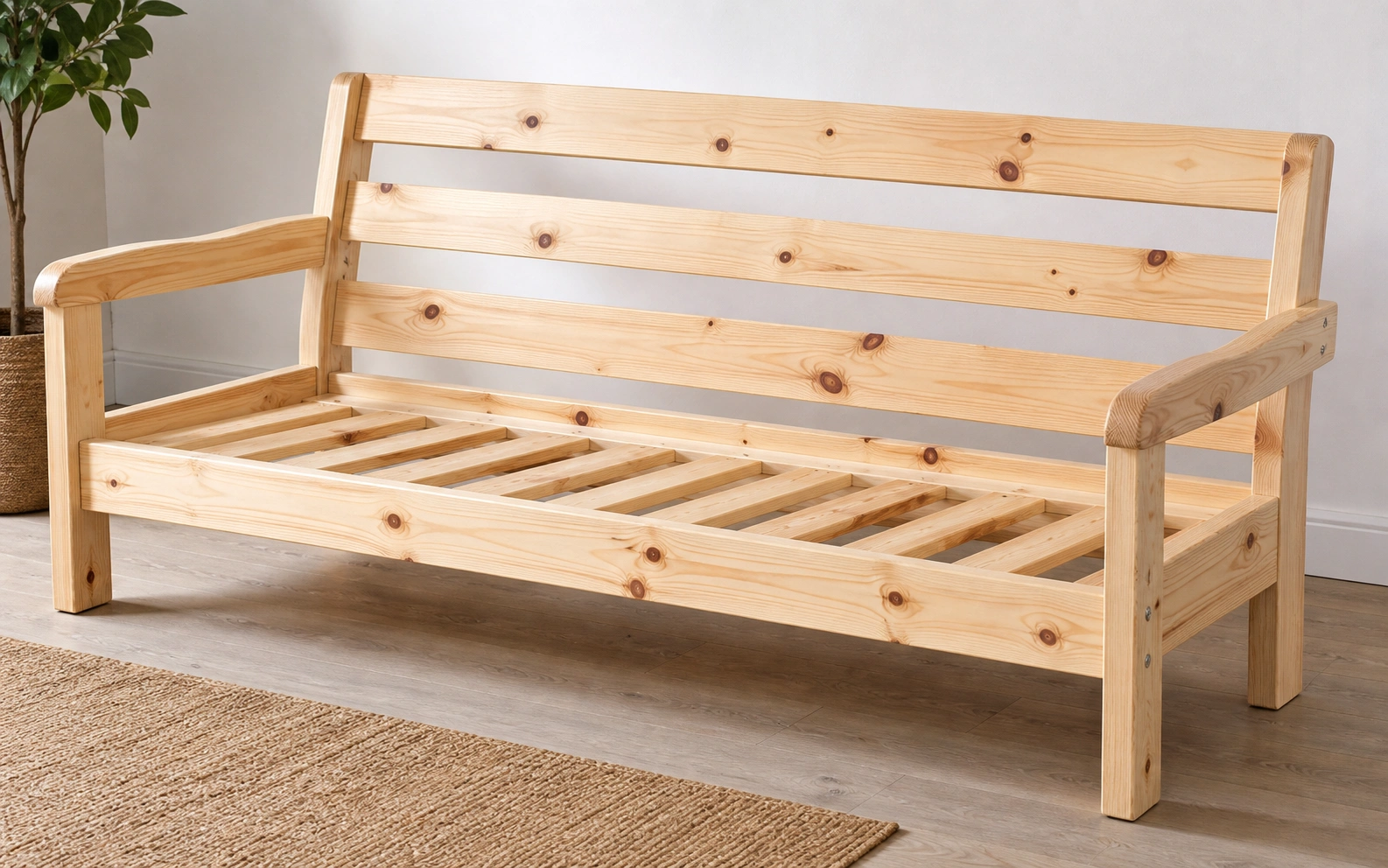
Pine
Affordable softwood that is lightweight and easy to work with. Pine frames are common in budget-friendly sofas but are more prone to dents, scratches, and warping over time. Suitable for occasional-use furniture or as secondary structural components.
Softwood — Budget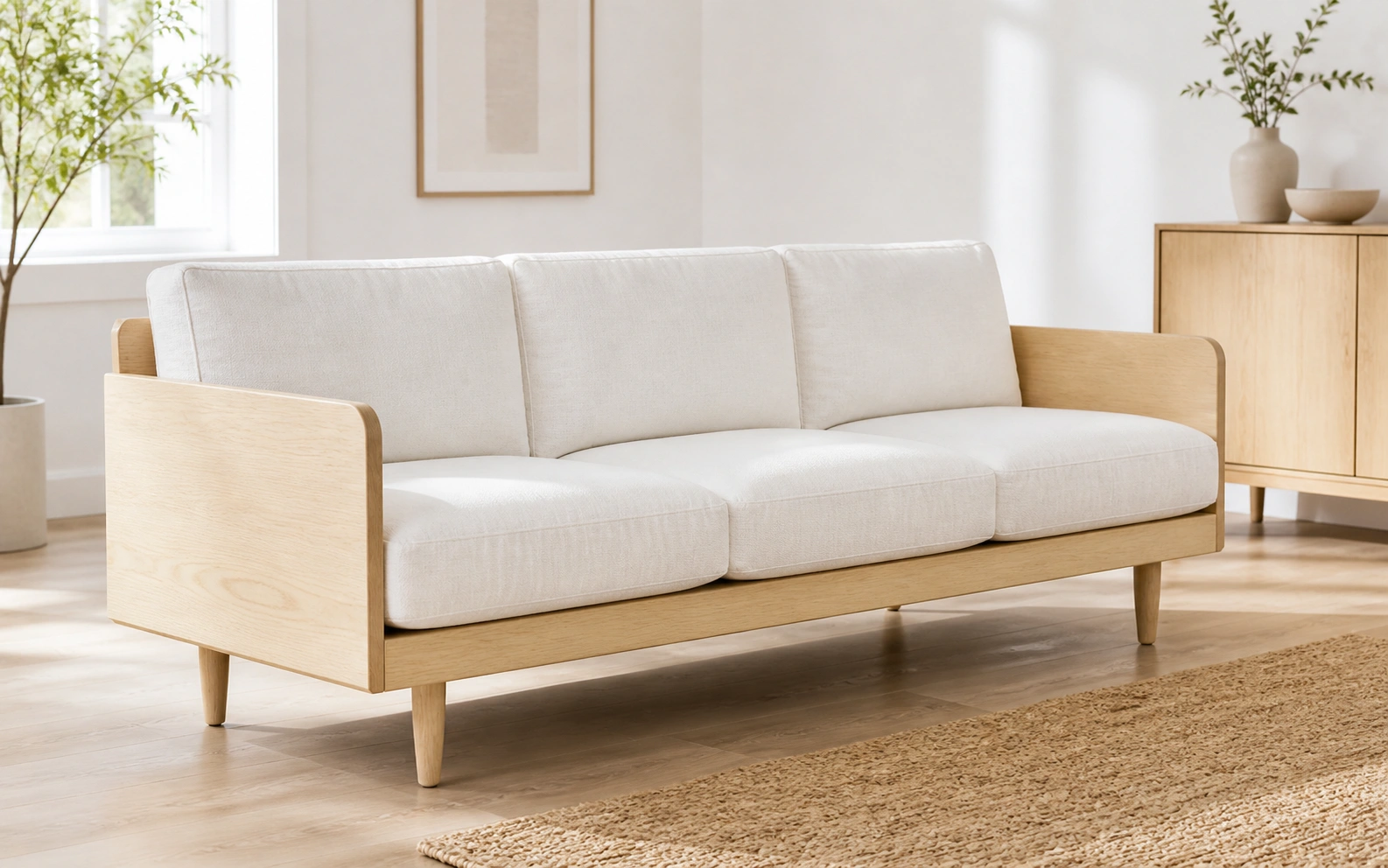
Birch
A mid-range hardwood offering good strength at a moderate price. Birch has a fine, uniform grain and takes stain well, making it versatile for various finishes. Often used in Scandinavian and modern sofa designs where a clean, light aesthetic is desired.
Hardwood — Mid-RangeCritical Factor — Kiln Drying: Regardless of wood species, the most important quality indicator is moisture content. Properly kiln-dried wood has been reduced to 6-8% moisture content, which prevents warping, cracking, and joint failure over time. Always ask a seller whether the frame wood is kiln-dried. Wood that has not been properly dried will almost certainly develop structural problems within the first few years of use.
Frame Joinery Methods That Matter
The way wooden pieces are connected — known as joinery — is just as important as the wood species itself. A sofa built from premium oak with cheap staples will fail long before a pine sofa with proper dovetail joints. Understanding joinery helps you evaluate sofa quality before buying.
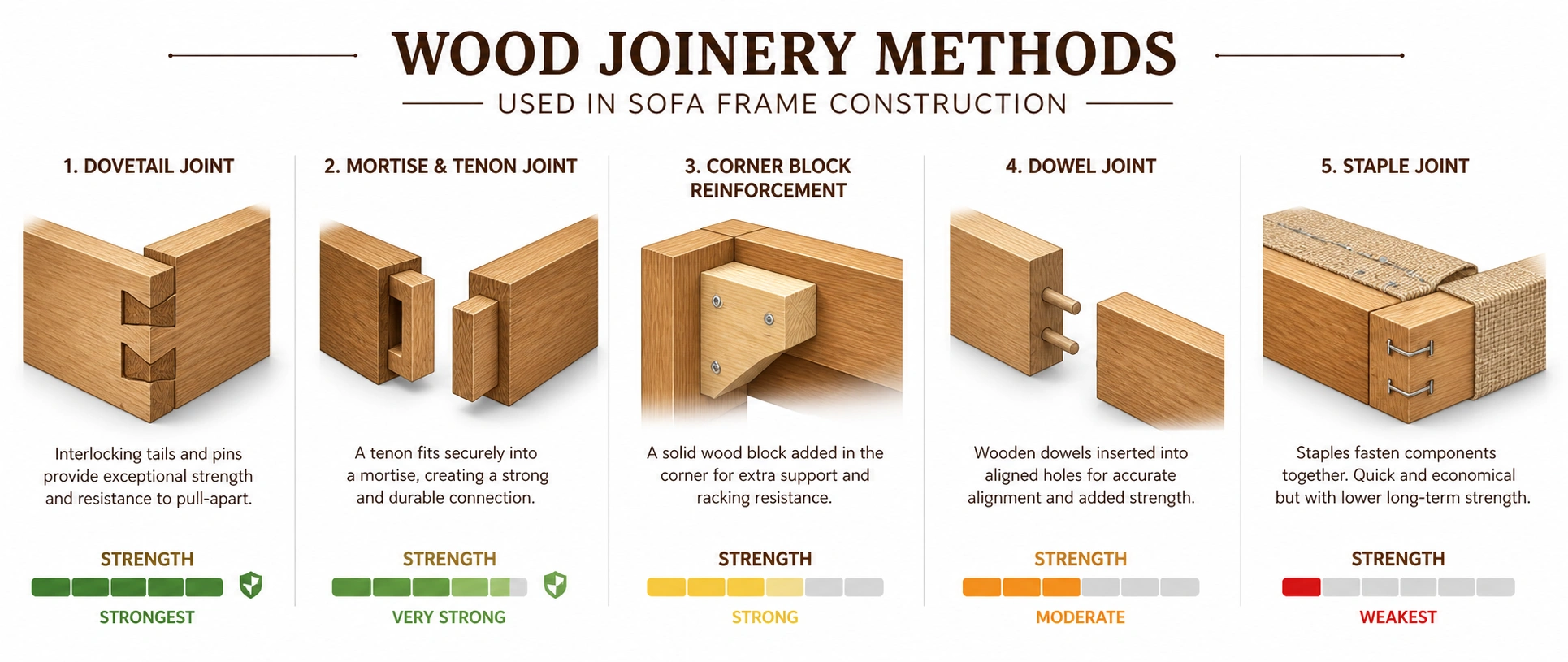
Dovetail Joint
Interlocking pins and tails — strongest wood-to-wood joint
Mortise & Tenon
Peg inserted into a hole — excellent for frame corners
Corner Blocks
Triangular wood blocks screwed into joints — adds critical reinforcement
Dowel Joint
Wooden pegs glued into aligned holes — decent but glue-dependent
Staples / Nails
Fasteners driven into wood — weakest, prone to loosening over time
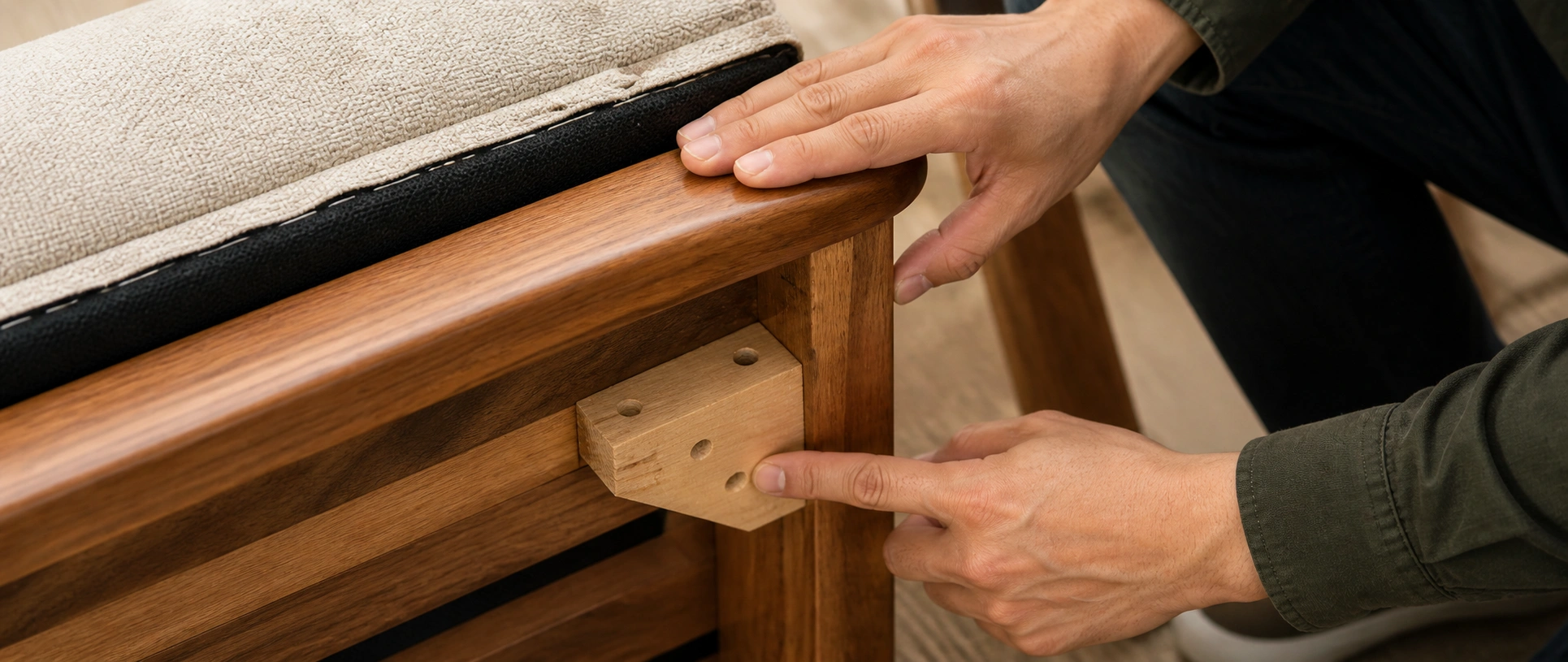
The gold standard for wooden sofa frames combines mortise-and-tenon joints at major stress points (where the arms meet the seat, where the back meets the base) with corner blocks at all interior corners, secured with both glue and screws. If you are evaluating a sofa in person, ask to see underneath the cushions — a quality wooden frame will show these reinforced joints clearly. For more details on structural components, our sofa suspension types guide covers how the frame connects to seating support systems.
Popular Wooden Sofa Styles
Wooden sofas span an enormous range of design aesthetics, from sleek mid-century modern pieces to chunky rustic farm tables. The style you choose should complement your existing decor while meeting your comfort and space requirements. Here are the most popular wooden sofa styles available today.
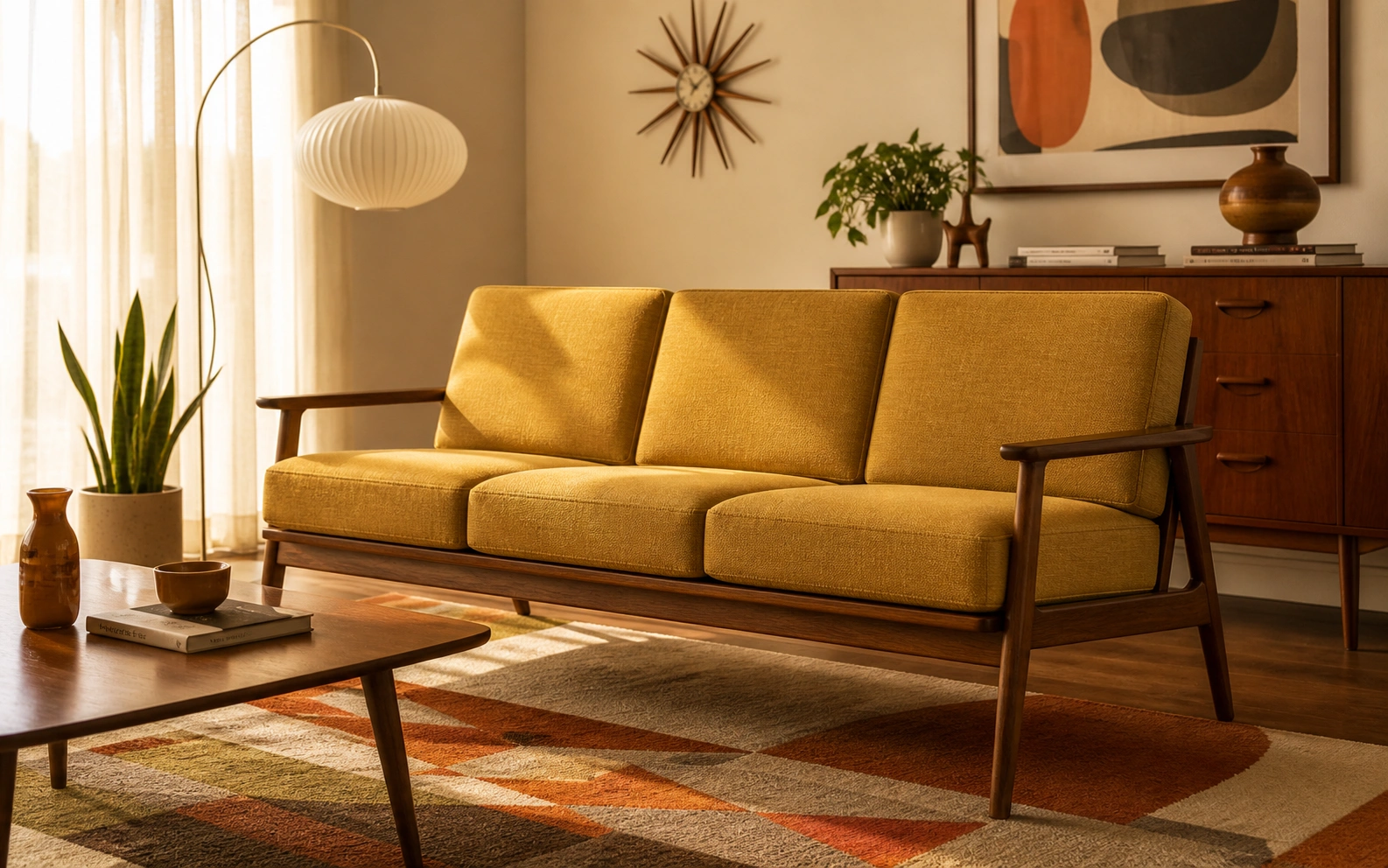
Mid-Century Modern
Characterized by tapered wooden legs, clean geometric lines, and a mix of wood and fabric. Usually features exposed walnut, teak, or oak arms and legs with upholstered cushions. Pairs perfectly with modern sofa interiors.
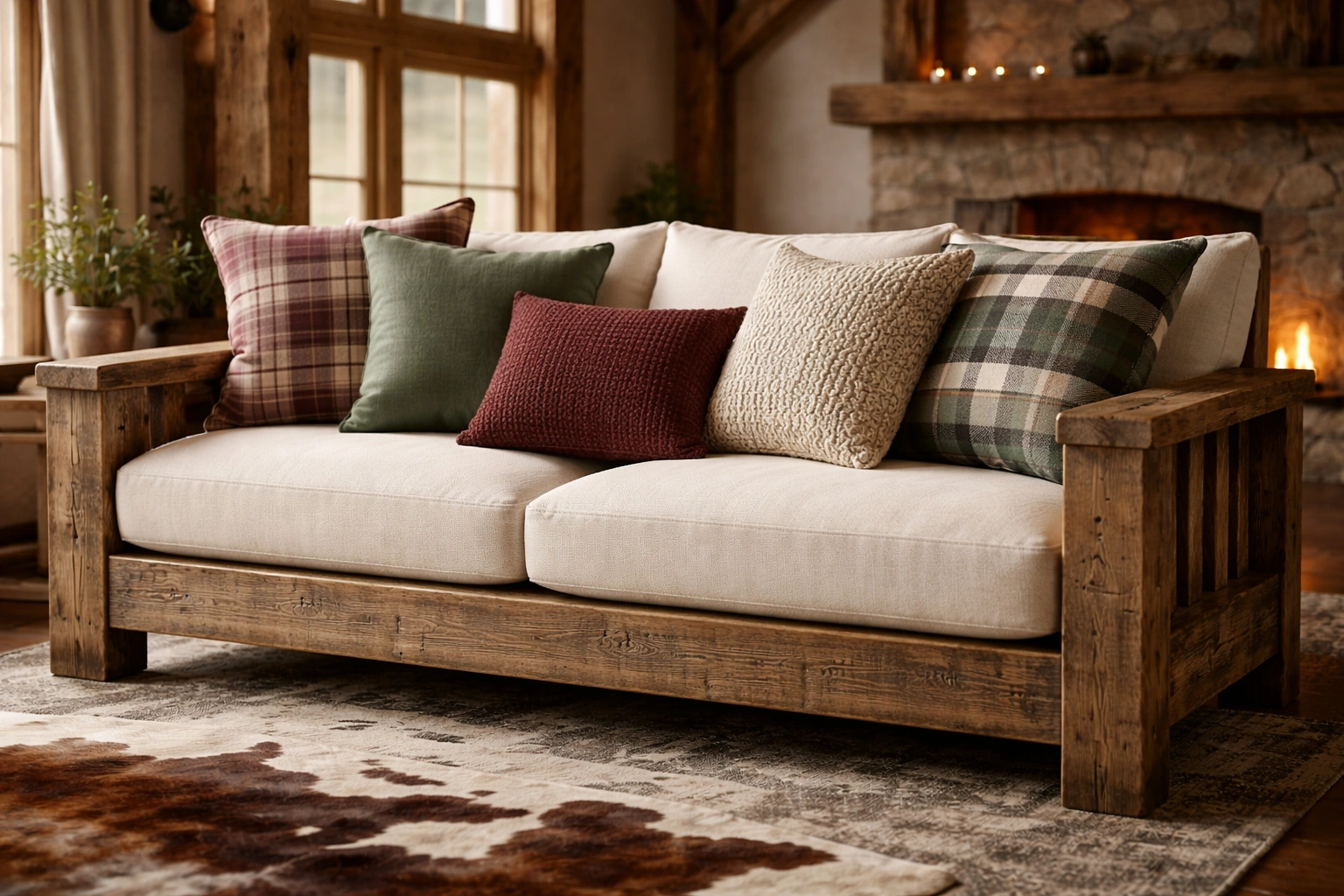
Rustic / Farmhouse
Features thick, often reclaimed wood with visible grain, knots, and natural imperfections. Chunky arms and distressed finishes create a warm, lived-in feel. Works beautifully in family rooms and cabins.
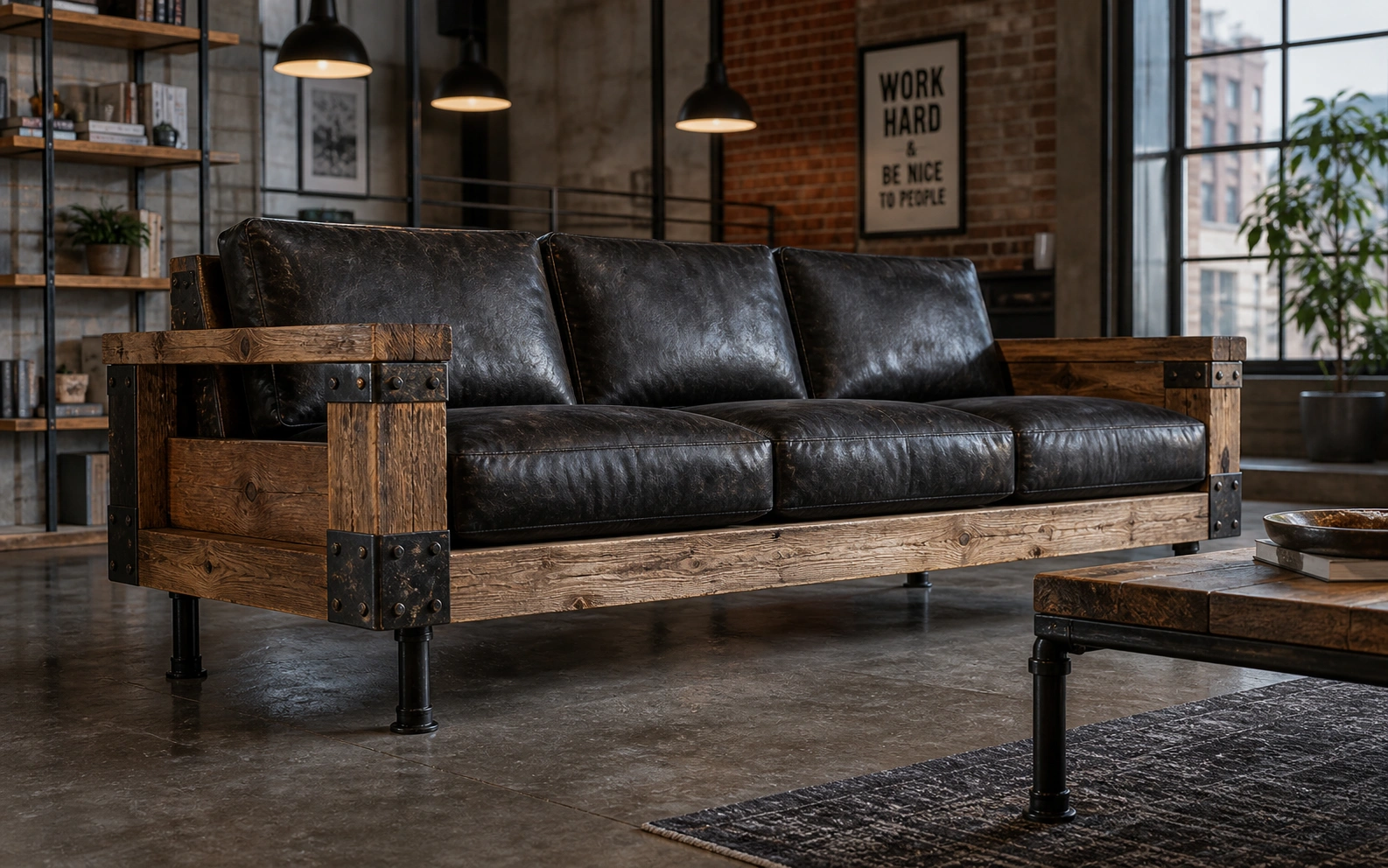
Industrial
Combines raw or rough-sawn wood frames with metal accents like exposed bolts, pipe legs, or steel brackets. The contrast between organic wood and industrial metal creates a bold, urban aesthetic popular in industrial sofa designs.

Scandinavian
Emphasizes light-colored woods (birch, pine, ash) with minimalist forms and pale upholstery. Function-driven design with subtle organic curves. Ideal for small apartments and bright, airy spaces.
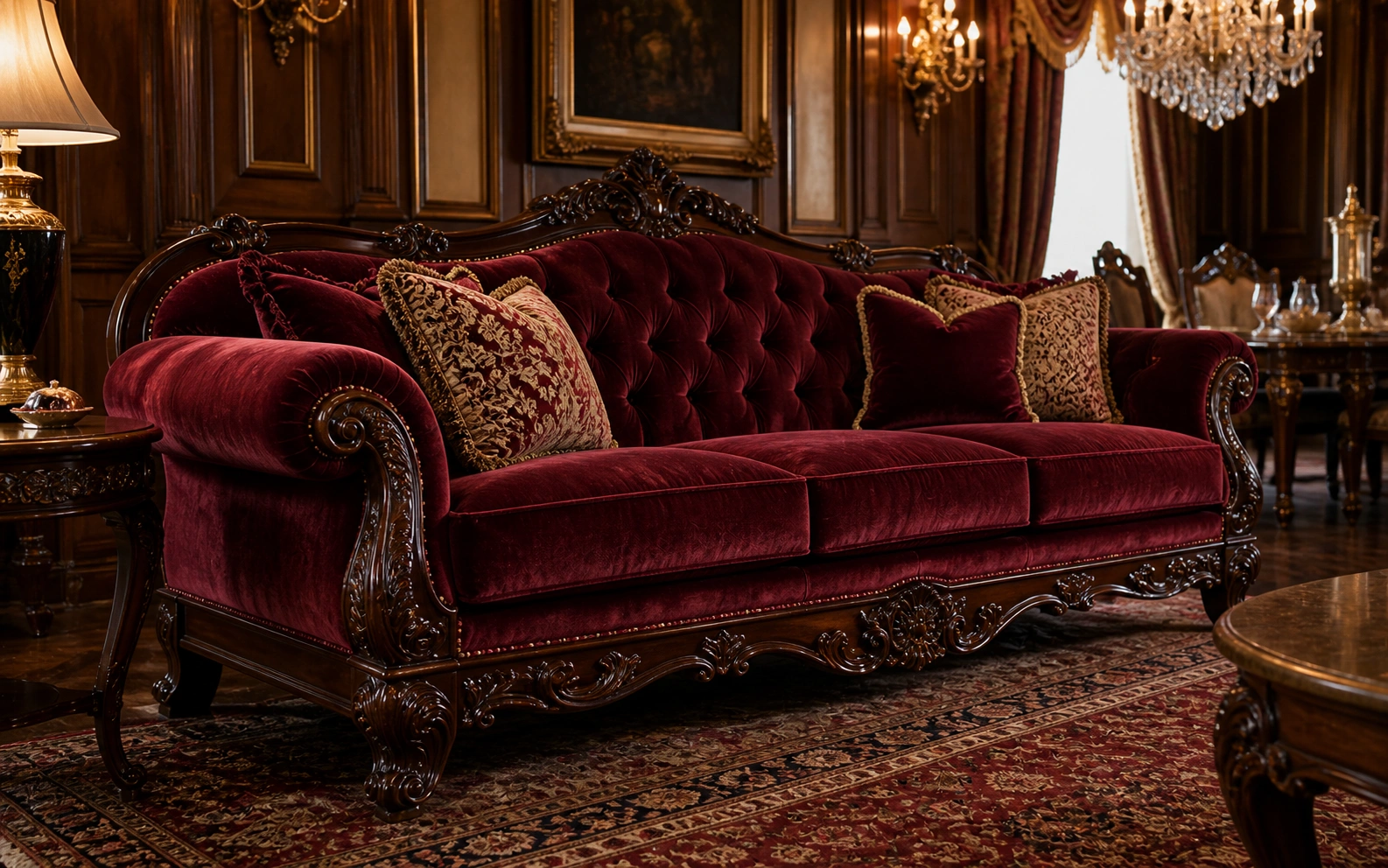
Traditional / Classic
Features ornate carved wood details, rolled arms, and rich dark finishes like mahogany or cherry stain. Often includes tufted upholstery and decorative wooden trim. Complements vintage sofa and formal living room settings.

Bohemian
Low-profile wooden frames, often floor-level or with short legs, paired with layered colorful textiles and mismatched cushions. Natural, unfinished wood tones work best. Explored further in our bohemian sofas guide.
Wooden Sofa vs. Other Frame Materials
While wood is the most traditional sofa frame material, modern manufacturing has introduced alternatives. Understanding how wood compares helps you decide if it is the right choice for your specific situation. Our comprehensive materials explained guide covers this in even greater detail.
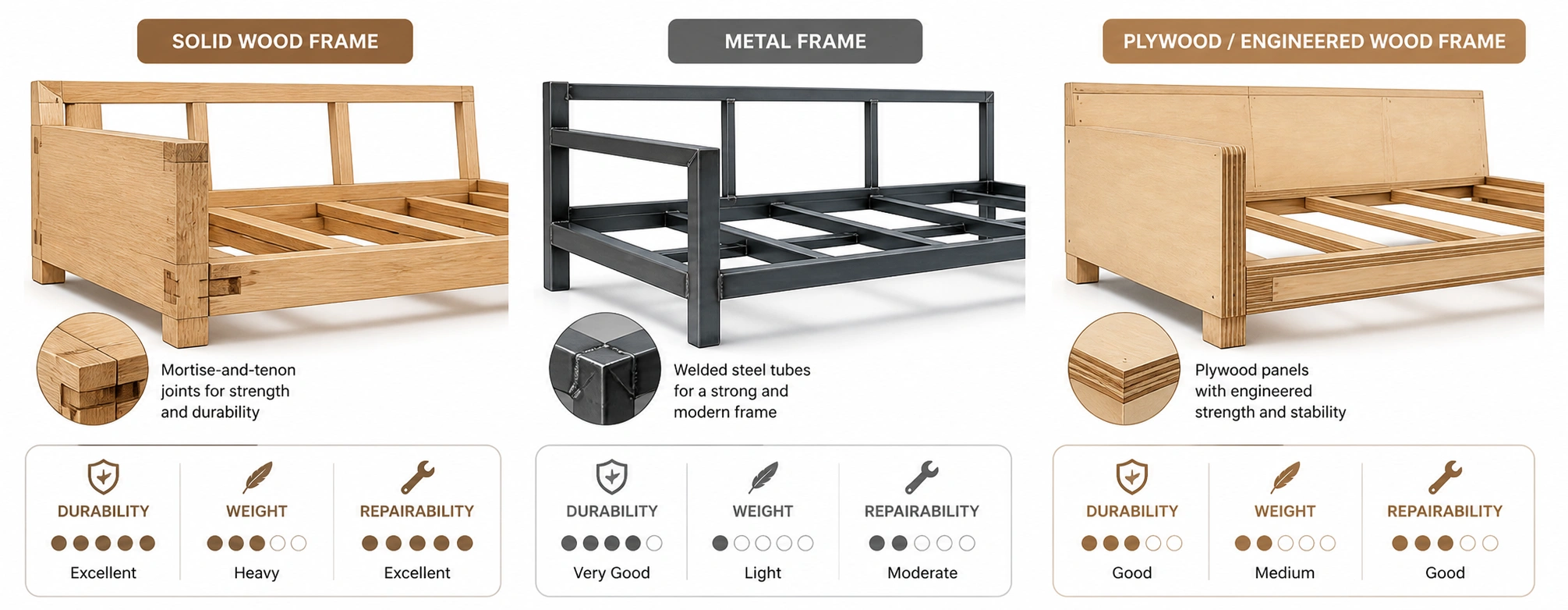
| Factor | Solid Wood Frame | Metal Frame | Plywood / Engineered |
|---|---|---|---|
| Durability | 15–25+ years (hardwood) | 10–20 years | 5–10 years |
| Weight | Heavy to very heavy | Moderate to heavy | Light to moderate |
| Repairability | Excellent — joints can be reglued, pieces replaced | Limited — welded joints cannot be easily fixed | Poor — delamination is irreversible |
| Moisture Resistance | Varies by species (teak excellent, pine poor) | Good (if treated/coated) | Poor — swells and delaminates |
| Aesthetic Warmth | High — natural grain and color | Low — cold, industrial feel | Low — uniform, artificial appearance |
| Price Range | $300 – 1.500 (varies by species) | $300–1.200 | $100–600 |
| Resale Value | High — retains value well | Low to moderate | Very low |
| Eco-Friendliness | High if sustainably sourced | Moderate (energy-intensive production) | Low (formaldehyde adhesives) |
For buyers who value sustainability, sustainable sofas made from FSC-certified wood offer an environmentally responsible option that does not sacrifice quality. If you are comparing overall value, our price vs quality sofa guide explains why spending more on the frame often saves money in the long run.
Pros and Cons of Wooden Sofas
Every material has trade-offs. Here is an honest assessment of what you gain and what you sacrifice when choosing a wooden sofa, so you can make an informed decision based on your priorities.
✅ Advantages
- Exceptional longevity — hardwood frames can outlast multiple upholstery changes
- Repairable — individual joints, legs, and components can be fixed or replaced without replacing the entire sofa
- Natural beauty — wood grain adds warmth and character that synthetic materials cannot replicate
- High resale value — quality wooden sofas retain significant value in the secondhand market
- Structural stability — wood does not flex or bounce like metal, providing a firm, predictable seating experience
- Wide style versatility — from rustic to ultra-modern, wood adapts to virtually any interior design
- Eco-friendly potential — sustainably harvested wood is renewable and biodegradable
- Customizable — wood can be sanded, refinished, restained, or painted to update its look over time
❌ Disadvantages
- Heavier weight — hardwood sofas are difficult to move, especially for rearranging or deep cleaning
- Higher upfront cost — quality hardwood frames cost significantly more than engineered wood or metal alternatives
- Maintenance requirements — wood needs periodic polishing, humidity control, and protection from direct sunlight
- Susceptible to moisture — most wood species warp, crack, or rot if exposed to persistent moisture (except teak and cedar)
- Pest vulnerability — untreated wood can attract termites and wood-boring insects in certain climates
- Potential for squeaking — as joints age, wooden frames may develop creaks that metal frames typically do not
- Longer delivery times — solid wood furniture often requires longer manufacturing and curing times
Bottom Line: For buyers planning to keep their sofa for 10+ years, the advantages of a wooden sofa far outweigh the drawbacks. The higher initial investment pays for itself through longevity, repairability, and retained value. However, if you move frequently, live in a very humid climate without climate control, or have a strict short-term budget, you may want to explore other options from our buying guide section.
How to Choose a Quality Wooden Sofa
Knowing what to look for separates a smart purchase from an expensive mistake. Whether you are shopping online or testing sofas in person, this checklist covers every critical evaluation point.
🔍 Wooden Sofa Quality Checklist
- Verify the wood species — Ask specifically whether the frame is solid hardwood (oak, maple, teak, birch) or softwood (pine, cedar). If the seller cannot tell you, consider it a red flag.
- Confirm kiln-dried status — The wood should be kiln-dried to 6-8% moisture content. Air-dried wood or wood with unknown moisture content is a risk for warping.
- Inspect the joinery — Lift cushions and look for mortise-and-tenon joints, dowels, and corner blocks. Avoid frames held together primarily by staples or nails.
- Check frame thickness — Main structural rails should be at least 1.25 inches thick. Thinner rails indicate cost-cutting that will affect longevity.
- Test for stability — Sit on the sofa and shift your weight. There should be no wobbling, creaking, or lateral movement. A stable frame feels solid and grounded.
- Evaluate the finish — Run your hand over exposed wood surfaces. The finish should be smooth and even with no rough spots, bubbles, or drips. Quality finishes protect the wood from moisture and UV damage.
- Assess the weight — Heavier sofas generally indicate denser wood. If a supposedly hardwood sofa feels unexpectedly light, the frame may use a thinner gauge or hollow construction.
- Look for FSC certification — The Forest Stewardship Council label ensures the wood was responsibly harvested, supporting sustainable forestry practices.
- Review the warranty — A manufacturer confident in their wooden frame will offer at least a 10-year frame warranty. Shorter warranties suggest lower confidence in construction quality.
- Consider your space — Use our sofa size and room guide to ensure the wooden sofa dimensions work with your room layout, doorways, and staircases for delivery.
For buyers deciding between standard options and bespoke pieces, our custom vs ready-made sofa comparison explores whether a custom wooden sofa is worth the additional cost and wait time. Additionally, understanding the sofa price breakdown helps you determine what percentage of your budget should go toward the frame versus upholstery and features.
Maintenance and Care Tips
Proper maintenance dramatically extends the life of a wooden sofa. While the upholstery requires its own care routine — detailed in our fabric sofa cleaning guide and leather sofa cleaning guide — the wooden components need specific attention to prevent drying, cracking, and moisture damage.

Weekly Dusting
Use a soft, dry microfiber cloth to remove dust from all exposed wood surfaces. Avoid feather dusters which can scratch the finish. Dust traps moisture against the surface and can cause cloudiness in the finish over time.
Quarterly Polishing
Apply a high-quality wood polish or wax every 3-4 months. This replenishes natural oils, creates a protective barrier against moisture, and restores the wood's luster. Choose a product matching your finish type (oil-based for oiled wood, wax for waxed finishes).
Humidity Control
Maintain indoor humidity between 40-60% using a humidifier in dry seasons and a dehumidifier in humid months. Wood expands in high humidity and contracts in dry conditions — extreme fluctuations cause warping, cracking, and joint failure.
Sunlight Protection
Position your sofa away from direct sunlight or use curtains and UV-filtering window film. Prolonged UV exposure bleaches wood color, dries out the surface, and degrades protective finishes. Our UV protection guide covers solutions in detail.
Immediate Spill Response
Wipe any liquid spills from wood surfaces within minutes. Even finished wood can absorb moisture through seams, joints, and microscopic finish imperfections. Use a damp cloth followed immediately by a dry cloth — never let water sit on wood.
Periodic Joint Inspection
Every 6 months, check all visible joints for looseness. Gently wiggle arms, legs, and back supports. If you detect movement, address it immediately — loose joints worsen rapidly as stress transfers to adjacent connections. For significant issues, refer to our sofa frame repair guide.
Pro Tip: Keep wood touch-up markers and filler sticks in a color matching your sofa's finish. Small scratches and dents are inevitable, but touching them up immediately prevents moisture from penetrating the exposed wood grain. Addressing a scratch in minutes takes far less effort than dealing with water-damaged wood months later.
If your wooden sofa develops issues like loose legs or creaking joints, most problems can be resolved with basic tools and wood glue before they become serious. For the upholstered portions, explore our full maintenance section for material-specific cleaning and protection advice.
Frequently Asked Questions
These are the most common questions buyers ask about wooden sofas. Each answer is based on furniture industry standards and expert recommendations.


