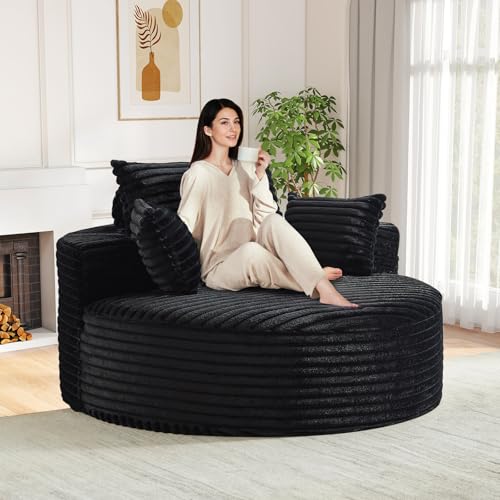
Round Sofa: The Complete Buying Guide
Discover everything about round sofas — from types and materials to sizing, styling, and real pros and cons — so you can decide if this bold statement piece is right for your home.
VIEW RECOMMENDATIONSWhat Is a Round Sofa?

A round sofa is a seating piece characterized by its circular or semi-circular shape, breaking away from the conventional linear form of traditional couches. Unlike standard sofas that follow a straight or L-shaped configuration, a round sofa wraps around to create a continuous seating loop, offering a distinctive 360-degree or wraparound seating experience.
Round sofas come in a wide variety of designs. Some are fully circular — forming a complete ring where every seat faces inward — while others take a semi-circular or crescent shape that can be placed against a wall like a conventional sofa with a dramatically curved front. There are also modular round sectionals made of individual pieces that you arrange into a circular formation, giving you flexibility in both shape and size.
What makes round sofas stand out is their ability to serve as a social hub. Because the seating faces inward, everyone seated is naturally oriented toward each other, making conversation effortless. This is a stark contrast to linear sofas where people sit side by side facing forward. If you frequently host gatherings or simply enjoy a cozy, communal seating arrangement, a round sofa creates an inviting atmosphere that standard furniture simply cannot replicate.
It is worth noting that a round sofa is not the same as a curved sofa. While both feature non-linear forms, they differ significantly in geometry, function, and room placement. We explore these differences in detail in a later section, but the key takeaway is this: if you want a true statement piece that defines a seating area as its own zone, a round sofa delivers far more visual impact than a gently curved alternative.
Types of Round Sofas
Not all round sofas are created equal. Understanding the different types helps you narrow down which style matches your space, budget, and lifestyle. Below are the six main categories you will encounter when shopping.
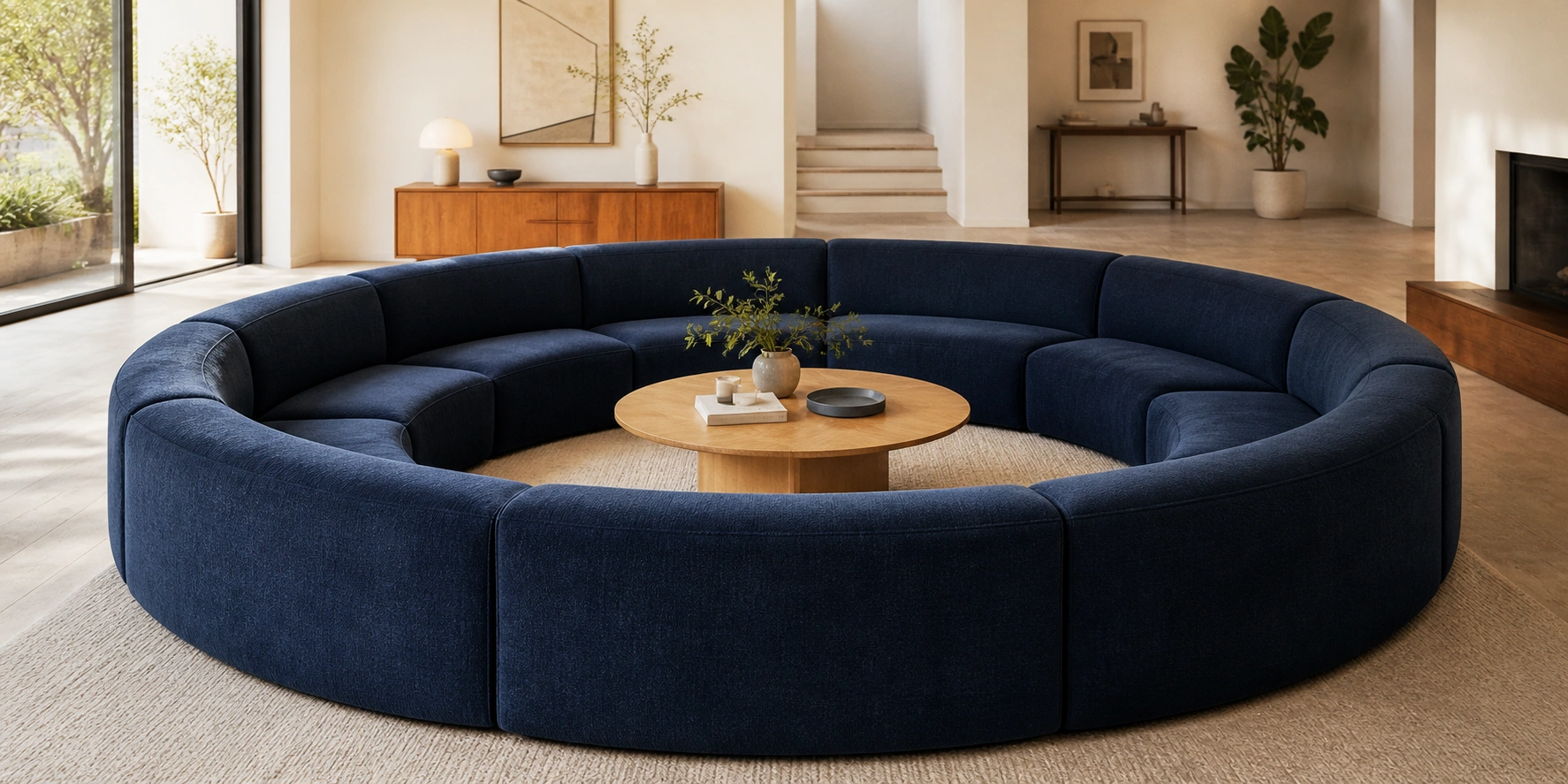
Full Circular Sofa
A complete ring-shaped sofa where all seats face the center. Ideal as a freestanding centerpiece in large, open rooms. Seats typically range from 4 to 8 people depending on diameter.
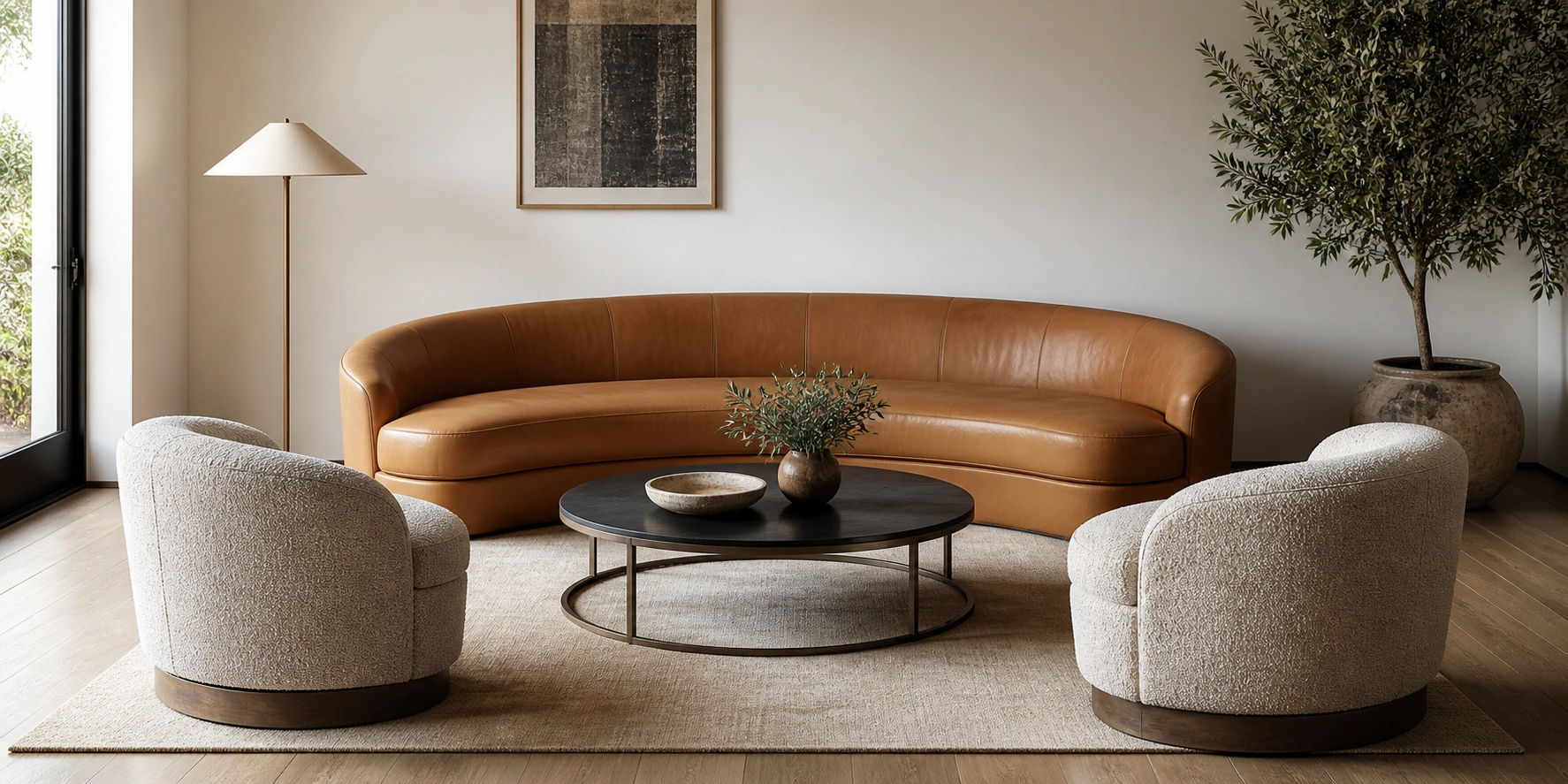
Semi-Circular Sofa
A half-moon shape designed to sit against a wall or float in a room. Combines the drama of a round shape with the practicality of a traditional sofa placement. Perfect for medium to large rooms.
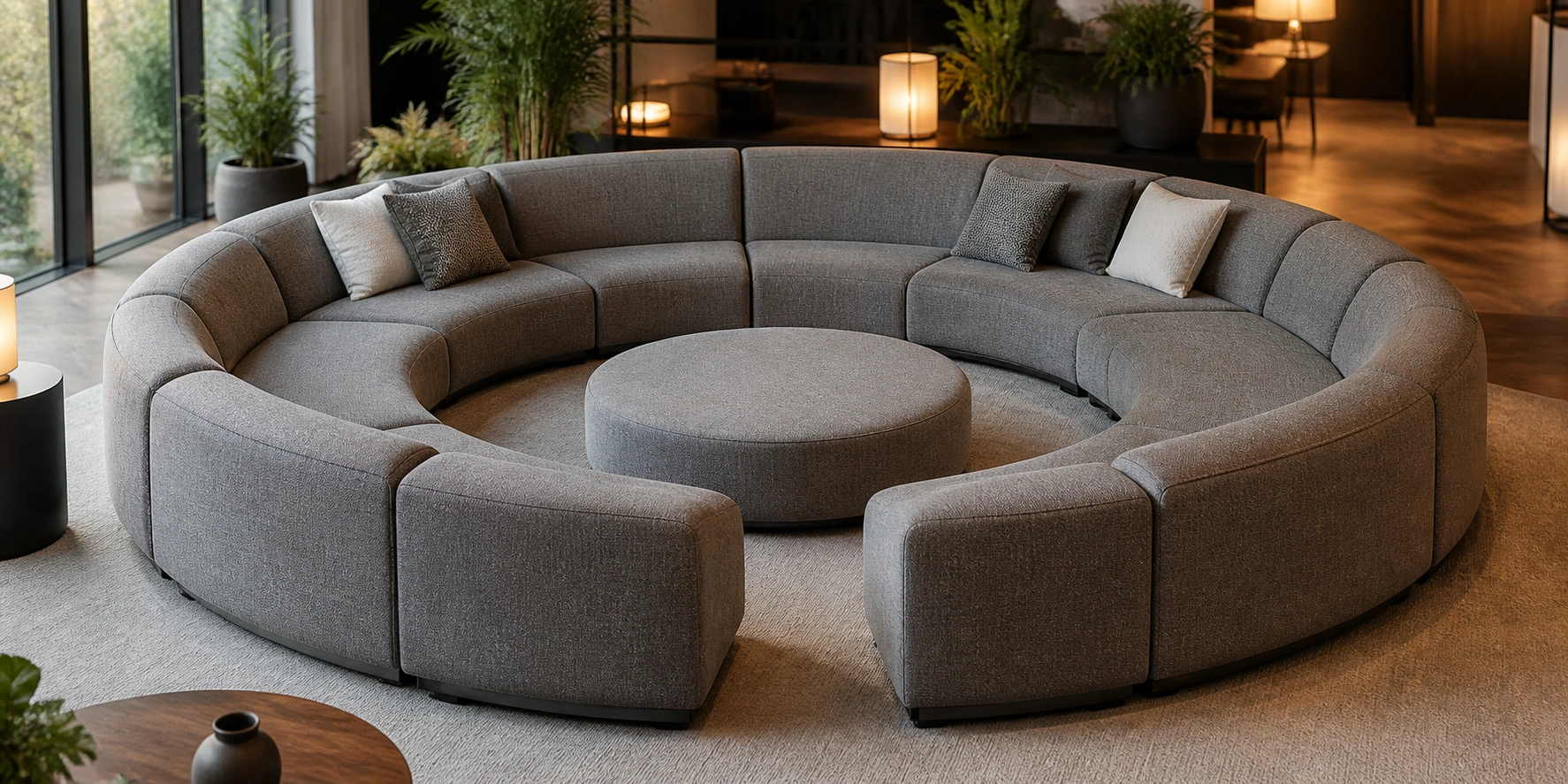
Modular Round Sectional
Individual seat modules that connect to form a circle or partial circle. Offers maximum flexibility — rearrange pieces to suit different occasions. Often compared to modular sofas but with curved connecting pieces.
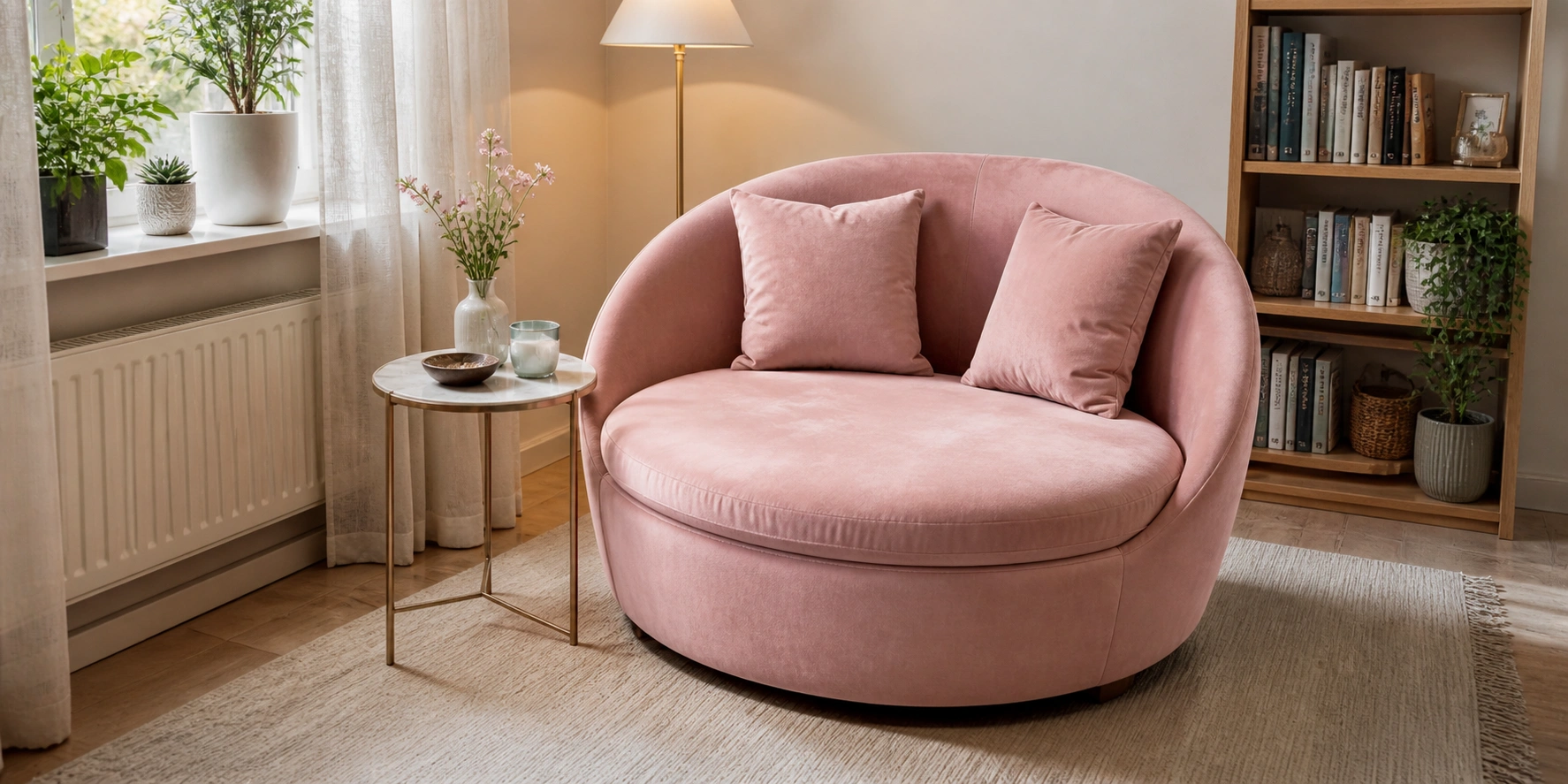
Compact Round Sofa (2-Seater)
Smaller diameter round sofas designed for two people. A practical option for those who want the round aesthetic without sacrificing floor space. Works well in apartments and cozy reading nooks.
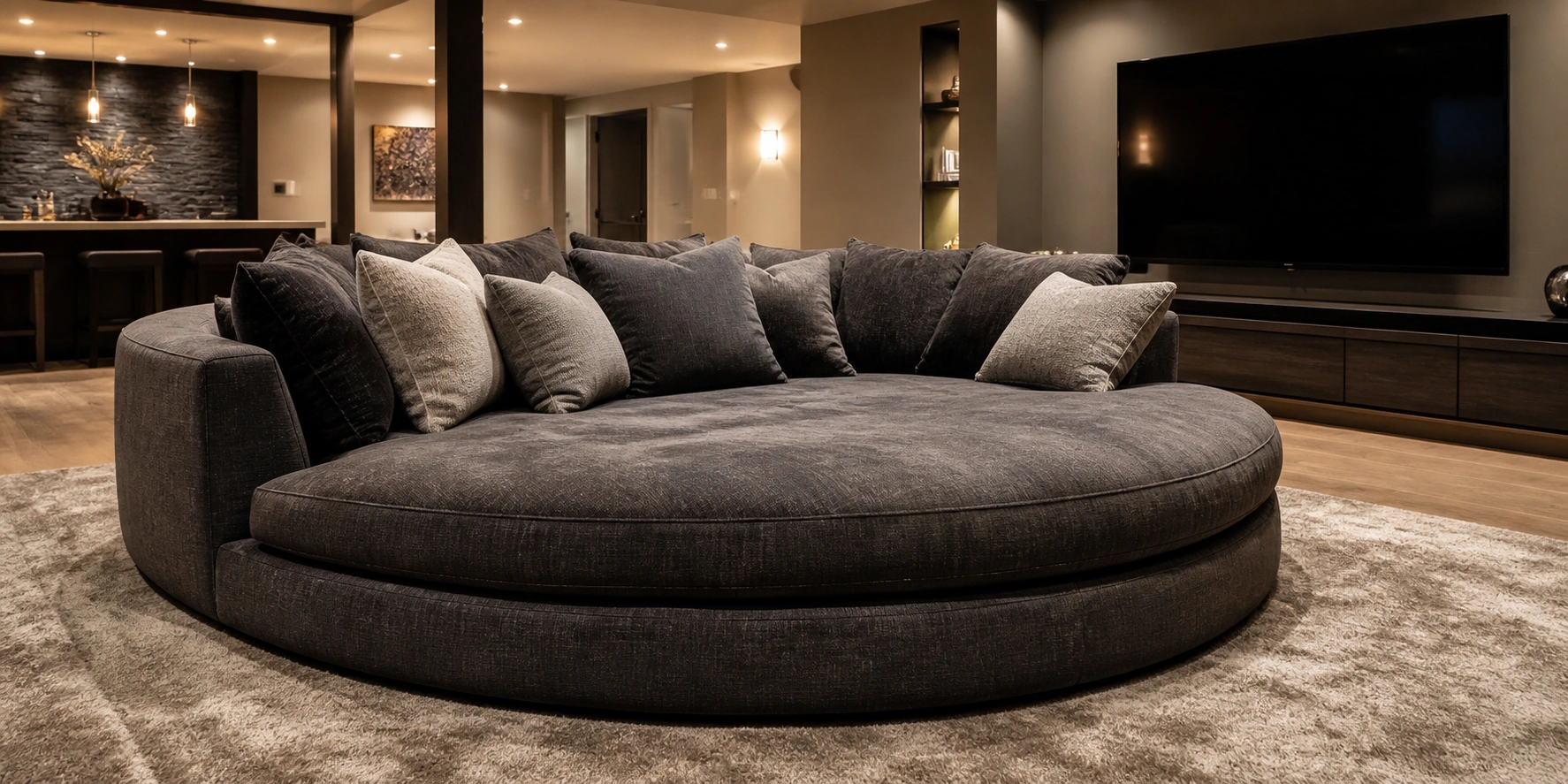
Oversized Round Sofa
Extra-large circular sofas with generous seat depths and wide diameters. Prioritizes lounging comfort over formal seating. Popular in large living rooms and entertainment spaces.
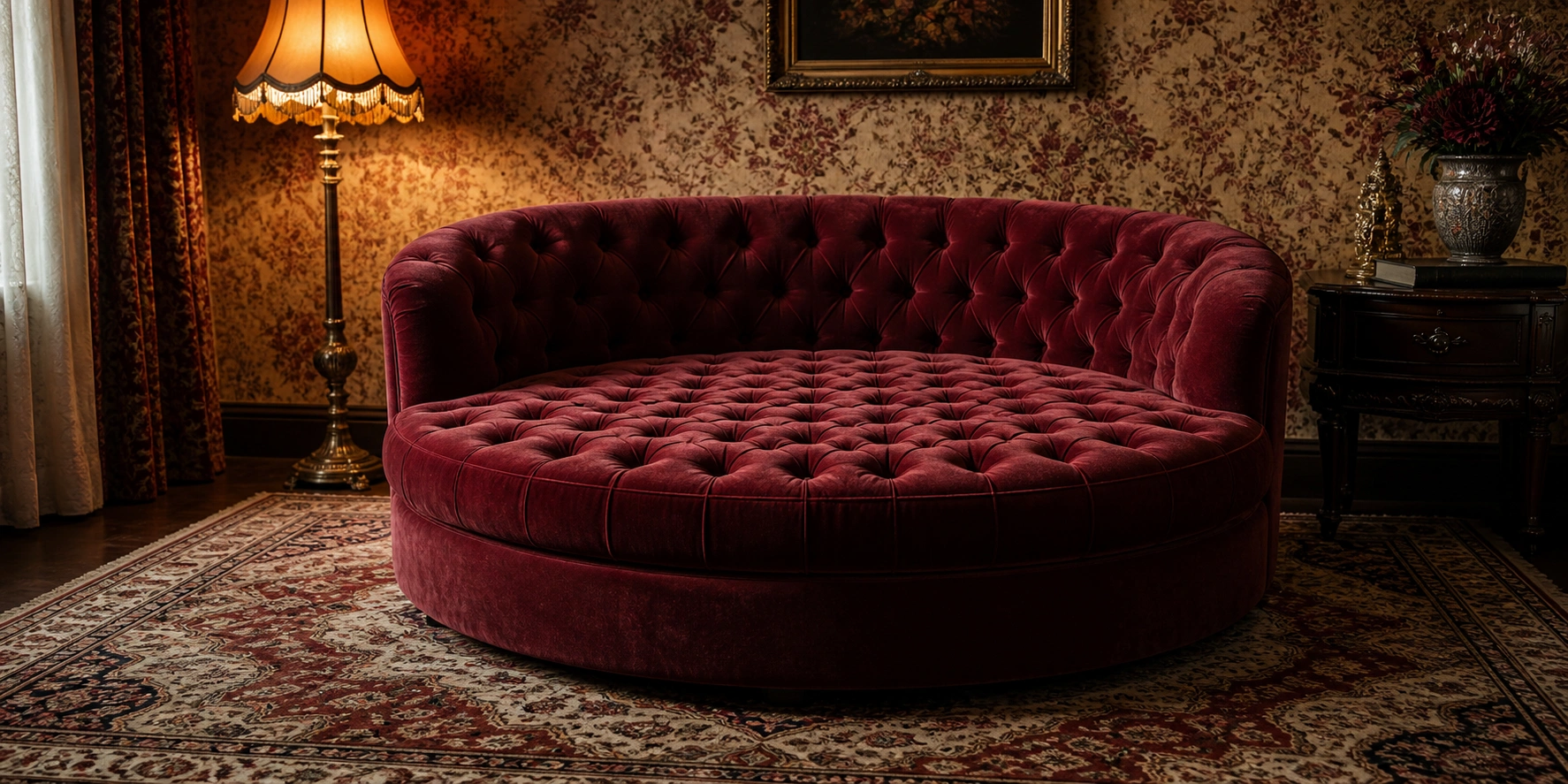
Tufted Round Sofa
Features button or channel tufting across the curved surface, adding texture and a classic aesthetic. Often found in vintage-inspired and contemporary designs. Velvet upholstery is the most common pairing.
Round Sofa vs. Curved Sofa — Key Differences
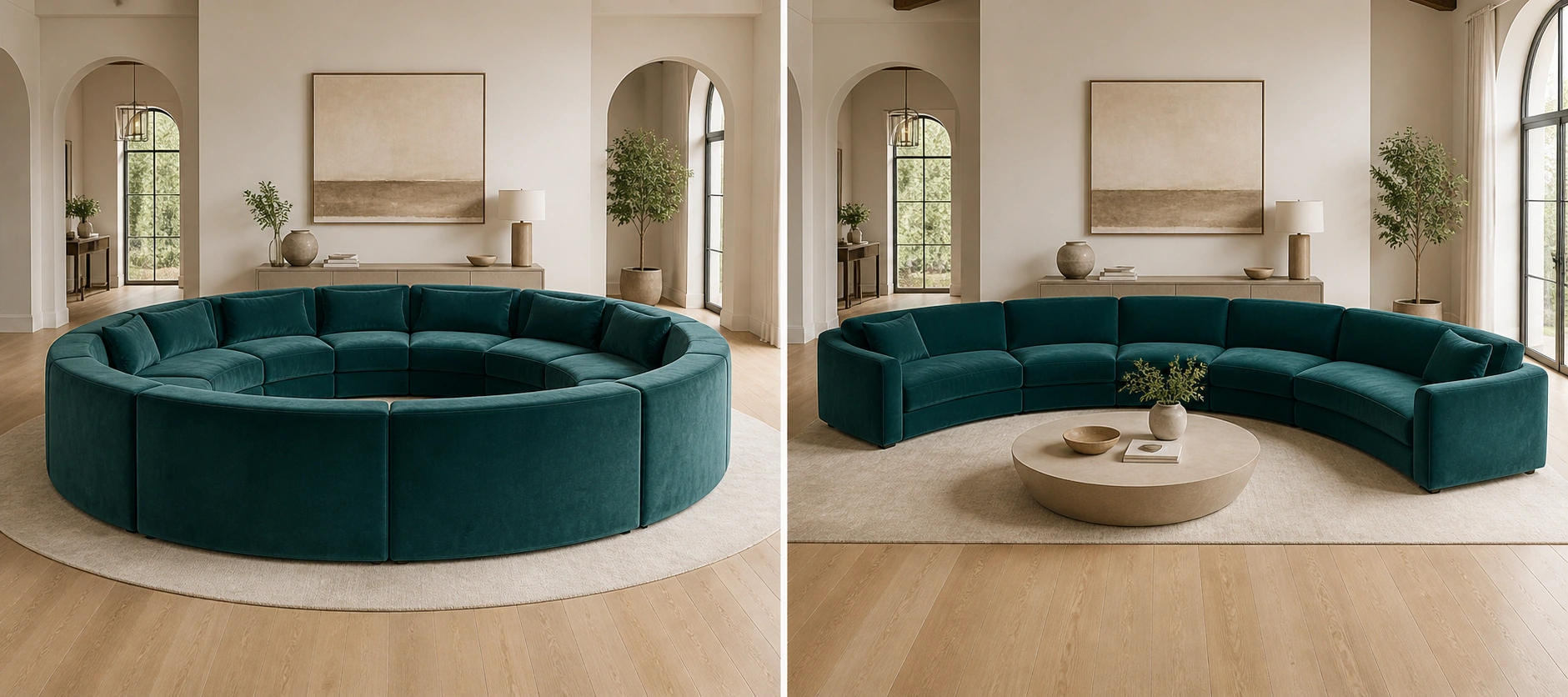
Many shoppers confuse round sofas with curved sofas, and while they share a non-linear DNA, they serve very different purposes in a room. Understanding these differences is essential before you invest in either style.
| Feature | Round Sofa | Curved Sofa |
|---|---|---|
| Shape | Full circle, semi-circle, or near-complete loop | Gentle arc or crescent without closing |
| Seating Direction | Faces inward toward the center | Faces forward or slightly inward |
| Room Placement | Freestanding centerpiece; not against walls | Can float or sit against a wall |
| Social Dynamic | Encourages group conversation | Good for conversation but also TV viewing |
| Space Requirement | High — needs open floor space on all sides | Moderate — more flexible placement |
| Visual Impact | Very high — immediate focal point | High — elegant but less dramatic |
| Flexibility | Low — fixed position once placed | Higher — can be rearranged more easily |
| Best For | Large rooms, conversation areas, statement design | Living rooms, offices, versatile layouts |
If your primary goal is to create a dedicated conversation zone that draws people together, the round sofa wins. If you need a sofa that can adapt to different room configurations and still work with a television or fireplace as a focal point, a curved sofa offers more day-to-day versatility.
Pros and Cons of Round Sofas
A round sofa is a significant design commitment. Before you buy, weigh these honest advantages and drawbacks against your specific needs, room size, and lifestyle.
✅ Advantages
- Exceptional conversation flow — Inward-facing seats naturally encourage interaction, making it the best choice for social spaces and hosting.
- Unmatched visual impact — A round sofa immediately becomes the room's focal point, elevating the entire design aesthetic.
- 360-degree access — Full circular models allow entry from any angle, which is great for open-plan layouts.
- Space definition — In open-concept homes, a round sofa creates a natural boundary for a living area without needing walls or dividers.
- Unique personality — You will rarely see a round sofa in every home, giving your space a distinctive, curated feel.
- Flexible modular options — Modular round sectionals let you adjust the shape and size as your needs change.
❌ Disadvantages
- Significant space requirement — Most round sofas need a large, open room. They are generally not suitable for small spaces.
- Poor TV alignment — Inward-facing seats make it difficult for everyone to comfortably watch a television unless it is placed overhead or the sofa is semi-circular.
- Difficult to move — The circular shape and often heavy construction make rearranging or moving a challenge.
- Limited wall placement — Full circular sofas cannot be placed against walls, reducing layout options.
- Higher price point — Round sofas are specialty items, often costing more than comparable sectional sofas of similar seating capacity.
- Less common selection — Fewer models on the market means fewer choices in size, color, and material compared to standard sofas.
Best Rooms for a Round Sofa
Round sofas are not one-size-fits-all. Their success depends entirely on the room you place them in. Here is a breakdown of where round sofas thrive and where they struggle.
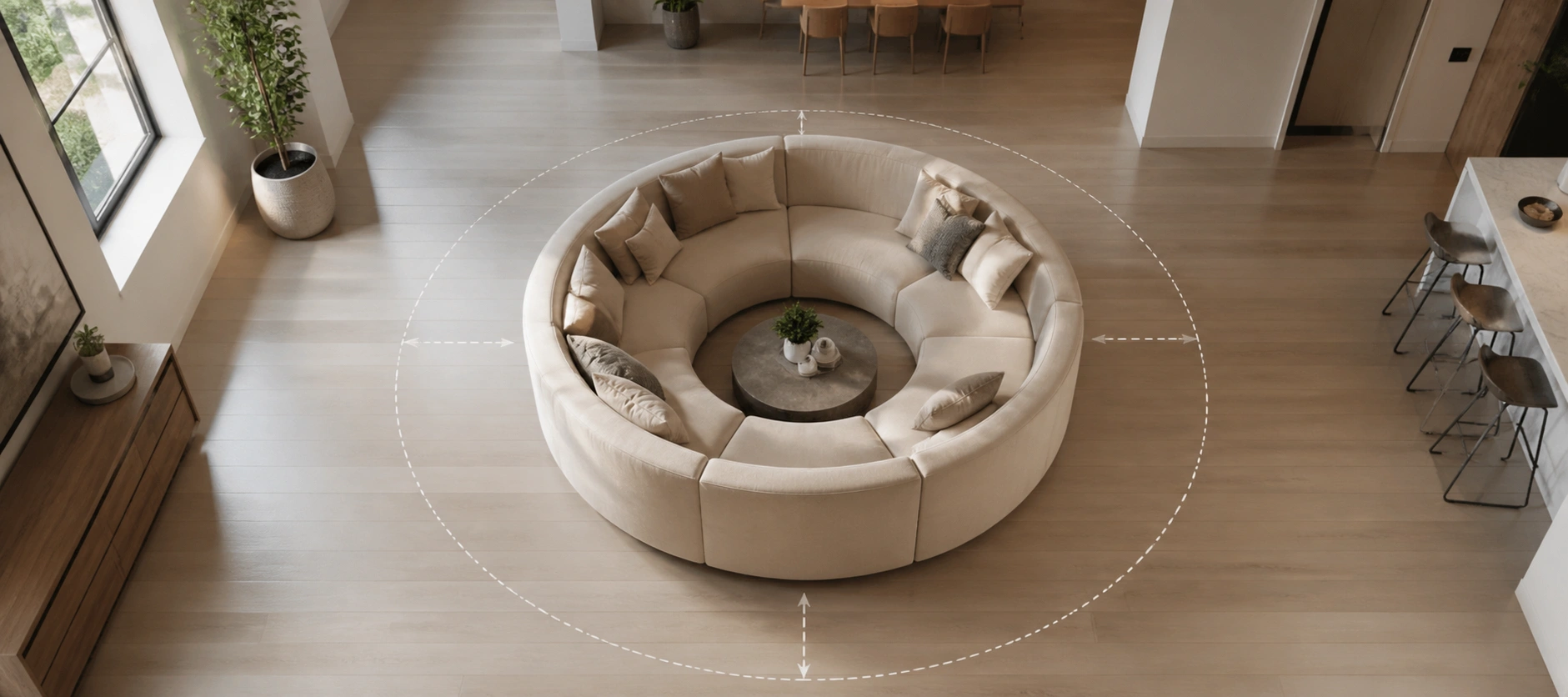
Large Living Room
The most natural fit. An open-plan living room with at least 12x12 feet of clear floor space allows a round sofa to shine as the centerpiece.
Office Lobby
Round sofas create an impressive first impression in corporate lobbies, hotel reception areas, and waiting areas. They project sophistication and encourage casual meetings.
Home Theater
A semi-circular round sofa arranged around a screen creates an immersive, cinema-like experience. Pair with a home theater setup for maximum impact.
Reading Nook / Library
A compact 2-seater round sofa in a quiet corner creates a cozy, enveloping reading spot. The curved shape wraps around you for a sense of privacy.
Executive Office
A semi-circular or small round sofa in a home office creates an intimate seating area for informal meetings and brainstorming sessions.
Basement / Rec Room
Basement spaces often have open floor plans that accommodate round sofas well, especially for game nights and casual gatherings.
Rooms where round sofas are generally not recommended include narrow hallways, small bedrooms, galley kitchens, and any room with a footprint smaller than 10x10 feet. For tighter spaces, consider a curved sofa or a compact loveseat instead.
Best Materials for Round Sofas
The material you choose for your round sofa affects not only its appearance but also its durability, comfort, and maintenance requirements. Because the curved shape involves more surface area and complex tailoring than a flat sofa, certain materials perform better on round frames. Our materials guide covers the full spectrum, but here are the top picks specifically for round sofas.
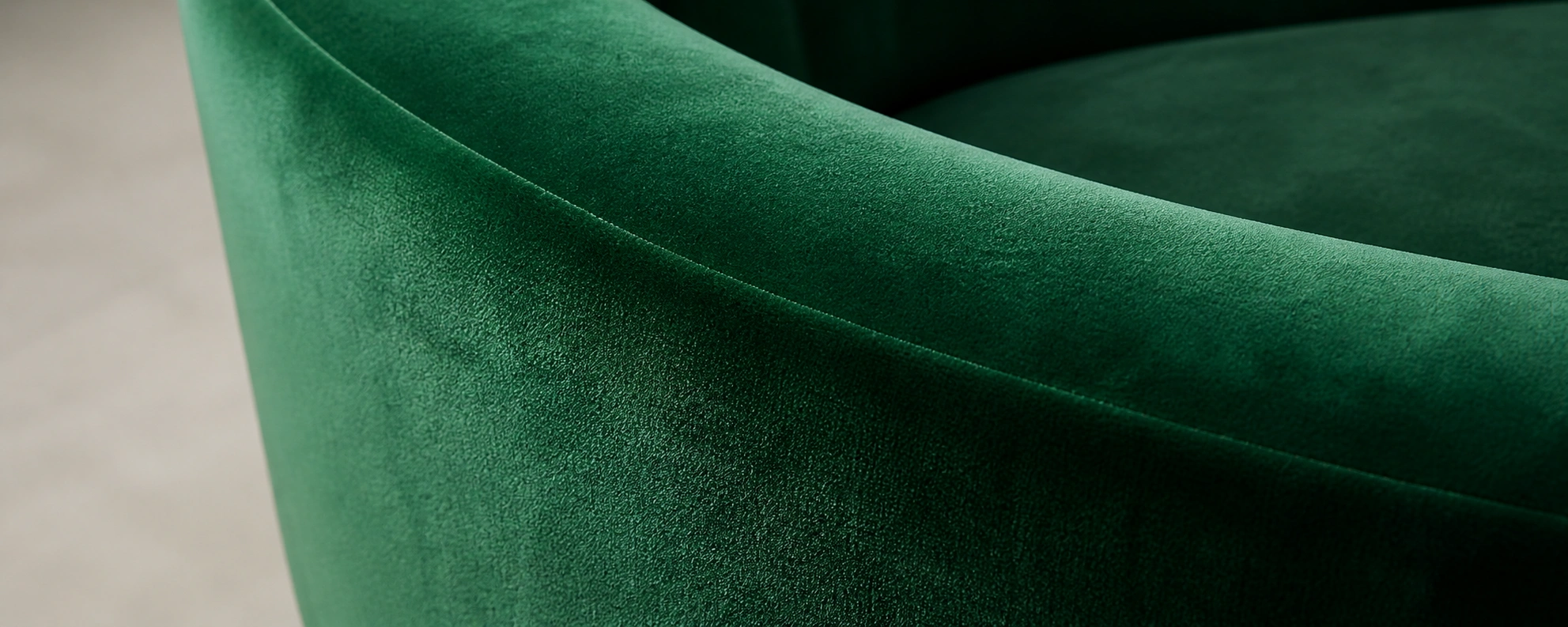
Velvet
The most popular choice for round sofas. Velvet catches light beautifully on curved surfaces, creating a rich, dimensional look. Available in bold colors that complement the dramatic shape. However, it shows marks and requires regular upkeep. See our velvet cleaning guide for care tips.
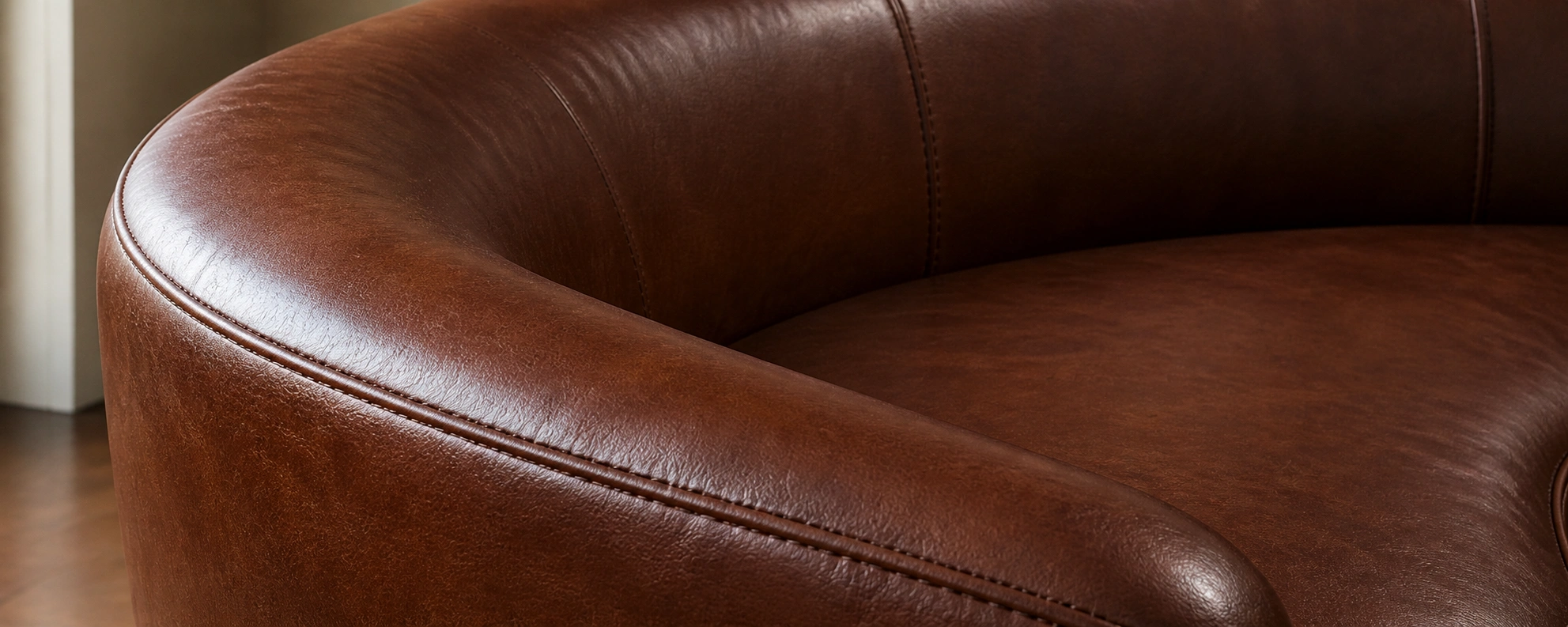
Leather
Leather wraps beautifully around round frames and develops a gorgeous patina over time. It resists stains and is simple to wipe clean. Higher upfront cost but exceptional longevity. Learn about leather grades to understand quality differences. Check our leather care guide for maintenance.
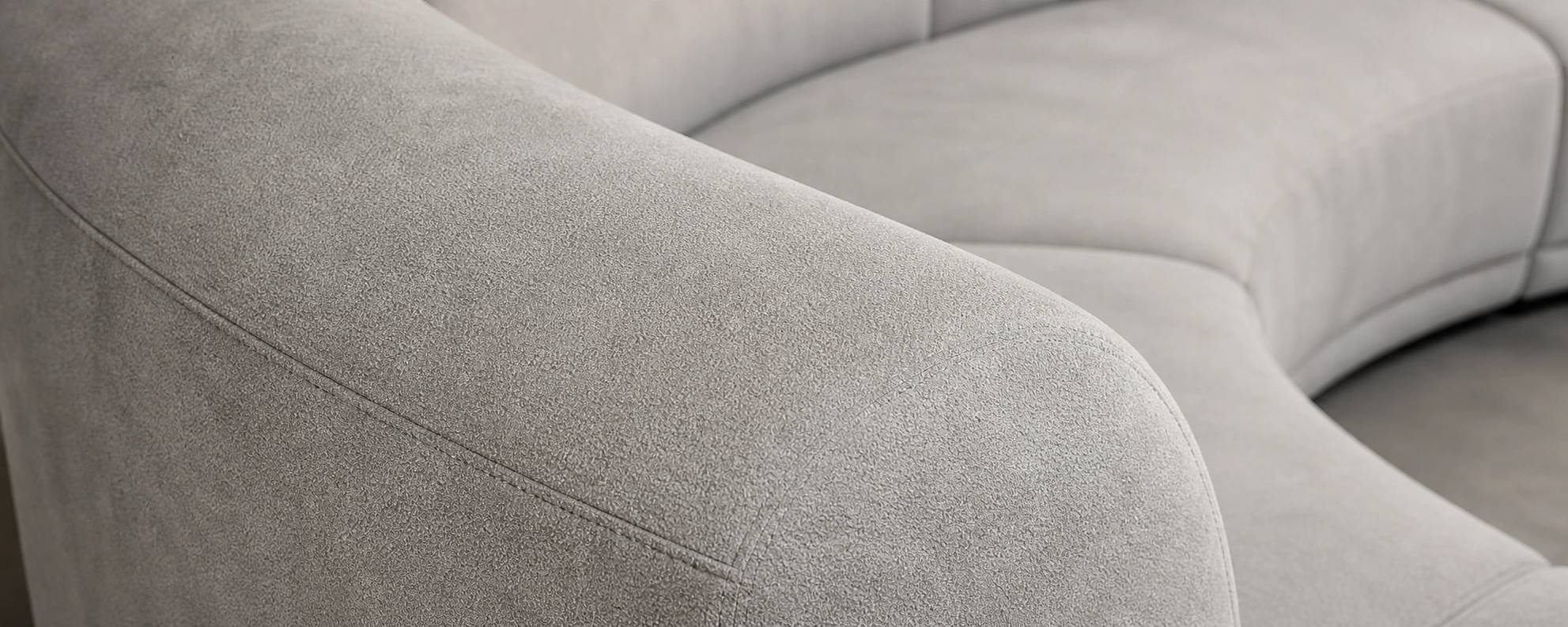
Microfiber
Soft, stain-resistant, and budget-friendly. Microfiber handles the wear and tear of daily family life well. It may lack the visual drama of velvet but excels in practicality. For households with pets, this pairs well with pet-proof sofa covers.
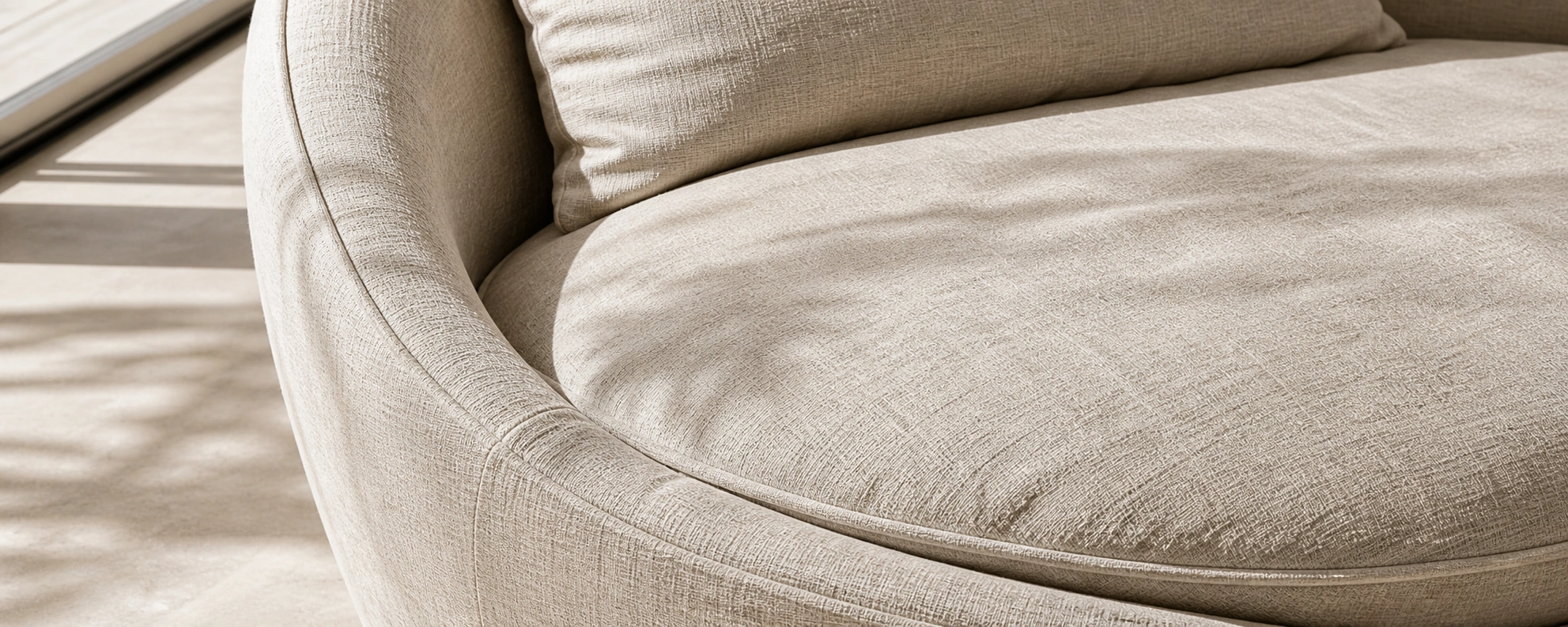
Linen
Linen gives a relaxed, airy feel that suits coastal and Scandinavian-inspired spaces. It is breathable and comfortable year-round. However, it wrinkles easily and is more prone to staining. Consider fabric protection treatments if you choose linen. Explore more in our linen sofa guide.
For a deeper comparison between the two most popular options, read our detailed leather vs. fabric sofa guide. Also, when evaluating fabric durability, understanding the Martindale abrasion test scores can help you choose a fabric that will last on a high-traffic round sofa.
Size Guide: How to Choose the Right Size
Choosing the wrong size round sofa is the most common — and most expensive — mistake buyers make. Because round sofas occupy floor space in all directions, you cannot simply compare their width to a linear sofa. You must account for the full diameter plus clearance around it.
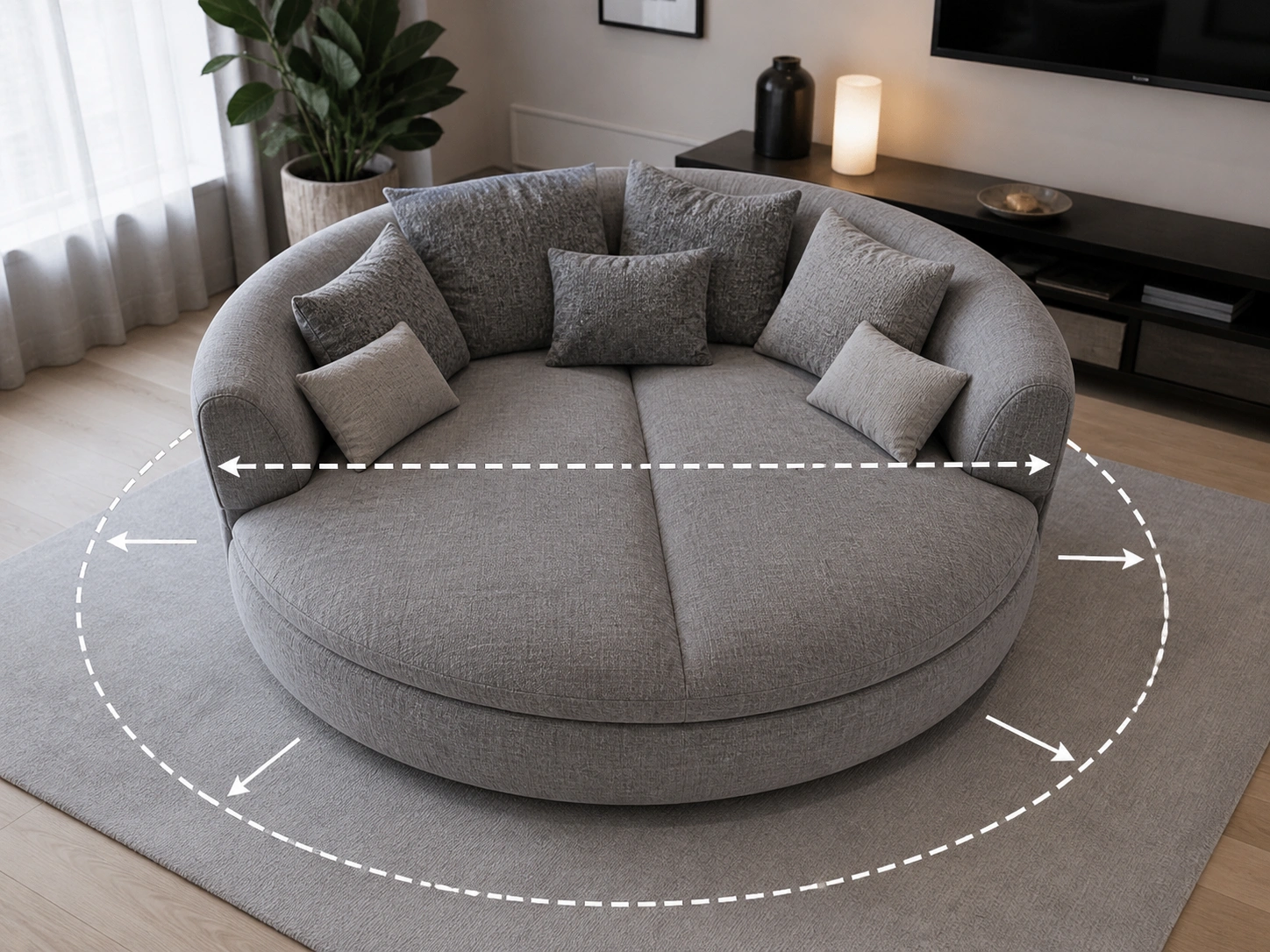
Step 1: Measure the diameter. The diameter is the distance across the widest point of the sofa, measured from the outer edge of one side to the outer edge of the opposite side. For semi-circular sofas, measure the width of the curved front (the chord length) and the depth from the wall to the front edge.
Step 2: Add clearance. You need a minimum of 30 inches (76 cm) of clear floor space around the entire perimeter of a full circular sofa for comfortable walkways. For semi-circular models against a wall, ensure at least 30 inches of clearance on the open sides and front.
Step 3: Calculate total space needed. Add the sofa diameter plus 60 inches (30 inches on each side) to determine the minimum room floor area required. For example, a round sofa with a 90-inch diameter needs at least 150 inches (12.5 feet) of clear space in every direction. For detailed measuring techniques, see our sofa measurement guide.
| Round Sofa Type | Typical Diameter | Minimum Room Size | Seating Capacity |
|---|---|---|---|
| Compact 2-Seater | 50–65 inches | 10 x 10 ft | 2 people |
| Semi-Circular (Medium) | 80–100 inches (width) | 12 x 12 ft | 3–4 people |
| Full Circular (Standard) | 90–110 inches | 14 x 14 ft | 4–6 people |
| Oversized Round | 110–140 inches | 16 x 16 ft+ | 6–8 people |
| Modular Round Sectional | 100–150 inches (assembled) | 15 x 15 ft+ | 5–8 people |
Pay attention to seat depth as well. Round sofas often have deeper seats than standard sofas, which affects how comfortably you can sit with your feet on the floor. If you prefer a firmer, more upright seating posture, look for round sofas with seat depths under 22 inches. For a lounging experience, depths of 24 inches or more are ideal — similar to what you would find in a deep seat sofa.
How to Style a Round Sofa
A round sofa is a bold piece that demands thoughtful styling. If you simply drop it into a room without considering the surrounding elements, it can look out of place. Here are proven styling strategies that make a round sofa feel intentional and cohesive.
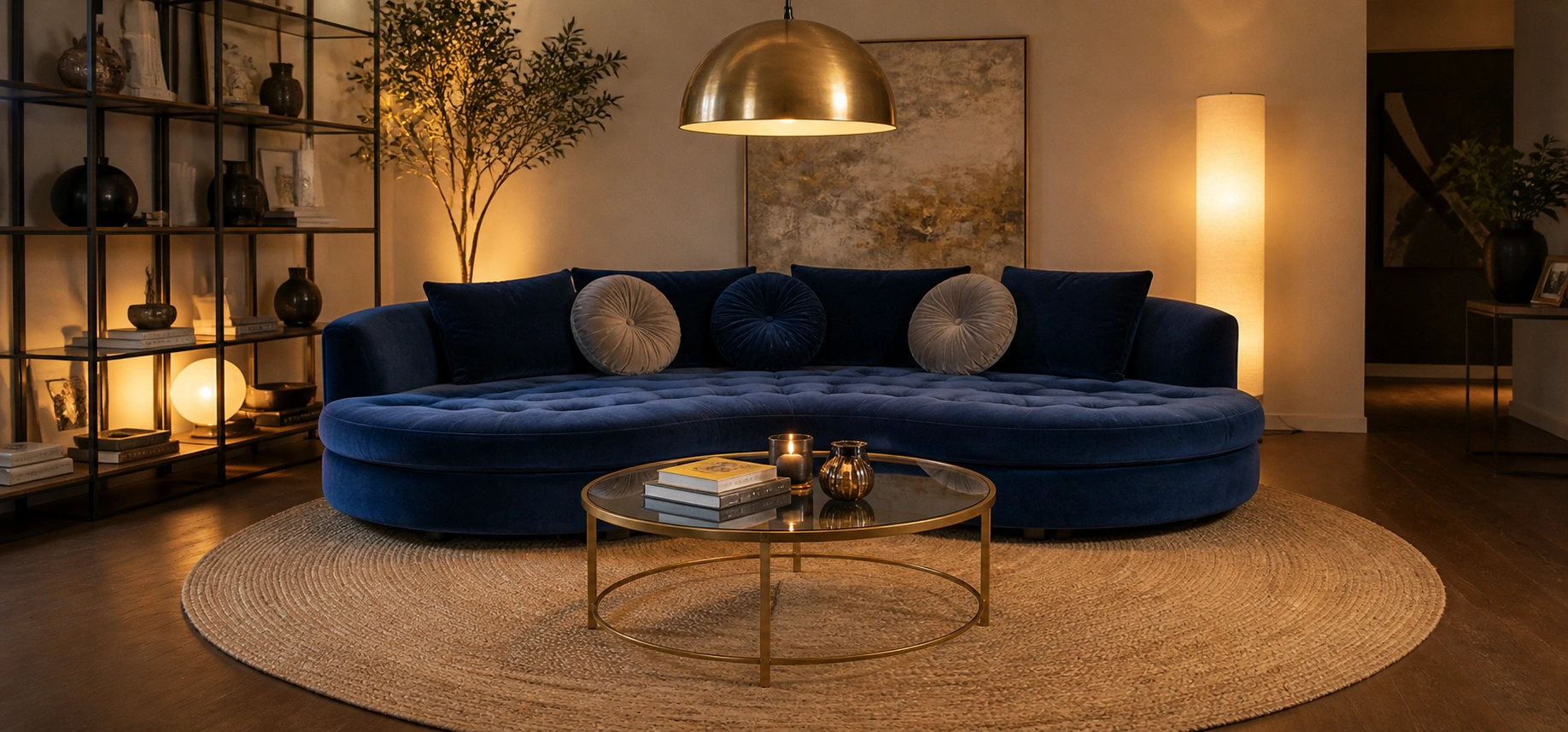
Pair With a Round Coffee Table
Mirroring the circular shape with a round or oval coffee table creates visual harmony. Avoid square or rectangular tables — they clash with the sofa's curves. A glass-top round table keeps the space feeling open.
Use a Large Circular Rug
An oversized round rug underneath anchors the sofa and defines the conversation zone. The rug should extend at least 24 inches beyond the sofa's edge on all sides. For layout tips, see our living room layout guide.
Balance With Angular Elements
Prevent the room from feeling too "soft" by introducing angular pieces — a rectangular bookshelf, geometric art, or a square side table. The contrast between curves and straight lines creates dynamic visual interest.
Choose Bold or Neutral Color Strategically
In bold colors like emerald, navy, or terracotta, a round sofa becomes the undeniable star — keep surrounding furniture neutral. In neutral tones like beige or grey, the shape itself provides the drama, and you can layer color through accessories.
Layer With Curved Accessories
Add throws and pillows in complementary curves — cylindrical cushions, round bolsters, or crescent-shaped pillows. Avoid overly boxy throw pillows that fight the sofa's organic shape.
Light It Properly
A statement chandelier or pendant light centered above the round sofa reinforces the circular theme. Supplement with floor lamps or wall sconces placed symmetrically around the seating area for even, flattering light.
If you are drawn to dramatic, eye-catching round sofas, a velvet round sofa in a jewel tone paired with brass accents and a dark rug creates a luxurious, moody aesthetic. For a lighter, airier feel, a linen or light-fabric round sofa on a cream-colored rug with natural wood accents leans toward coastal or Scandinavian style — explore more in our coastal sofa and bohemian sofa guides.
Maintenance and Care Tips
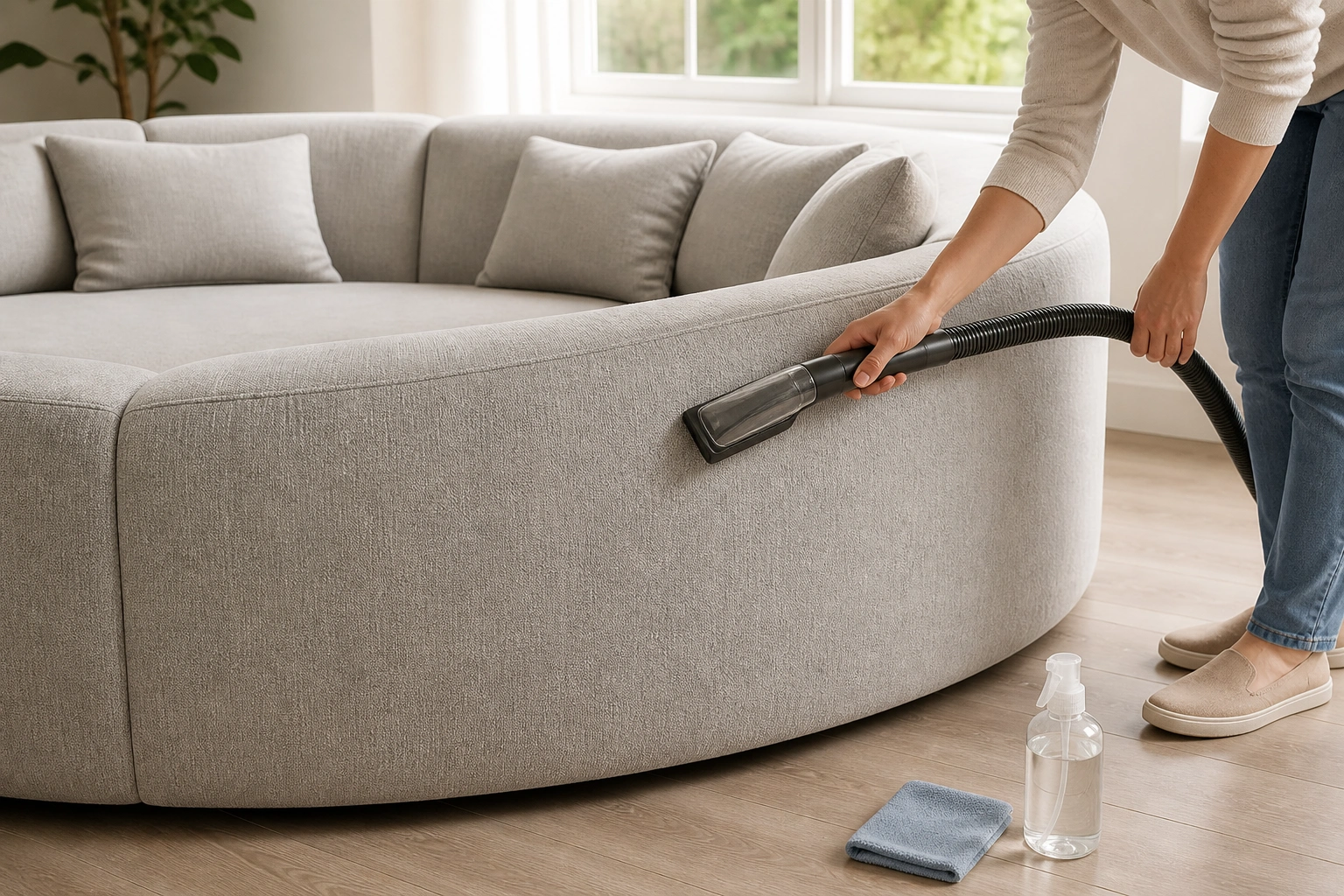
Round sofas present some unique maintenance challenges due to their shape. The curved surfaces can trap dust in crevices that are harder to reach than on a flat sofa, and the complex upholstery work means repairs can be more difficult. Here is how to keep your round sofa in top condition.
Vacuum regularly with the right attachment. Use an upholstery brush attachment and follow the curve of the sofa systematically. Pay extra attention to seams, tufted buttons, and the crevice where the seat meets the back — these areas accumulate dust faster on curved furniture.
Rotate cushions if applicable. If your round sofa has removable seat or back cushions, rotate them weekly to ensure even wear. This is especially important for round sofas because certain seats may get more traffic depending on the room's traffic flow pattern.
Treat stains immediately. The curved shape means liquids can pool in low spots instead of running off. Blot spills immediately with a clean cloth — do not rub, as this can push the liquid deeper into curved crevices. For fabric sofas, follow our stain removal guide. For leather, use our leather conditioning routine to prevent cracking on curved surfaces where the material stretches most.
Use protection. Apply a fabric protection spray after purchase and reapply as directed. If you have pets, consider a sofa cover designed for curved furniture — standard rectangular covers will not fit properly on a round frame.
Address structural issues promptly. If you notice sagging cushions, a wobbly base, or squeaking, address it early. Round sofa frames experience different stress patterns than linear frames due to the distributed weight around the curve. Refer to our guides on fixing sagging cushions and repairing sofa frames for detailed instructions.
Round Sofa Buying Checklist
Use this checklist before making your purchase. Each item addresses a critical factor that, if overlooked, can lead to buyer's remorse. For a comprehensive sofa-buying framework, our how to choose a sofa guide covers additional universal considerations.
✅ Pre-Purchase Verification
- Measured the room and confirmed the round sofa diameter plus 30-inch clearance fits comfortably
- Taped out the sofa footprint on the floor to visualize scale and walkability
- Verified doorways, hallways, and staircases can accommodate delivery (round sofas may need angled entry)
- Determined whether a full circular or semi-circular shape better suits the room layout
- Confirmed the seating capacity meets your household's typical usage
- Selected a material appropriate for your lifestyle (pets, children, frequency of use)
- Checked the frame material — hardwood frames like kiln-dried oak or maple offer the best durability for curved construction
- Evaluated cushion fill type — high-resilience foam with a down wrap offers the best balance of support and softness
- Sat on the sofa (or a similar model) to test comfort level — curved seats feel different from flat seats
- Reviewed the return policy and delivery options — round sofas are difficult and expensive to return
- Compared prices across at least 3-4 retailers using our sofa budget guide to ensure fair pricing
- Read customer reviews specifically mentioning the round shape — look for feedback on comfort, durability, and real-world sizing
Frequently Asked Questions
A round sofa is a seating piece with a circular or semi-circular shape that breaks away from the traditional linear sofa design. It can range from a compact two-seater circle to a large modular sectional that forms a complete ring, offering 360-degree or wraparound seating.
Round sofas can work in small rooms if you choose a compact semi-circular or two-seater round design. However, full circular and oversized round sectionals require significant floor space. Measure your room carefully and leave at least 30 inches of clearance around the sofa for walkways. For small rooms, explore our small space sofa guide for alternatives.
A round sofa forms a complete or near-complete circle, while a curved sofa has a gentle arc or crescent shape without closing the loop. Curved sofas are more versatile for linear room layouts, whereas round sofas create a defined focal point and conversation hub.
Round sofas range from around $300 for small budget-friendly models to $5,000 or more for large luxury round sectionals. Mid-range options with quality upholstery typically fall between $800 and $2,500 depending on size, material, and brand. For budget planning, our sofa price breakdown helps you understand where your money goes.
Velvet is the most popular choice for round sofas due to its luxurious look and ability to highlight the curved shape. Leather offers durability and easy cleaning. Performance fabrics like microfiber are practical for families with children or pets. Linen works well for a casual, breathable feel. For fabric durability ratings, check the Martindale test scores.
Semi-circular round sofas can be placed against a wall, functioning like a traditional sofa with a curved front edge. Fully circular sofas are designed to be freestanding centerpieces and work best positioned away from walls to showcase their shape and allow access from all sides.
It depends on the design. Oversized round sofas with deep seats can be surprisingly comfortable for napping since the curved shape wraps around you. However, they are not as practical as a dedicated sleeper sofa or a futon sofa for overnight guests. If napping is a priority, look for round sofas with removable back cushions and seat depths over 24 inches.
Measure your doorway width and height, then compare to the sofa's smallest dimension. For full circular sofas, the diameter is the critical measurement. Some round sofas have removable legs or modular construction that helps with delivery. Always ask the retailer about disassembly options before purchasing. Our measurement guide covers delivery clearance in detail.
Now that you understand the types, materials, sizing, and styling of round sofas, browse our curated recommendations below. Each selection has been chosen for quality, value, and real customer satisfaction.