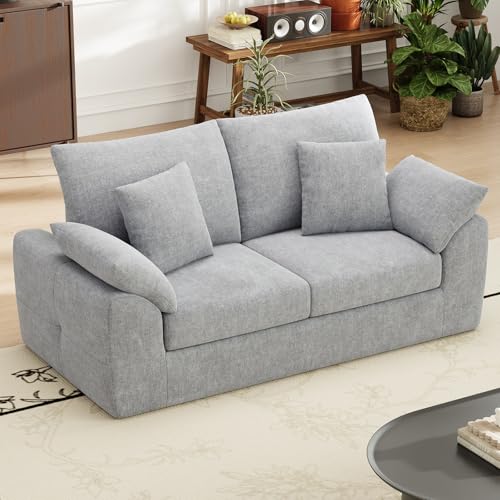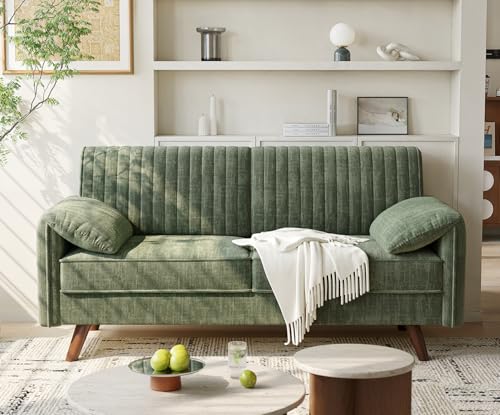
Best Sofas for Small Rooms: Maximize Comfort Without Sacrificing Space
The complete guide to choosing, measuring, and placing the perfect sofa for apartments, studios, and compact living rooms.
SEE TOP PICKSFurnishing a small room presents a unique challenge: you need a sofa that provides comfortable seating, fits your lifestyle, and doesn't overwhelm the limited floor space. Choosing the wrong piece can make an already compact room feel cramped and claustrophobic, while the right sofa can actually make a small room feel larger and more functional.
Whether you're outfitting a studio apartment, a cozy living room, or a multipurpose guest space, understanding how sofa dimensions, styles, and placement interact with your room's proportions is essential. This guide walks you through every consideration — from precise measurement techniques and how to measure a sofa properly, to the best types and configurations that are proven to work in tight quarters.
The goal isn't simply to find the smallest sofa available. It's to find the smartest sofa — one that balances proportion, function, and visual lightness to create a space that feels open and intentional rather than crowded.
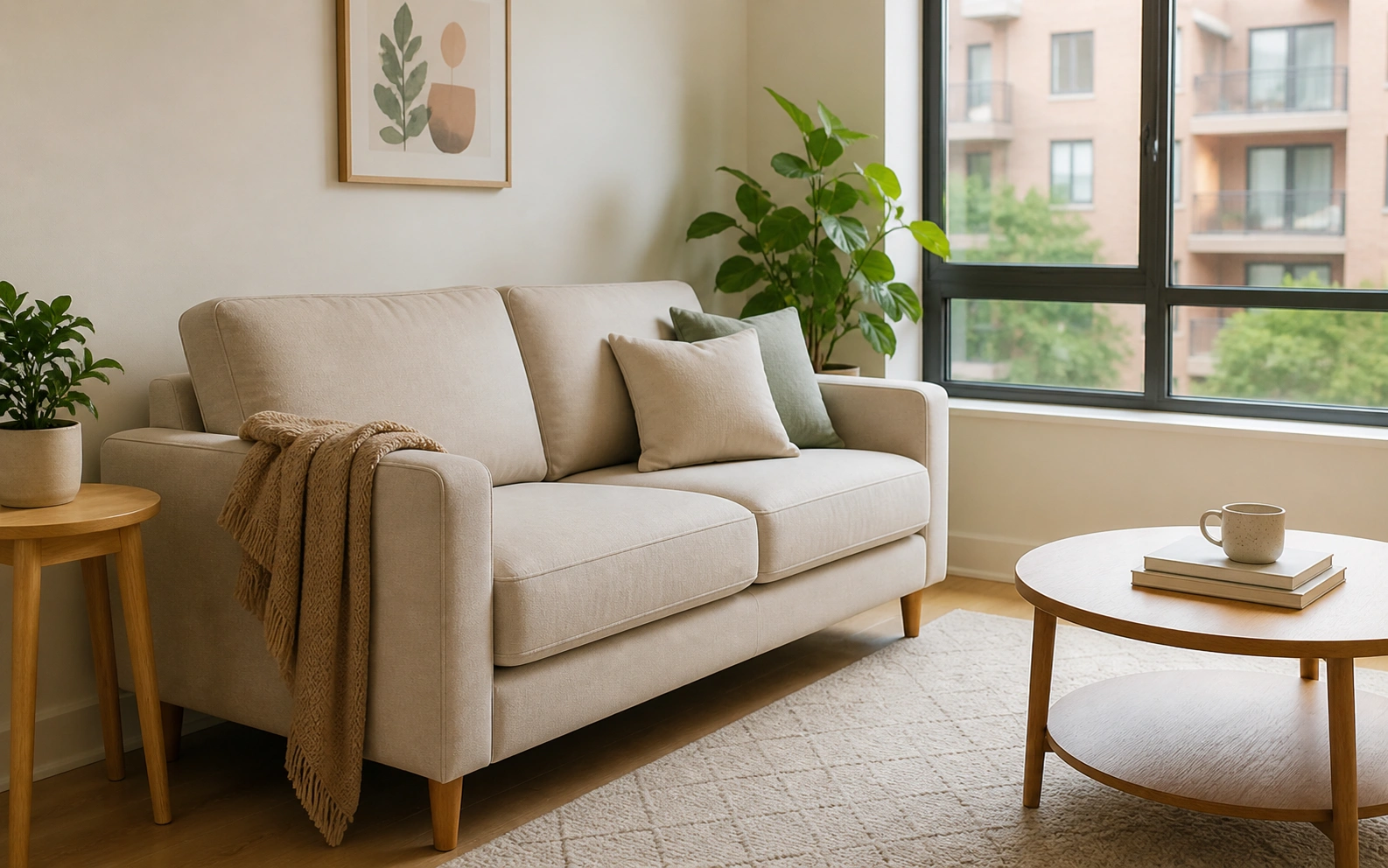
PhanMarket Tip: The most common mistake when buying a sofa for a small room is guessing the dimensions. Always measure your space first — including doorways, hallways, and elevator dimensions for delivery — before you start browsing. Our sofa size and room guide provides a detailed framework for getting this right.
Understanding Room Proportions for Sofa Selection
Before diving into sofa types, it's critical to understand the relationship between your room's dimensions and the sofa that will occupy it. A sofa that works in a 200-square-foot studio won't necessarily work in a 200-square-foot bedroom converted to a living space, because ceiling height, window placement, and traffic flow all play a role.
The Two-Thirds Rule
Interior designers widely recommend the two-thirds rule: your sofa should occupy approximately two-thirds of the wall length it sits against. If your longest wall is 120 inches, your sofa should be around 80 inches wide. For very small rooms where this ratio would result in an oversized piece, adjust down to roughly three-quarters of the wall length and compensate with visually lighter design choices.
This rule exists because a sofa that's too short looks lost and makes the room feel unanchored, while one that's too long creates a cramped, tunnel-like feeling. Getting this balance right is the single most impactful decision you'll make for your small room. If you're unsure where to start, our guide on what sofa size fits your room breaks this down by room square footage.
Clearance Requirements: The 30-Inch Minimum
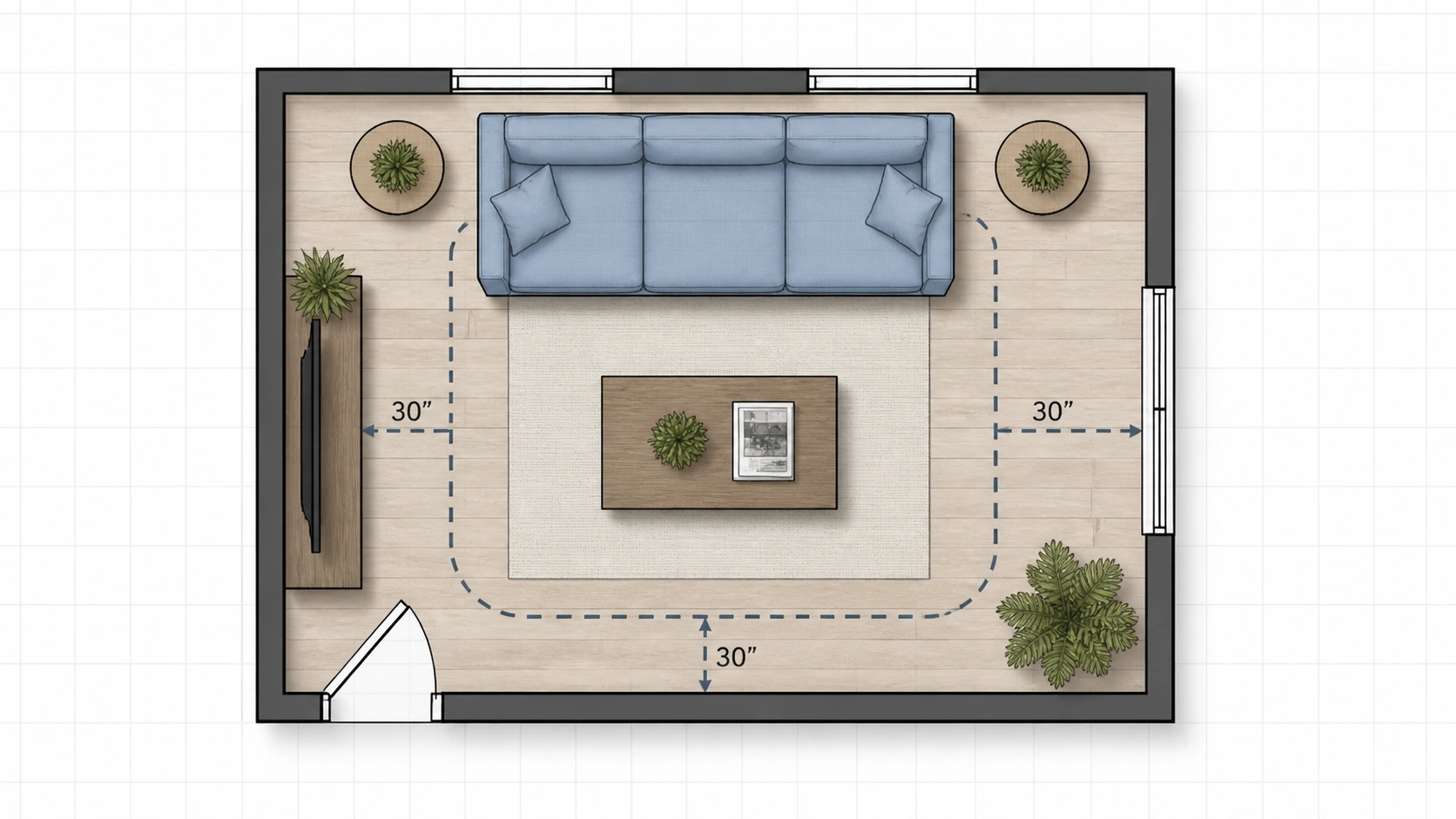
Regardless of your sofa's size, you must maintain at least 30 inches of clear walking space around the main traffic paths. This isn't a design preference — it's a safety and livability requirement. In narrow rooms, this often means choosing a shallower sofa (less than 35 inches deep) to preserve walkway width without sacrificing the sofa's seating area.
Room Size to Sofa Size Reference Table
| Room Size (sq ft) | Recommended Sofa Width | Ideal Sofa Depth | Best Sofa Types |
|---|---|---|---|
| Under 100 | 52–60 inches | 30–33 inches | Loveseat, 1-seater |
| 100–150 | 60–72 inches | 32–36 inches | 2-seater, apartment sofa |
| 150–200 | 72–84 inches | 33–38 inches | Compact 3-seater, small sectional |
| 200–250 | 80–90 inches | 35–40 inches | 3-seater, L-shaped sectional |
Best Sofa Types for Small Rooms
Not every sofa category works well in compact spaces. The following types have specific design characteristics — lower profiles, shallower depths, exposed legs, or modular flexibility — that make them particularly suited for small rooms. Here's a detailed look at each option and when to choose it.
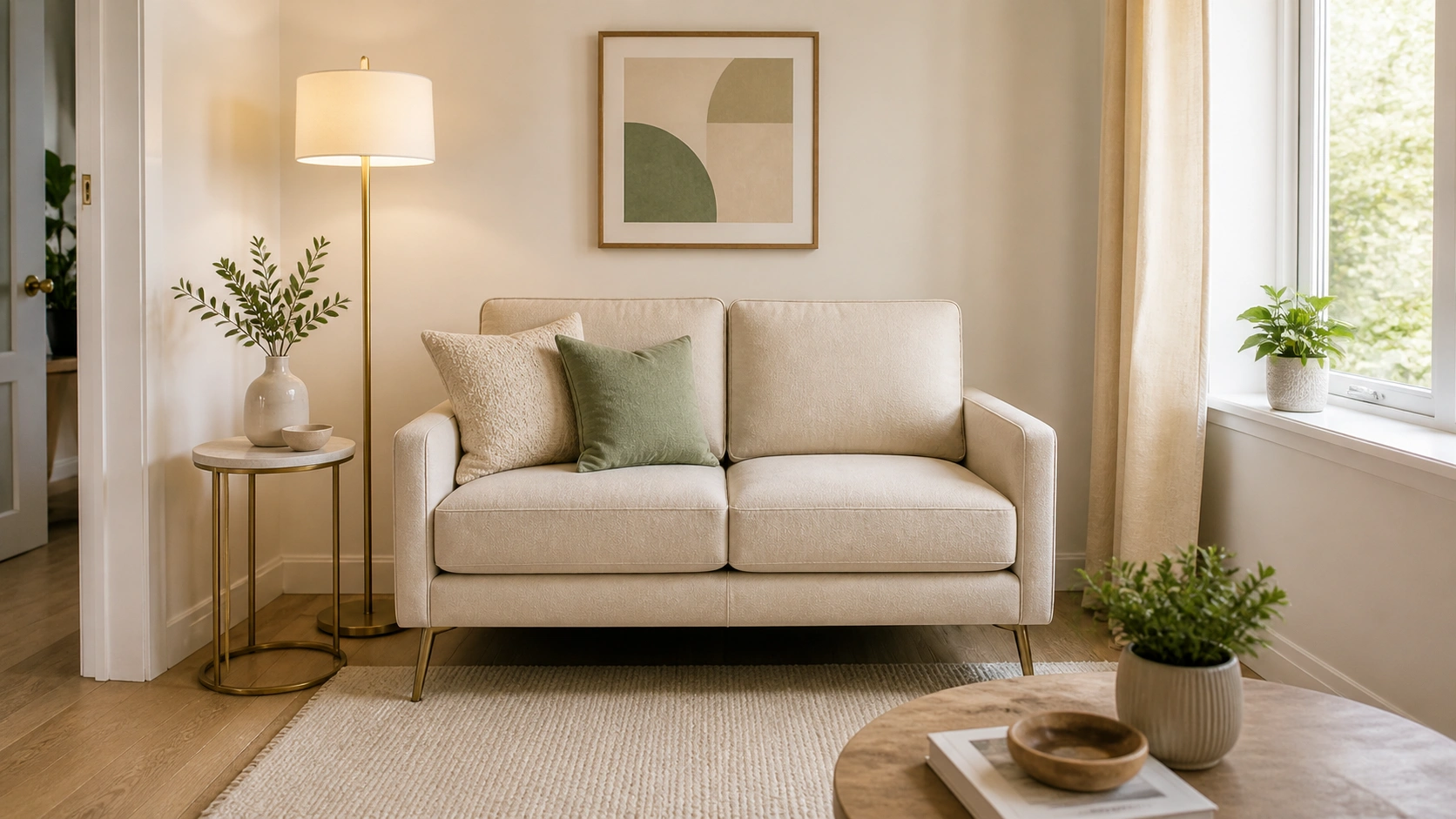
Loveseats (52–60 inches)
The most straightforward solution for tight spaces. Loveseats provide comfortable two-person seating with a compact footprint. They work exceptionally well in studios, reading nooks, and as secondary seating in larger rooms. Look for models with exposed legs to maintain an airy feel.
Explore Loveseats →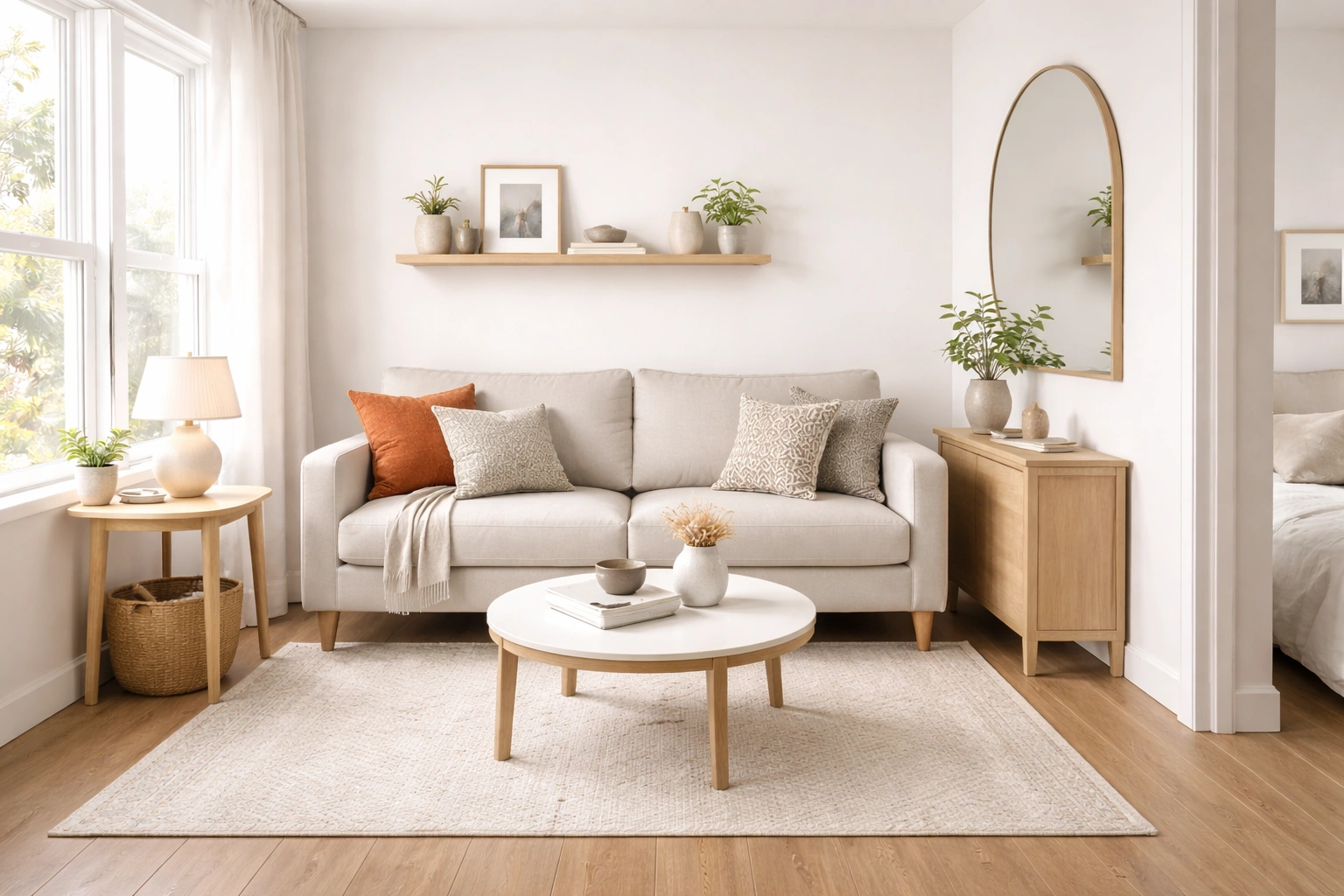
Apartment Sofas (68–75 inches)
Designed specifically for smaller spaces, apartment sofas offer the feel of a full sofa scaled down. They typically feature a shallower seat depth (under 35 inches) and a lower back height. This is often the sweet spot between the loveseat and standard sofa for rooms in the 100–150 sq ft range.
Explore Apartment Sofas →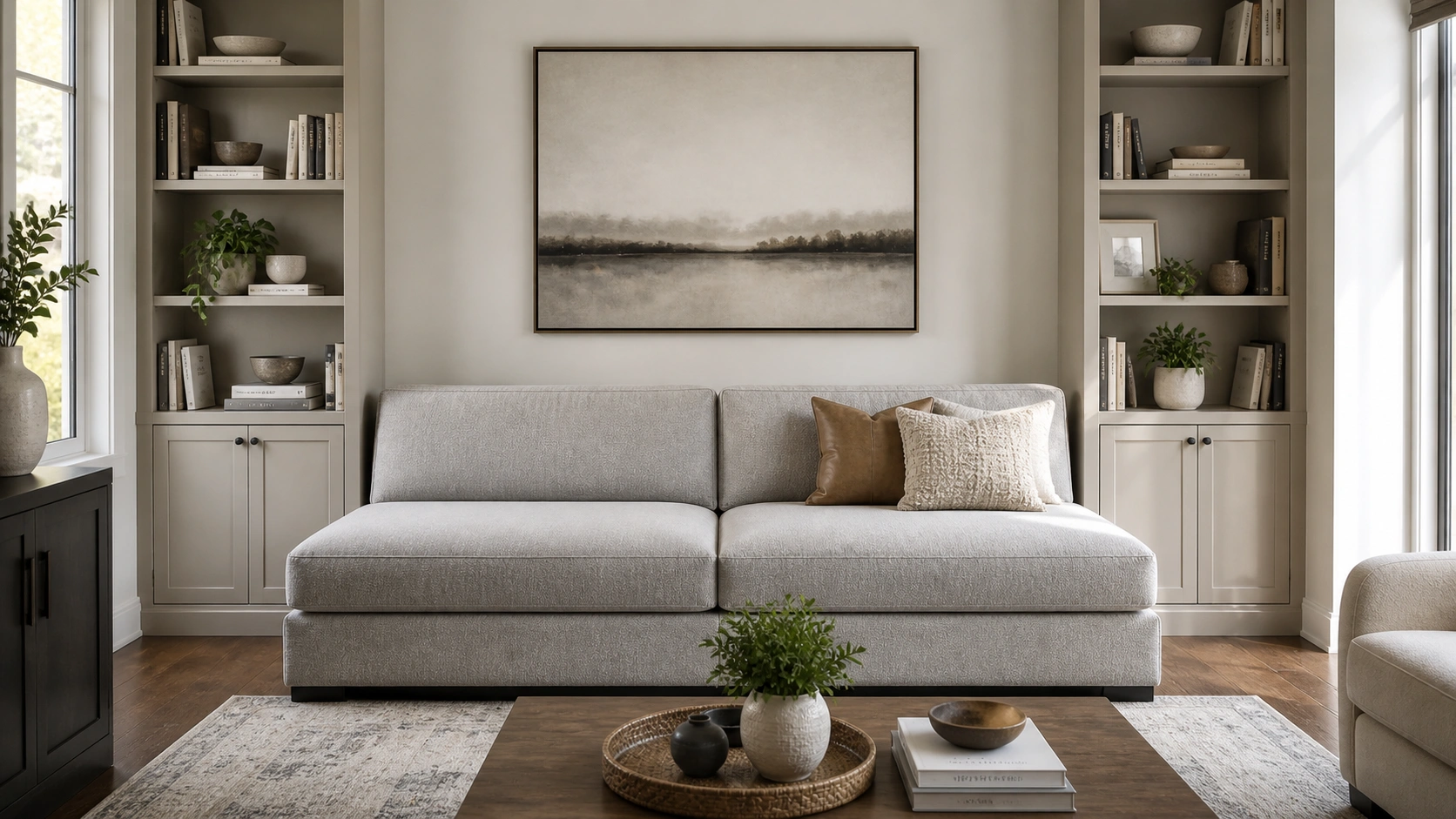
Armless Sofas
Removing arms saves 6–10 inches of total width compared to armed models. This can be the difference between a sofa that fits and one that doesn't in a narrow room. Armless designs also create cleaner sight lines, making the room feel less boxed in. Consider the pros and cons of armless sofas before committing.
Explore Armless Sofas →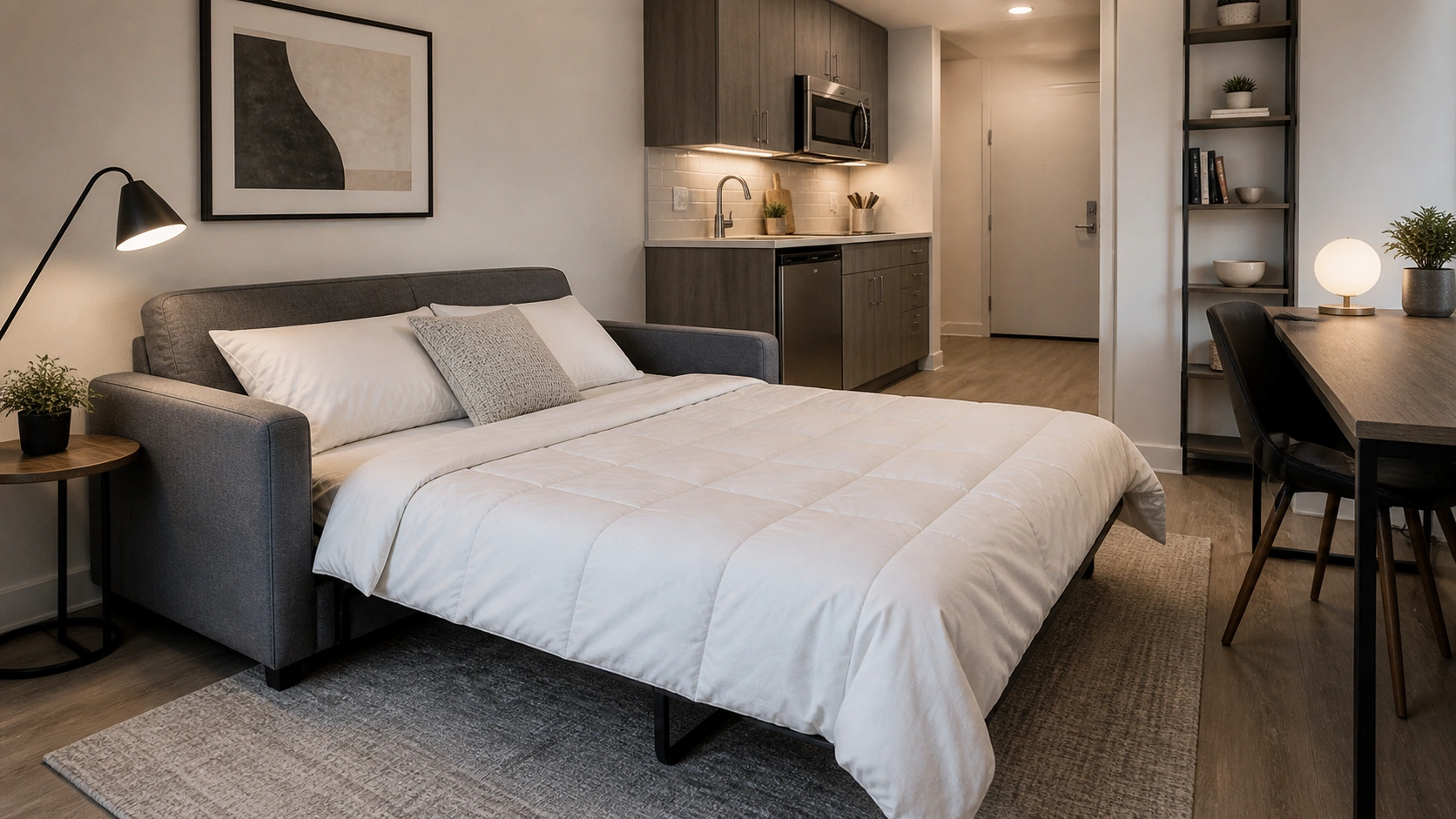
Sleeper Sofas
For rooms that double as guest spaces, a sleeper sofa eliminates the need for a separate guest bed. Modern designs are significantly thinner than older models, but always account for the additional depth when the bed is unfolded. Measure the fully opened dimensions against your available floor space.
Explore Sleeper Sofas →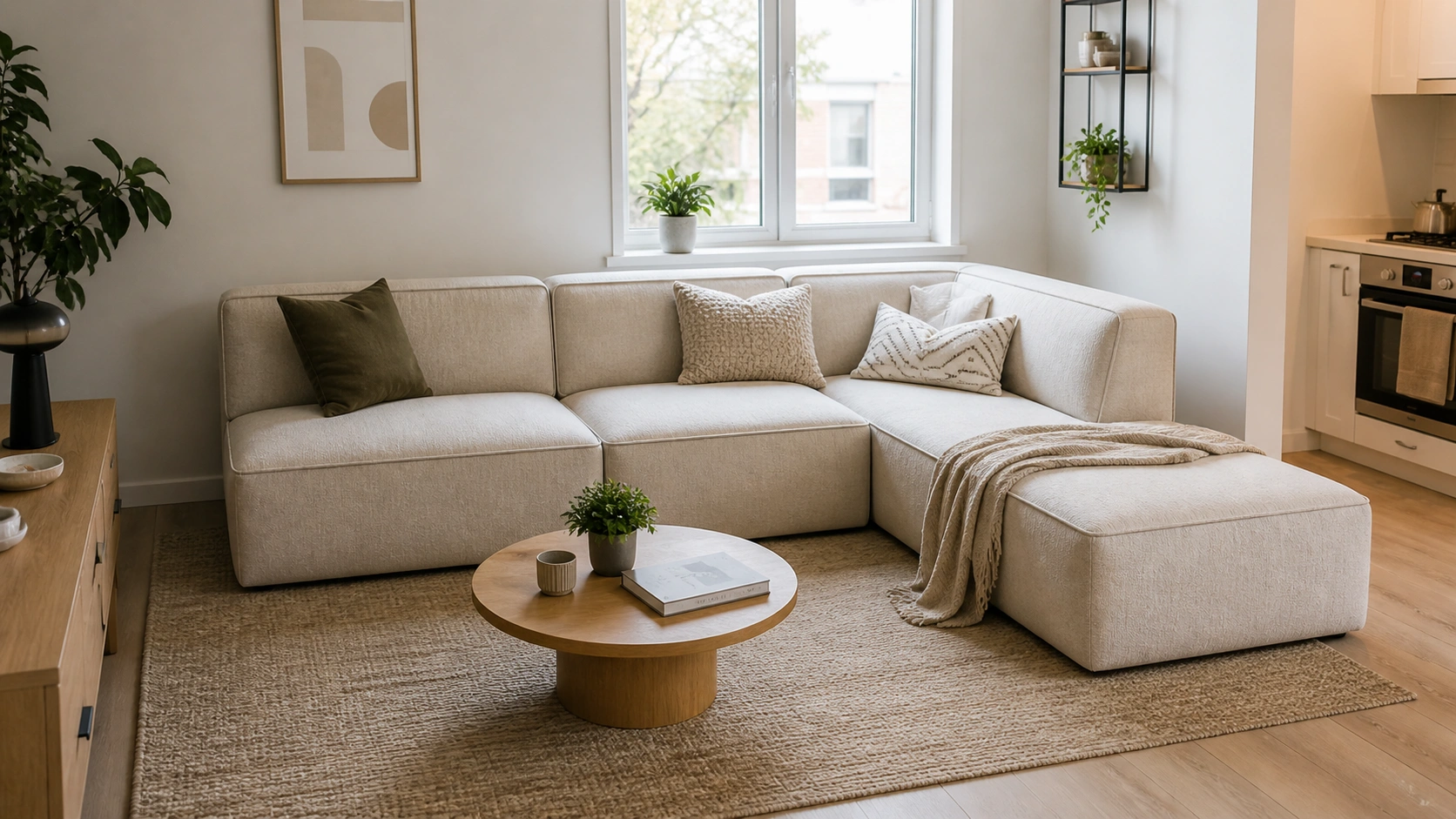
Modular Sofas
A modular sofa lets you start with fewer pieces and add modules as your space or needs change. Start with two seats and a corner piece, then reconfigure or expand later. This adaptability makes modular designs ideal for renters and people who move frequently.
Explore Modular Sofas →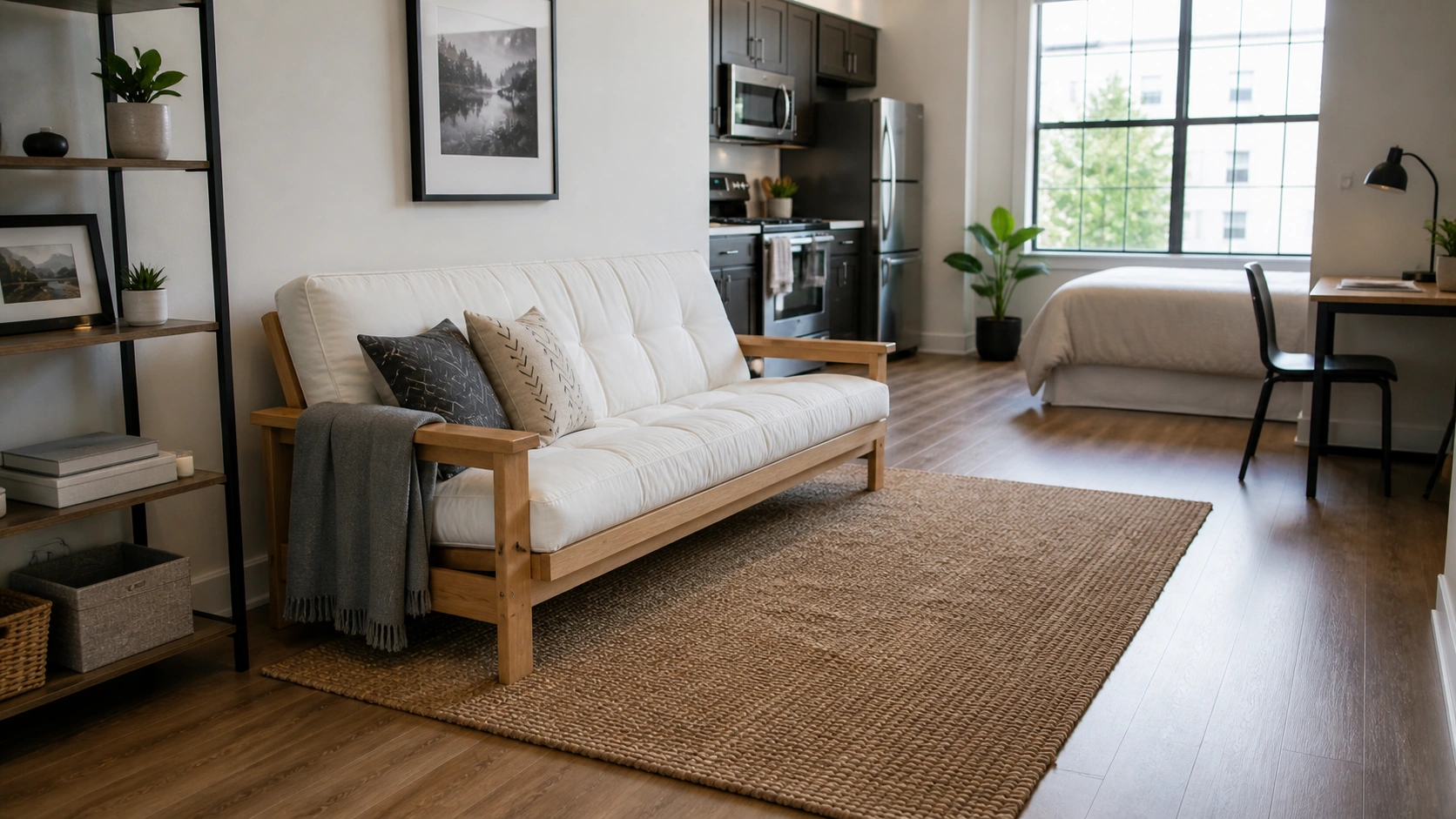
Futon Sofas
The most space-efficient convertible option. A futon sofa serves as seating during the day and a full bed at night without the bulky mechanism of a sleeper sofa. They're particularly popular in studios and dorm rooms where every inch counts.
Explore Futon Sofas →Design Choices That Make Small Rooms Feel Larger
Beyond choosing the right sofa type, specific design decisions can dramatically affect how spacious your room feels. The following strategies are backed by interior design principles and work together to create a sense of openness even in the tightest spaces.
1. Choose Light, Neutral Colors
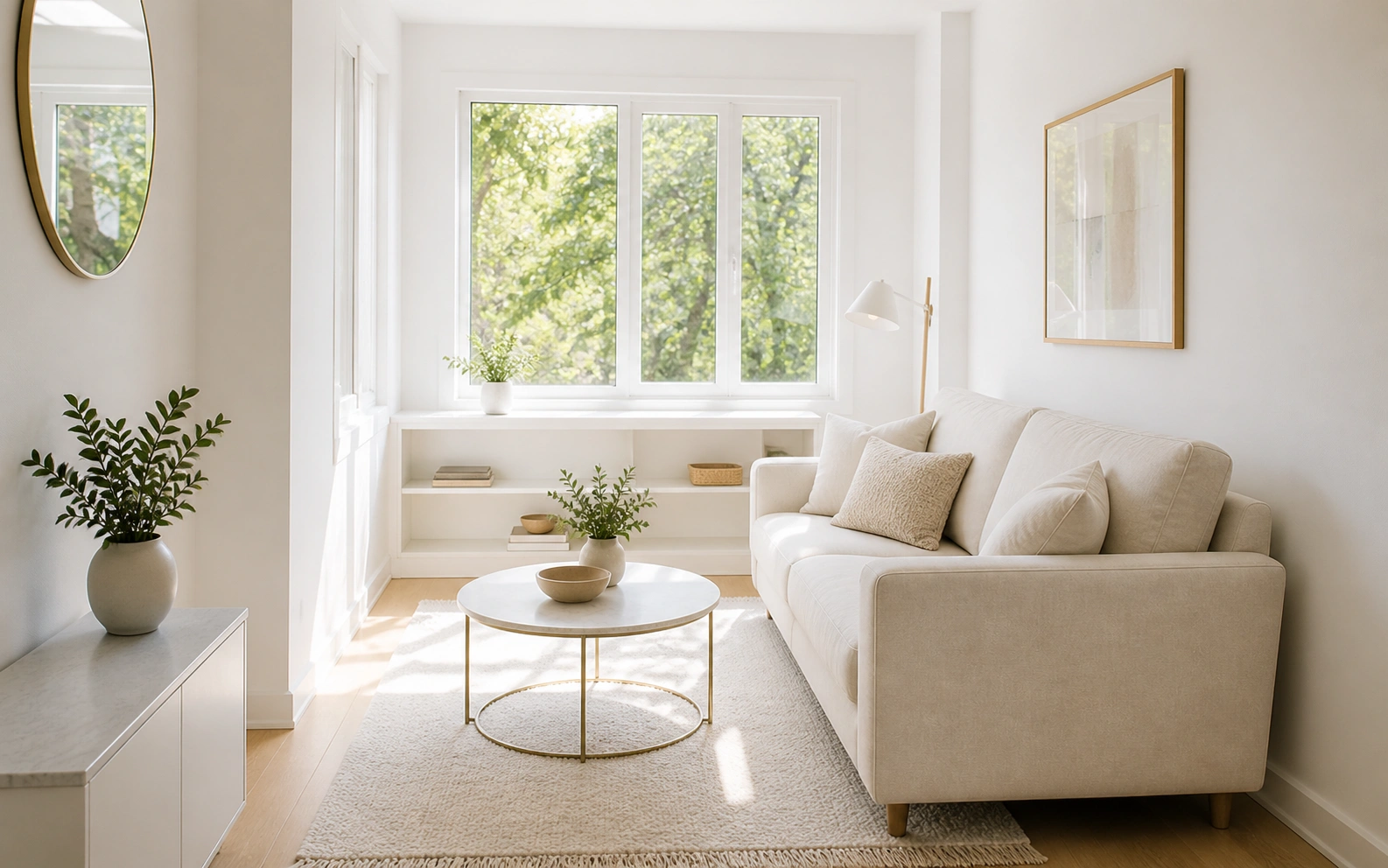
Light-colored sofas in cream, beige, light gray, or white reflect more light and create less visual weight than dark options. For maximum impact, choose a neutral-toned sofa that closely matches your wall color. This creates a seamless visual blend that makes the sofa appear to recede into the room rather than dominate it. If you prefer color, use it in accessories like throw pillows rather than the sofa itself.
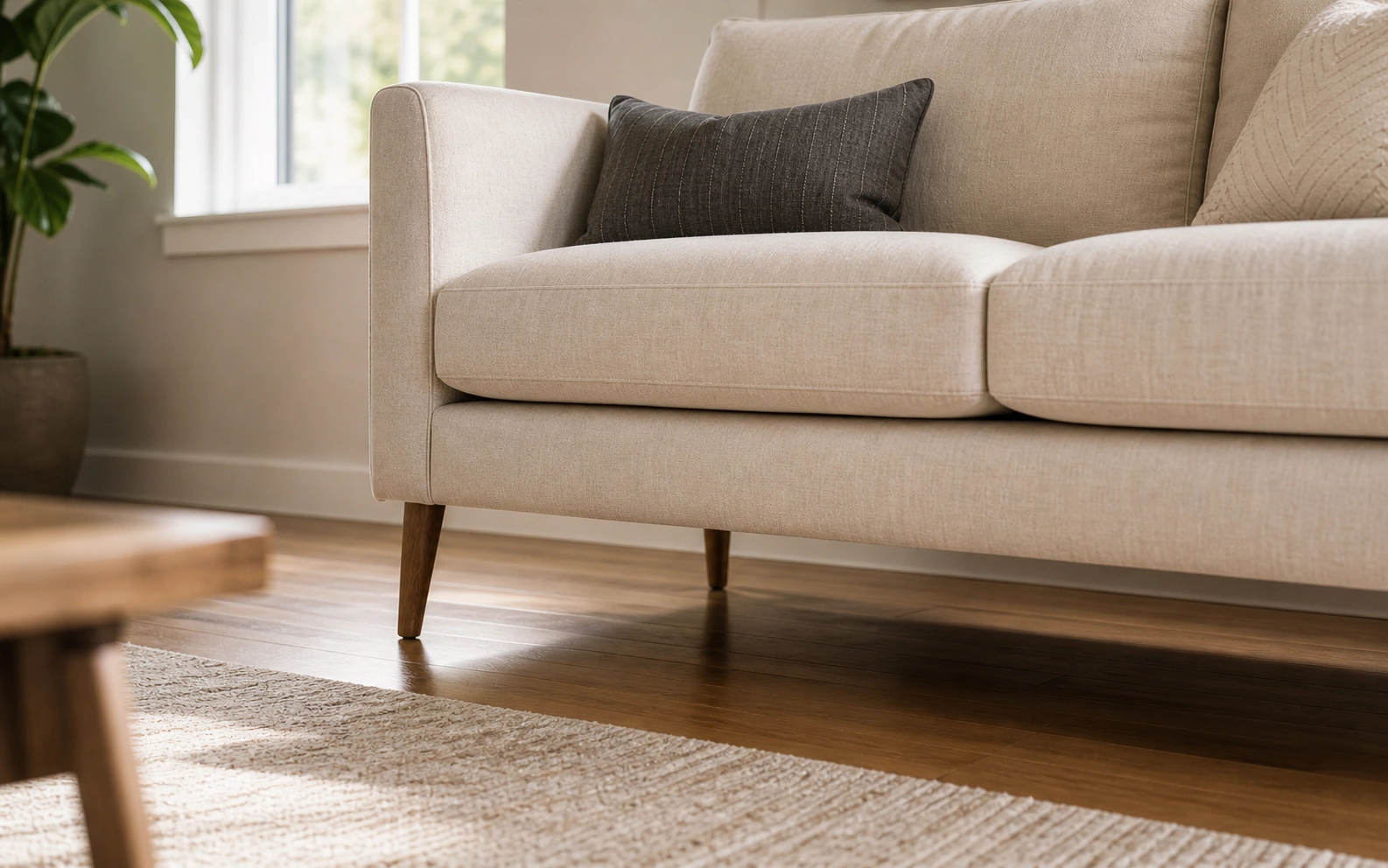
2. Prioritize Exposed Legs
Sofas with a skirt or base that sits directly on the floor create a heavy, blocky appearance and cut off the visual flow of the floor. Sofas with exposed legs — even just 4–6 inches of clearance — allow light and air to pass underneath, making the room feel significantly more open. Tapered or slim metal legs create the lightest visual effect, while chunky wooden legs add warmth without excessive heaviness.
3. Opt for Low-Profile Backs
A high-back sofa can visually lower your ceiling height, making the room feel smaller. Choosing a low-back sofa (under 30 inches from seat to top) preserves the sense of vertical space. In rooms with standard 8-foot ceilings, this difference is particularly noticeable. Track arms and thin arm profiles also contribute to a lighter overall silhouette compared to rolled or pillow arms.
4. Select Slim or Track Arms
Arm style affects both actual dimensions and perceived bulk. Track arms (thin, straight, and squared-off) are the most space-efficient, typically adding only 3–4 inches per side. Rolled arms can add 6–10 inches per side — that's up to 20 inches of total width you might not have to spare. If you love the look of plush arms but need to save space, consider a sofa with narrow pillow arms.
5. Consider Seat Depth Carefully
A deep seat sofa (over 40 inches) may feel luxurious, but it extends the sofa further into the room, eating into your walking space. For small rooms, a standard seat depth of 33–38 inches is ideal. Our sofa seat depth guide explains how to find the right balance between comfort and spatial efficiency based on your height and sitting preferences.
Strategic Layout Tips for Small Rooms
Where you place your sofa matters as much as which sofa you choose. The right layout can transform a cramped room into a functional, flowing space. Here are proven placement strategies for small rooms, drawn from professional living room layout principles.
Float the Sofa Away from Walls
Counterintuitively, pulling your sofa even 6–12 inches away from the wall can make a small room feel larger. This creates a sense of depth behind the sofa and prevents the "pressed against the wall" look that signals cramped space. This works best when the sofa back is visually low.
Use Corners with L-Shaped Designs
An L-shaped sectional sofa can be more space-efficient than a standard sofa plus armchair combination, because it consolidates seating along two walls. The key is choosing a compact sectional with a narrow chaise (under 50 inches) that doesn't protrude too far into the room.
Align with Architectural Features
Position your sofa parallel to the longest wall or aligned with windows rather than cutting across the room diagonally. Diagonal placement wastes corner space and disrupts traffic flow. In rooms with a focal point like a window or fireplace, face the sofa toward it while maintaining clear walkways behind.
Leave the Entry Path Clear
The sofa should never block the natural entry path into the room. Place it perpendicular to or alongside the doorway rather than directly in front of it. This creates an inviting transition and prevents the room from feeling closed off the moment you walk in.
📐 Pre-Purchase Measurement Checklist
- Measure the wall where the sofa will sit (length and any obstructions like vents or outlets)
- Measure the room's width to calculate walking space on the opposite side
- Check all doorways, hallways, and elevator dimensions for delivery clearance
- Account for other furniture pieces — coffee table needs 12–18 inches from the sofa edge
- Note window heights and radiators that could interfere with sofa placement
- Verify the sofa's total depth including any reclining or pull-out mechanisms
Multi-Functional Sofas for Small Spaces
When floor space is at a premium, every piece of furniture should earn its place by serving more than one purpose. Multi-functional sofas eliminate the need for additional furniture, effectively freeing up square footage for other uses. Here are the most practical options worth considering.
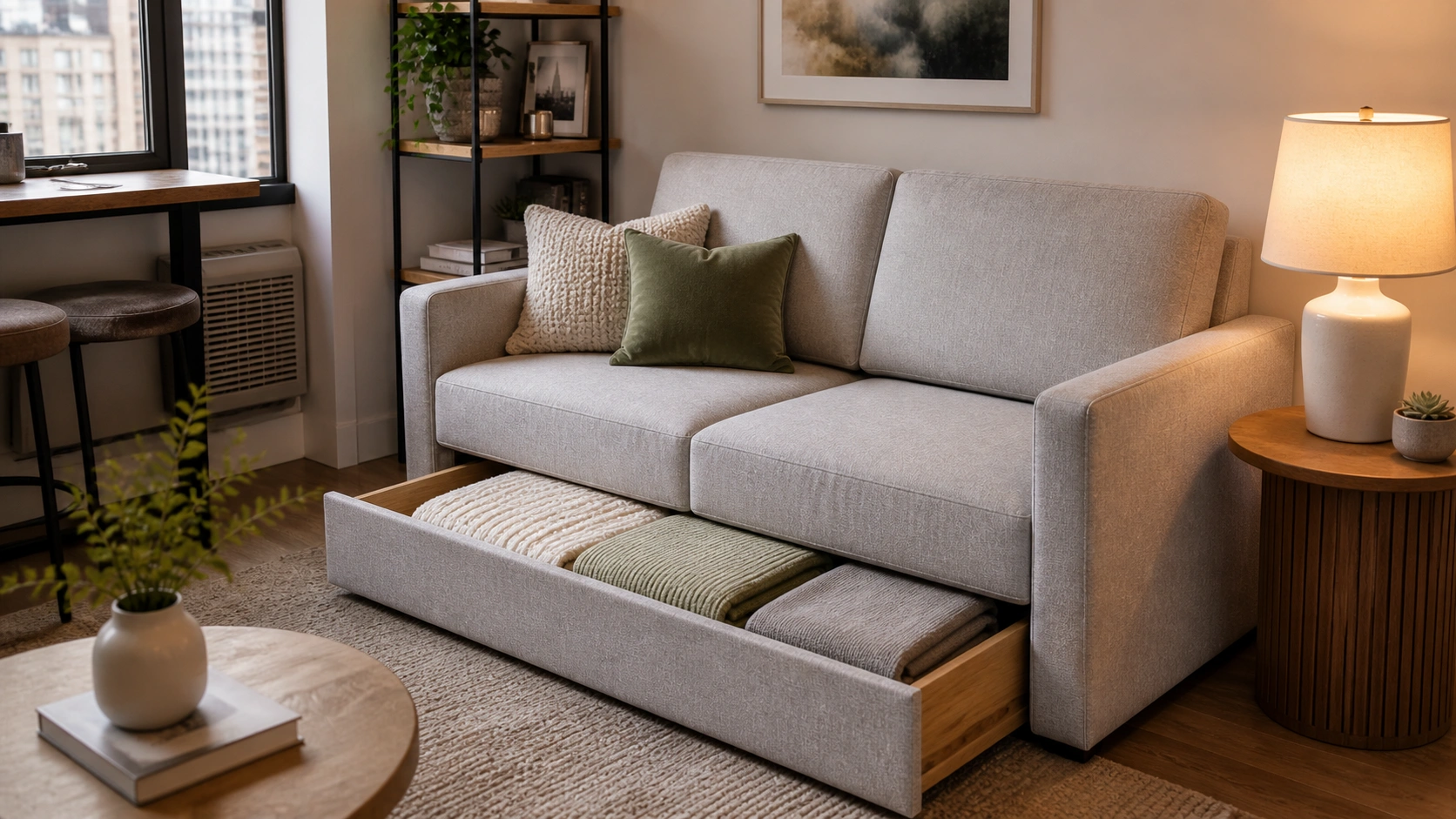
Sofas with Built-In Storage
A sofa with storage eliminates the need for a separate ottoman, trunk, or shelving unit. Storage compartments beneath the seat cushions can hold extra blankets, pillows, board games, or seasonal items. This is particularly valuable in studio apartments where closet space is limited. Look for lift-up seat mechanisms or pull-out drawers — both work well depending on how frequently you need to access the stored items.
Sleeper Sofas and Sofa Beds
For rooms that serve as both a living area and guest space, a sleeper sofa is the most efficient dual-purpose solution. Modern sleeper sofas have come a long way — many now feature memory foam mattresses, easy-lift mechanisms, and slim profiles that look like regular sofas during the day. For even tighter spaces, a sofa wallbed system combines a fold-down bed with a sofa, though these require professional installation and a higher budget.
Sofas with Removable or Reversible Components
A sofa with an ottoman that doubles as a footrest, extra seat, or occasional table offers three functions in one piece. Modular sofas take this further by allowing you to reconfigure the layout as needed — spread out for a movie night, compact for a work-from-home setup, or separate into individual chairs for a gathering. This flexibility is unmatched by fixed-frame designs.
Common Mistakes When Choosing a Sofa for a Small Room
After helping thousands of homeowners navigate small-space sofa selection, these are the most frequent — and most costly — mistakes we see. Avoiding them will save you money, frustration, and the hassle of returning a sofa that doesn't fit.
- Buying without measuring the delivery path. A sofa that fits your room is useless if it can't get through your doorway, up narrow stairs, or into a small elevator. Always measure the full delivery route, including any turns, before purchasing.
- Choosing a sofa that's too small. An undersized sofa looks awkward and fails to anchor the room, making the space feel incomplete rather than open. Refer to the two-thirds rule and err on the side of slightly larger rather than too small.
- Selecting a dark, bulky sofa with a skirt. Dark colors absorb light, heavy fabrics add visual weight, and skirts block the floor line — all of which make a small room feel smaller. Prioritize light colors, slim profiles, and exposed legs.
- Ignoring seat depth for your body type. A shallow seat may save space but becomes uncomfortable if you're tall. Balance spatial efficiency with personal comfort by checking the how to test sofa comfort guidelines before buying.
- Overcrowding with too much furniture. Pairing a small sofa with a large coffee table, bookshelf, and armchair defeats the purpose. Keep accompanying pieces minimal — a slim coffee table or nested tables are usually sufficient.
- Forgetting about the fully-opened dimensions. Reclining sofas and sleeper sofas require significantly more space when extended. Always check the recliner sofa or sleeper's open dimensions against your room measurements.
Frequently Asked Questions
For a small living room under 150 square feet, a 2-seater sofa (60–72 inches wide) or a compact loveseat (52–60 inches) is ideal. The sofa should leave at least 30 inches of walking space around it and not extend beyond two-thirds of the longest wall. Our detailed sofa size guide provides recommendations based on exact room dimensions.
A small-scale sectional or a modular sofa can work well in a small room if chosen carefully. L-shaped sectionals with a compact chaise can actually maximize seating while fitting into corners that would otherwise be wasted space. Avoid U-shaped sectionals in tight spaces, and always verify that the chaise extension doesn't block walkways. Compare the pros and cons in our sectional vs traditional sofa guide.
Light neutral colors such as cream, beige, light gray, and white make a small room feel more open and airy. These colors reflect light and create a seamless visual flow. Matching the sofa color to your wall color can create an especially expansive effect. Explore neutral sofa options and learn how bold-colored sofas can work in small spaces when used strategically with accessories.
Yes, an undersized sofa can look out of proportion and make a room feel unbalanced, similar to wearing shoes that are too small — technically functional but visually wrong. Even in a small room, the sofa should be substantial enough to anchor the space. Aim for a sofa that fills about two-thirds of the wall it sits against, as explained in our size and room guide.
Armless sofas can save 6–10 inches of horizontal space compared to armed sofas, making them a practical choice for narrow rooms. They also create a cleaner, more open visual line. However, they sacrifice some comfort for lounging and arm support. Review the full pros and cons of sofas without arms to decide if the trade-off works for your lifestyle.
Performance fabrics like microfiber, polyester blends, and crypton are the most durable options for apartment living. They resist stains, hold up to frequent use, and are easy to clean — all important in compact spaces where the sofa often serves multiple purposes. Learn more about the most durable sofa fabrics and check the Martindale abrasion test ratings when comparing options.
A quality small room sofa typically costs between $300 and $1,500 depending on materials, construction, and features. Budget options under $500 can work well for occasional use, while investing $800–1,500 gets you better frame construction, higher-density foam, and more durable upholstery. See our sofa budget guide and explore budget-friendly sofa recommendations that don't sacrifice quality.
Final Thoughts: Smart Choices Beat Small Choices
The key takeaway is that furnishing a small room isn't about finding the tiniest sofa available — it's about making intentional choices at every level: the right dimensions for your specific room, a visually light design that preserves the sense of space, a layout that maximizes flow, and features that serve multiple purposes. When all these elements align, even the most compact room can feel comfortable, functional, and stylish.
Take the time to measure carefully, understand your priorities (seating capacity vs. lounging comfort vs. guest sleeping), and choose a sofa that addresses your specific needs. The complete guide on how to choose a sofa provides a step-by-step decision framework that complements the small-space strategies covered here.
And remember: a well-chosen small sofa will outperform a poorly-chosen large one every time — not just in fitting the room, but in creating a space you actually enjoy spending time in.