Best Home Theater Sofas: The Complete Buying Guide for Media Rooms
Transform your movie nights with the perfect seating. Learn which sofa types, materials, and comfort features deliver a true cinema experience at home.
Why home theater seating is different: A living room sofa is designed for casual, short-duration sitting. A home theater sofa is engineered for extended viewing sessions — often 2 to 4 hours straight. The right choice impacts your comfort, posture, and immersion far more than most people realize. This guide helps you invest wisely.
What's Covered in This Guide
- Why Theater Seating Is Different
- Types of Sofas for Home Theaters
- Essential Comfort Features
- Best Materials for Dark Rooms
- Room Layout and Viewing Distance
- Recliners vs Standard Sofas
- Multi-Row Seating for Dedicated Theaters
- Budget Planning and Value Tiers
- Common Mistakes to Avoid
- Frequently Asked Questions
1. Why Home Theater Seating Is Different from Living Room Furniture
Many people make the mistake of moving an ordinary living room sofa into their media room and assuming it will work fine. While any couch lets you sit and watch a screen, a dedicated home theater demands specific ergonomic and functional qualities that standard furniture simply does not provide.
The key differences come down to three factors:
- Extended sitting duration: The average movie is 2 hours. A sports marathon or a movie marathon session can last 4 to 6 hours. Your sofa needs to support your body without causing fatigue, numbness, or back pain over that duration. This is closely related to the seat depth and cushion firmness you choose.
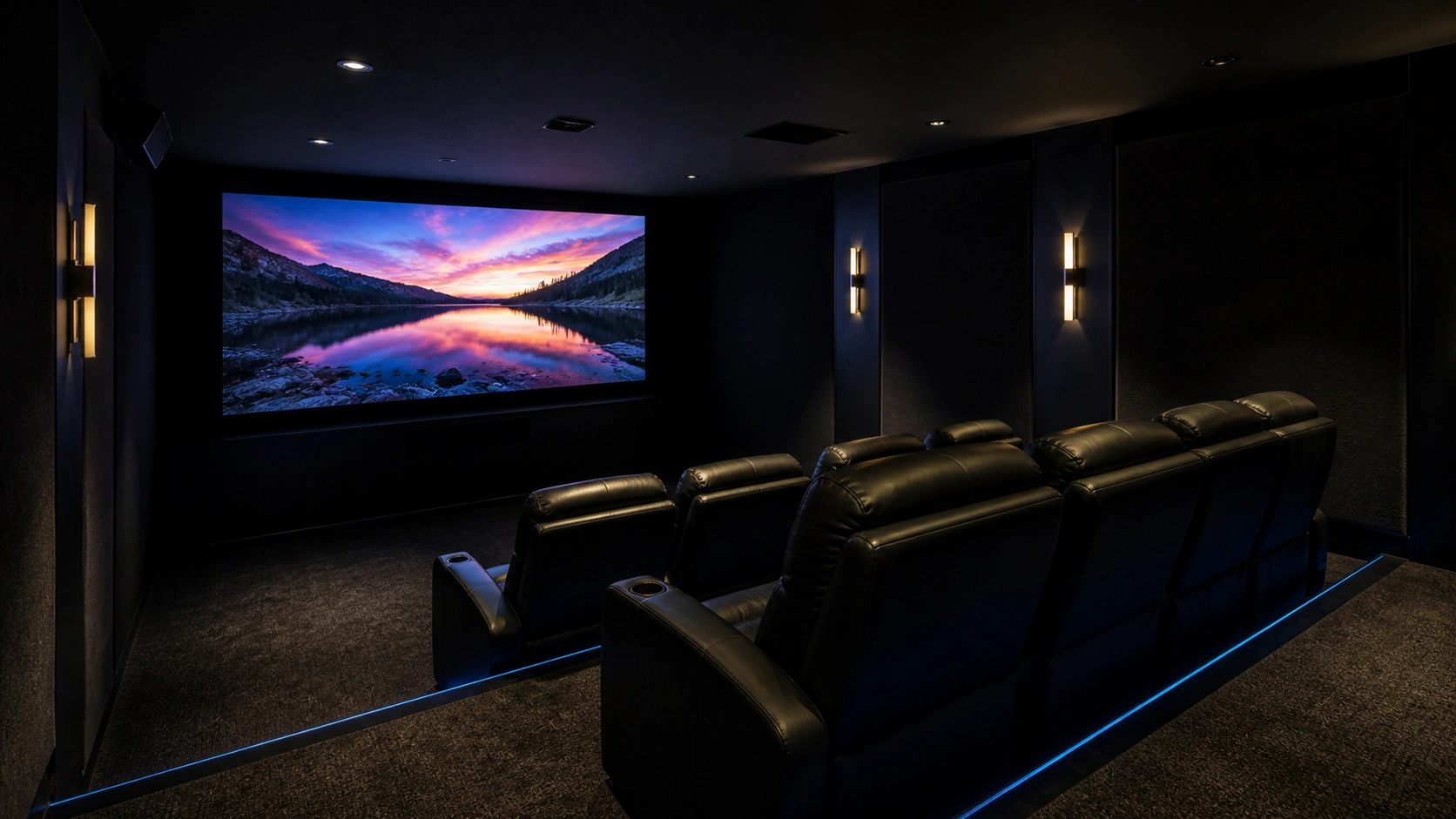
- Dark room environment: Home theaters are typically dark or dimly lit. This means the visual aesthetics of the sofa matter less than its tactile feel and functional features — you will be feeling for armrests, cup holders, and controls rather than seeing them clearly.
- Viewing angle optimization: The sofa height, back angle, and headrest position directly affect your line of sight to the screen. Poor positioning causes neck strain and reduces immersion. This is why high-back sofas with adjustable headrests are strongly preferred in theater settings.
2. Types of Sofas for Home Theaters
Not every sofa type works well in a media room. The right choice depends on your room size, seating capacity needs, and whether the room is a dedicated theater or a multi-purpose living space. Here are the four main options, each with distinct advantages:
Theater Recliner Sofas
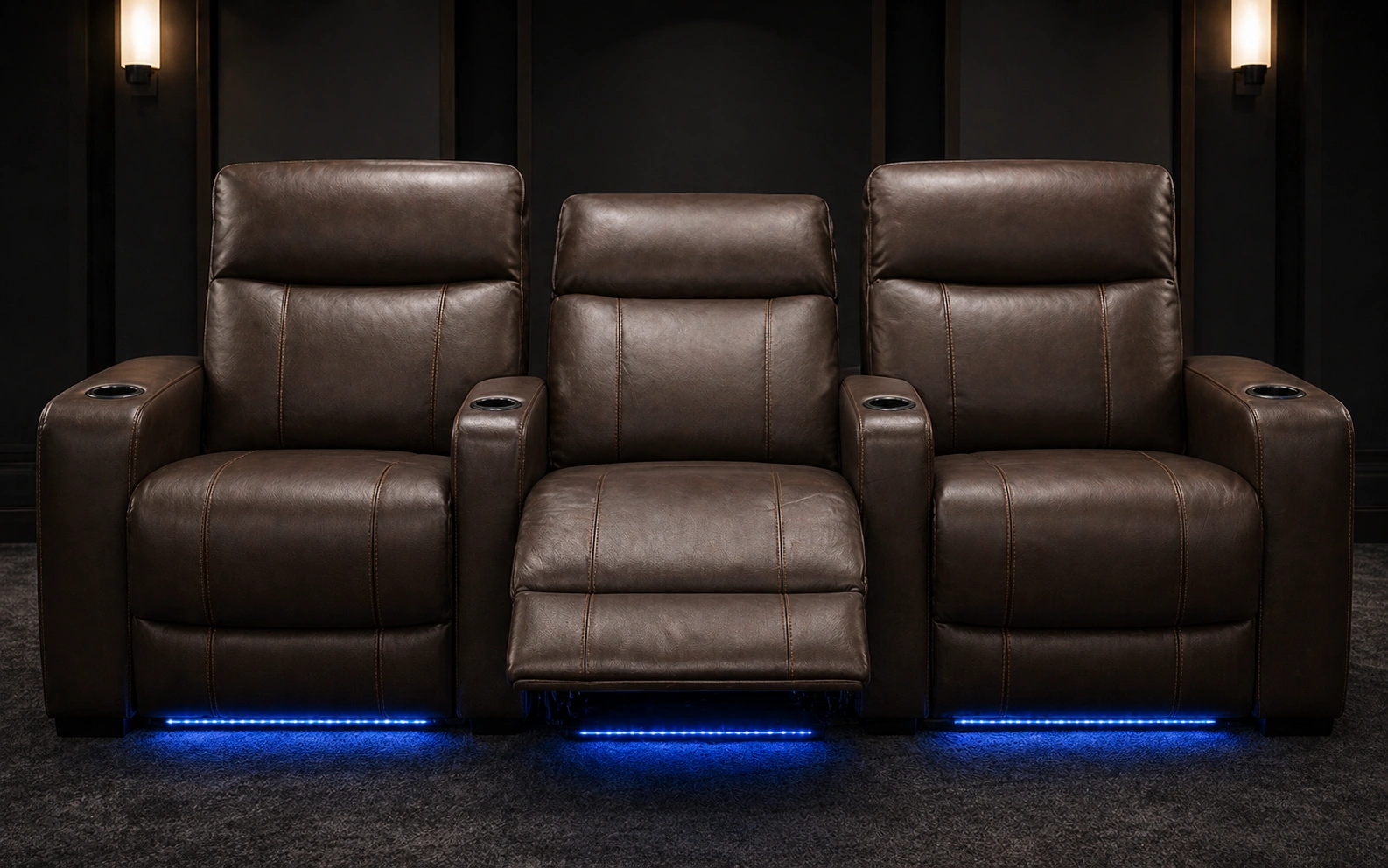
The gold standard for dedicated theaters. These are purpose-built recliners with motorized or manual recline, padded armrests, cup holders, and USB ports. Available as individual chairs linked together or as a continuous row. Offer the best ergonomic support for long sessions.
Theater Sectionals
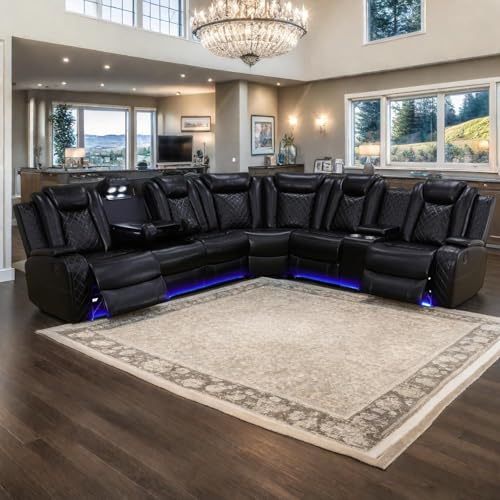
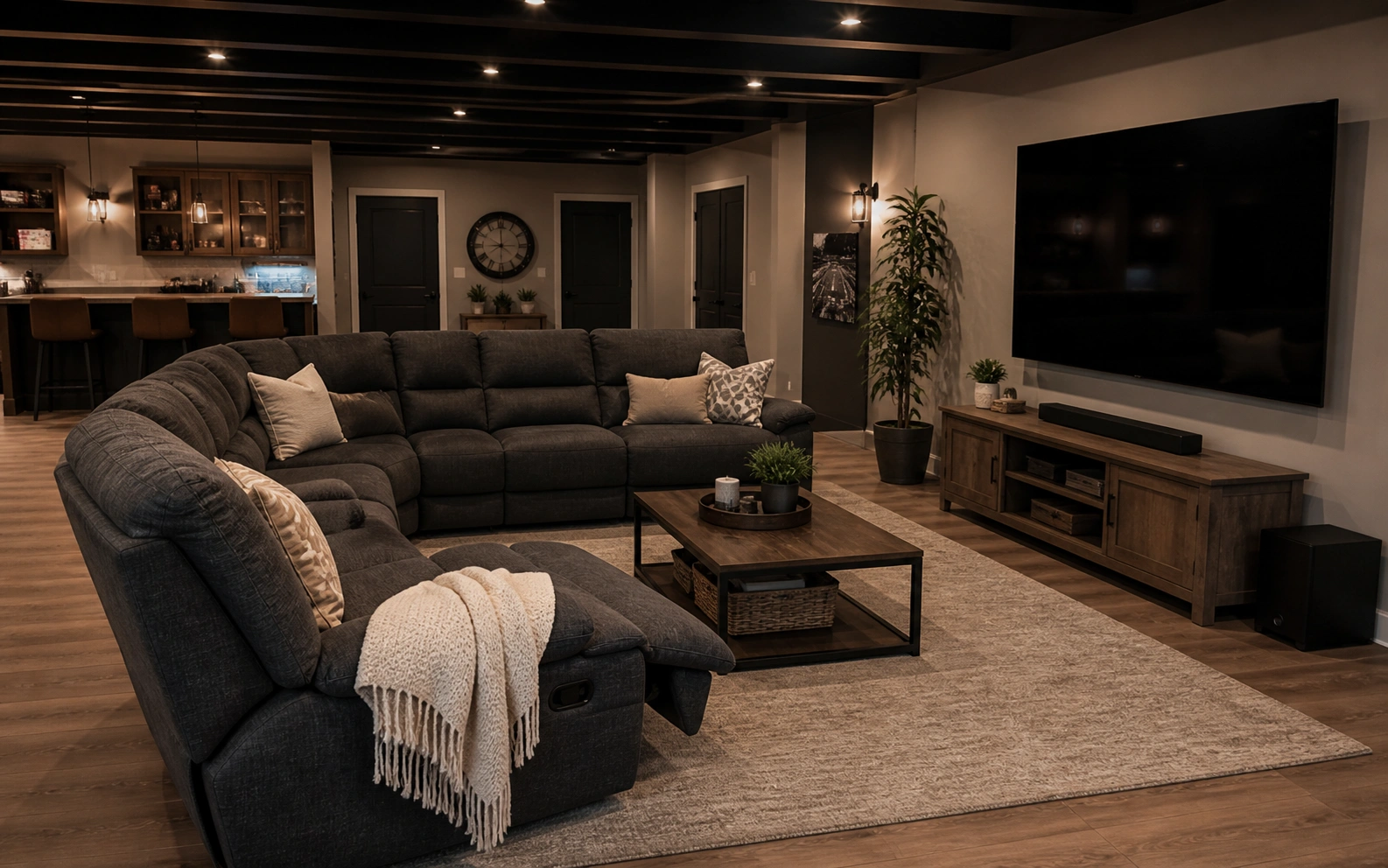
Ideal for multi-purpose rooms that serve as both a living area and media space. A sectional sofa maximizes seating capacity and can include built-in recliners on select seats. Best for families who want one furniture piece for both casual daily use and movie nights.
Modular Theater Seating
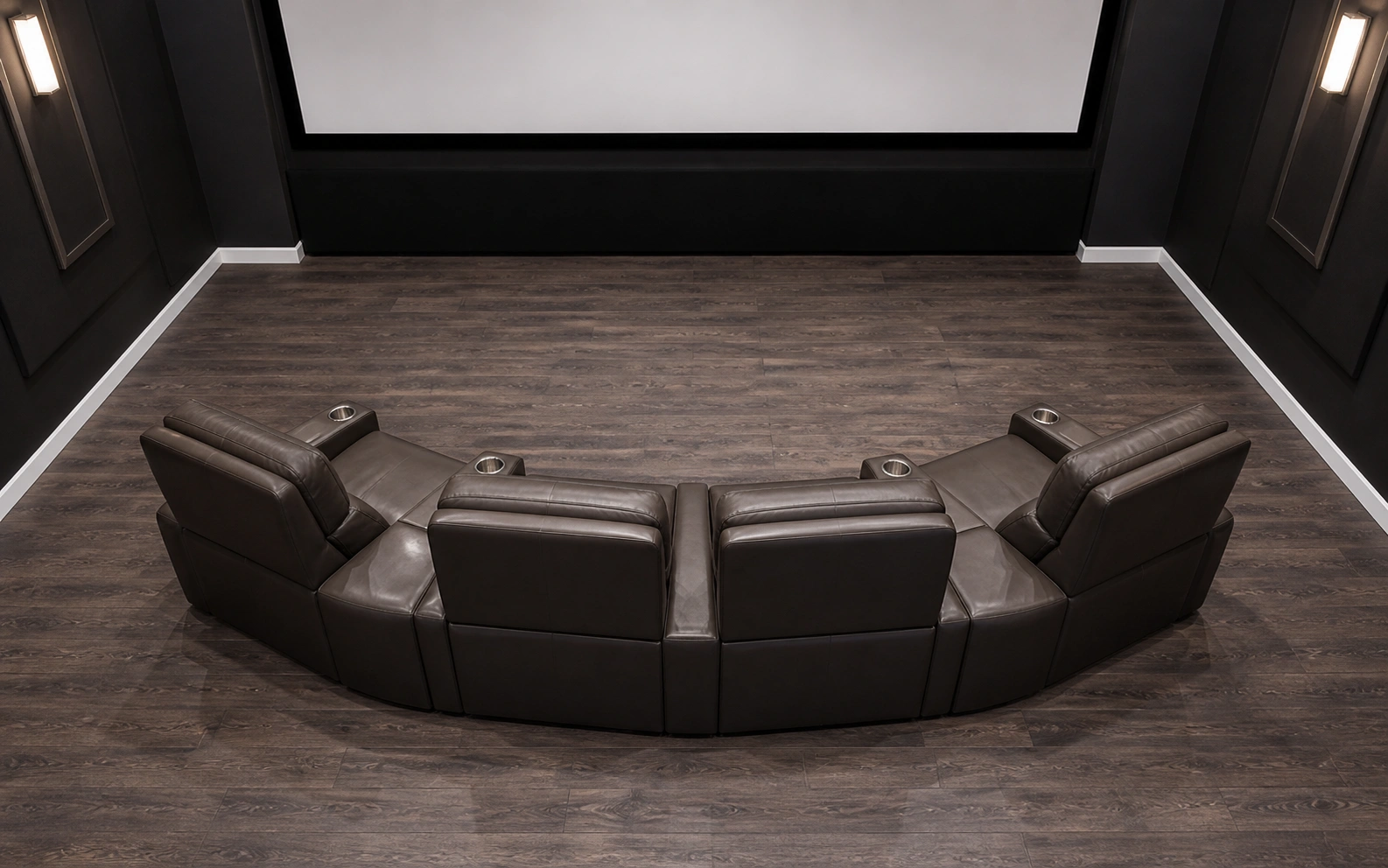
Modular sofas offer the most flexibility. You can configure straight rows, curved arrangements, or add corner pieces to wrap around a room. Perfect for irregular room shapes or when you want to customize the number of seats over time as your needs evolve.
Compact Loveseats
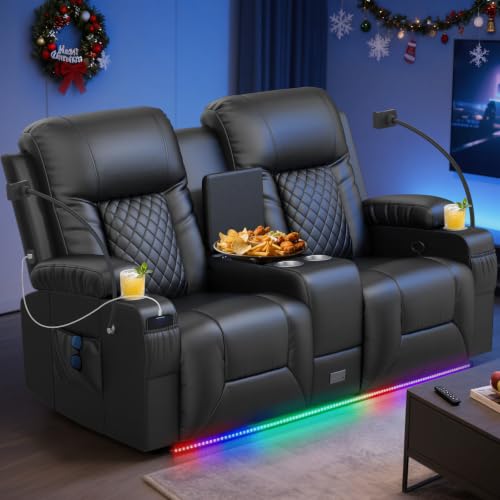
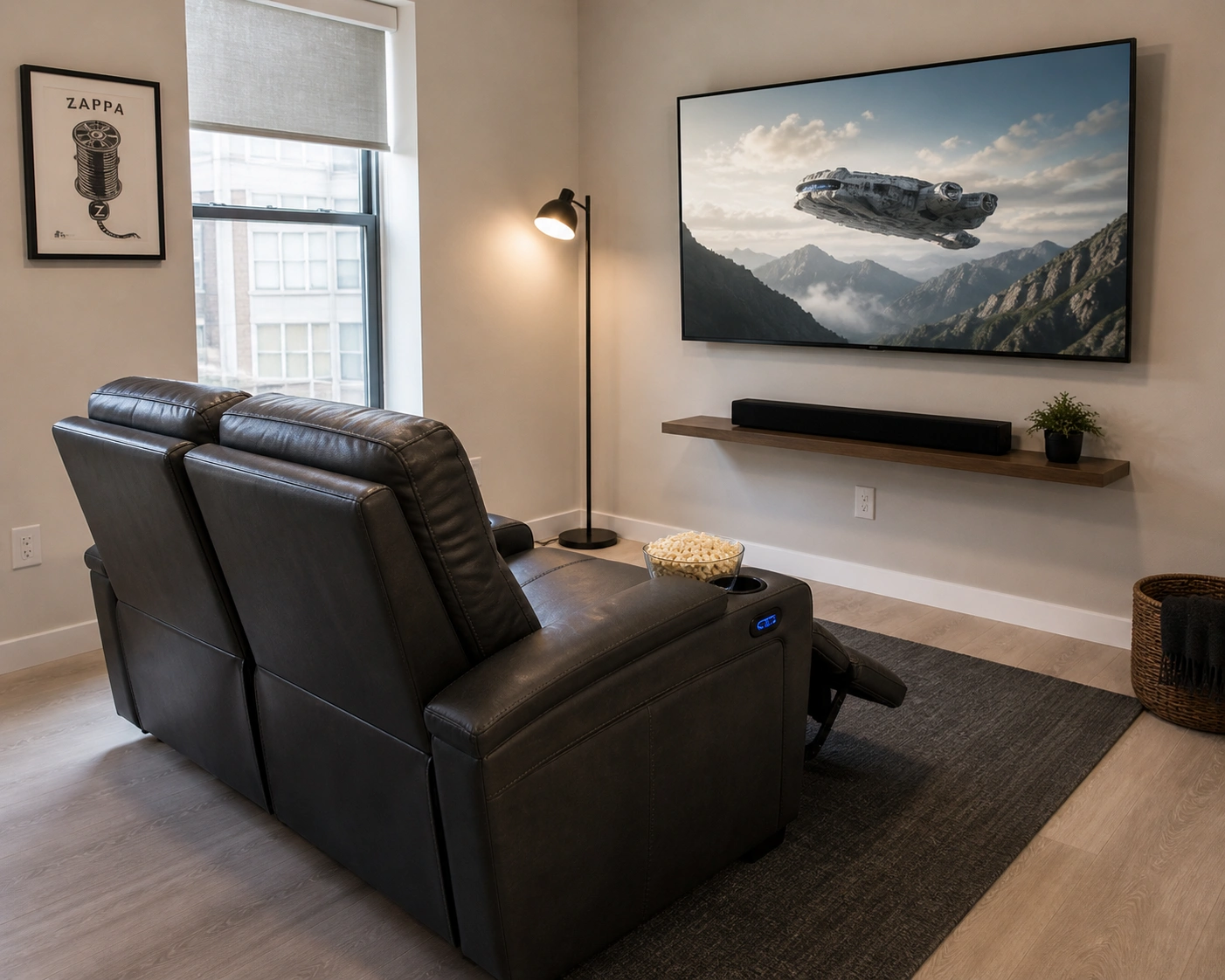
Best for small media rooms or apartment setups where a full sofa will not fit. A loveseat with reclining capabilities can seat two people comfortably while leaving enough space for proper viewing distance from the screen.
3. Essential Comfort Features for Home Theater Sofas
What separates a genuine theater sofa from an ordinary recliner? The answer lies in the details. These features directly impact your viewing experience and become more important the longer you sit. Here is what to prioritize:
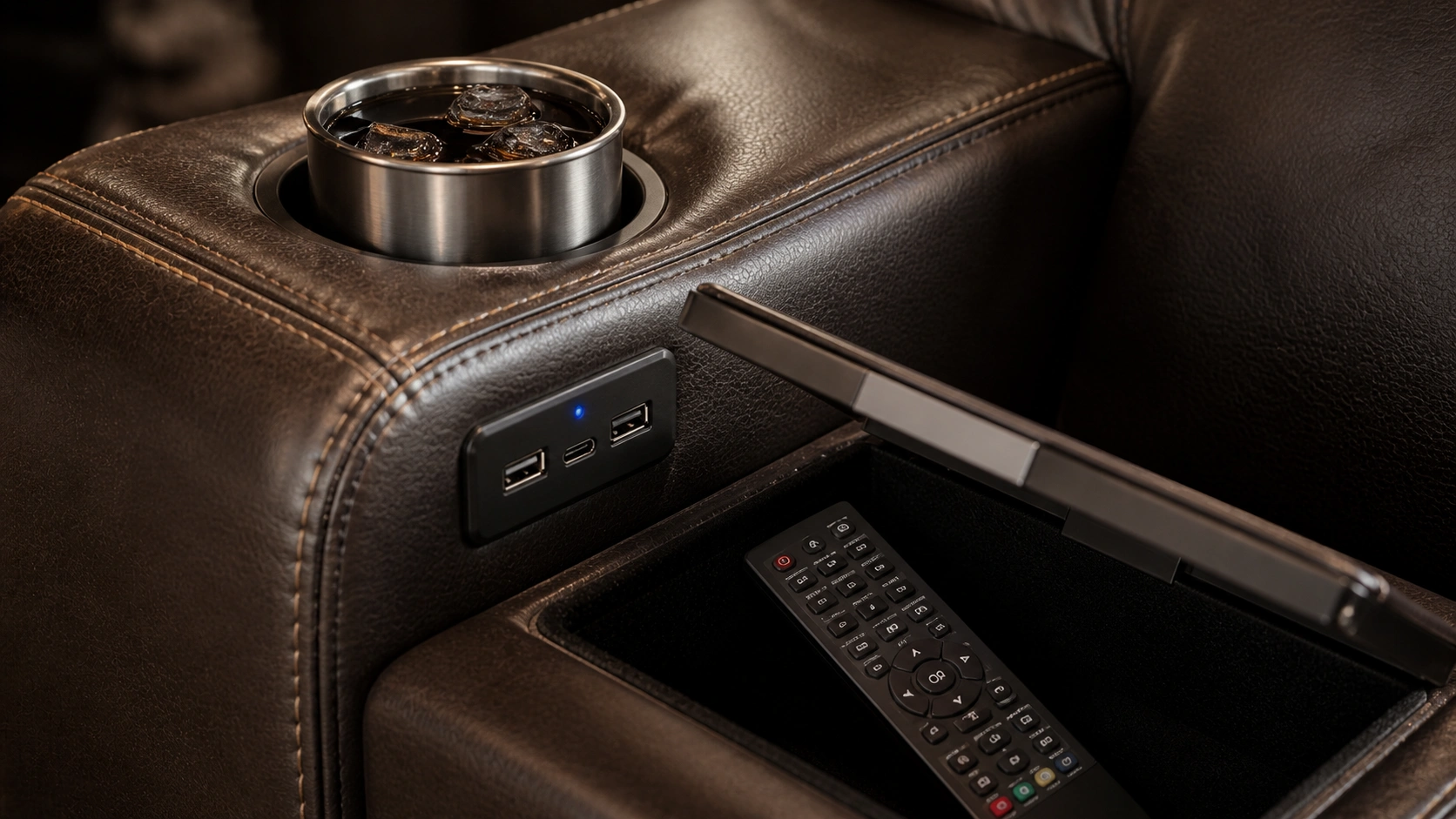
Feature prioritization tip: If you have a limited budget, prioritize adjustable headrests and cup holders first. These two features provide the most noticeable improvement in the theater experience. Power recline and USB ports are highly desirable but less critical — manual recline works perfectly fine, and portable chargers can substitute for built-in USB ports.
4. Best Materials for Home Theater Sofas
Material choice for a home theater sofa is different from a living room. In a dark room, visual texture is less noticeable, but durability, ease of cleaning (spilled drinks and snacks are common), and tactile comfort become far more important. Here is how materials compare in a theater context:
Color Recommendations
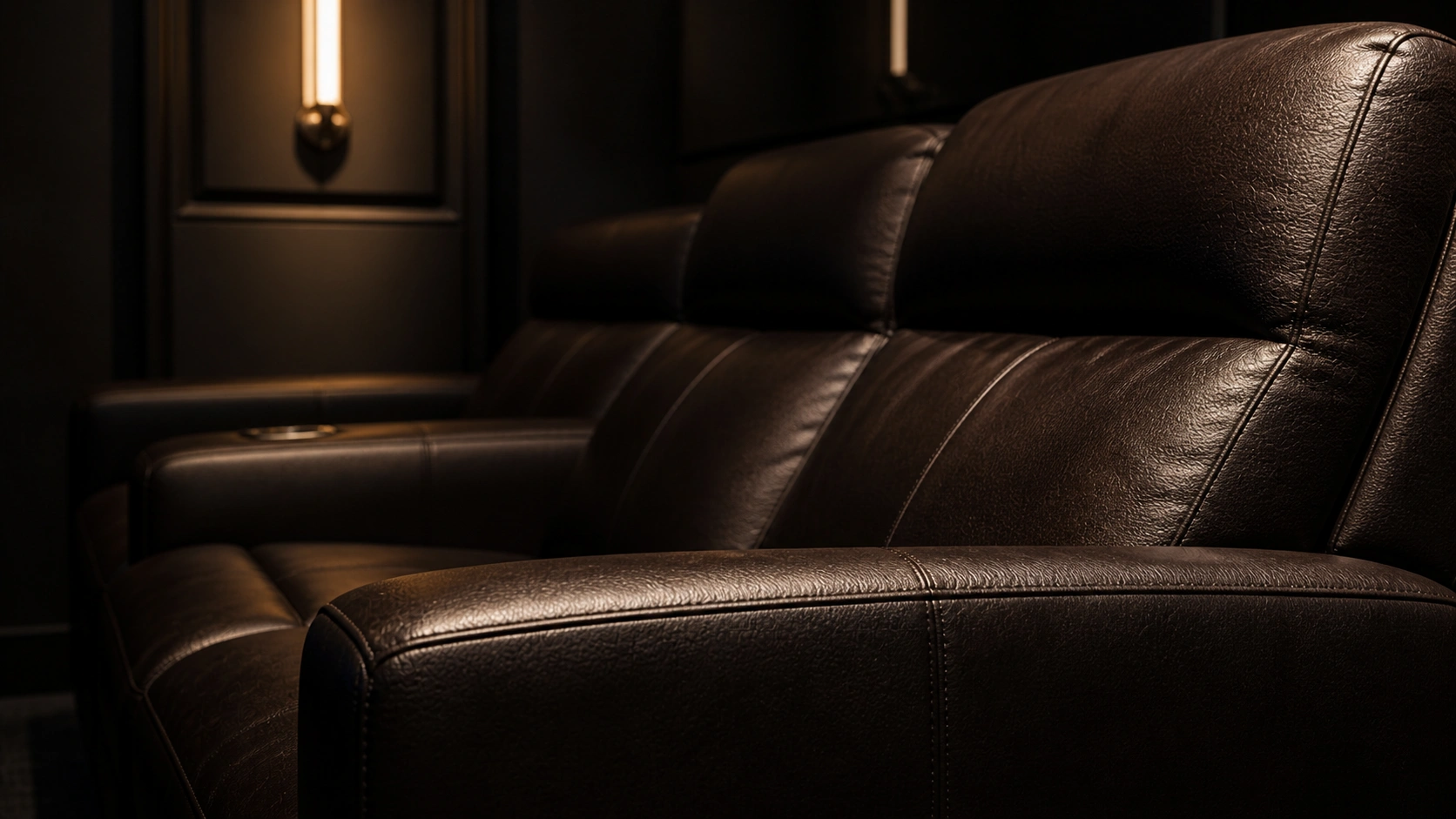
For home theaters, dark colors are strongly preferred for practical and aesthetic reasons. Black couches absorb the most light and eliminate screen glare. Brown couches and grey couches in dark shades are also excellent choices. Avoid white, cream, or bright colors — they reflect light from the screen, creating distracting glare and breaking the immersive dark-room illusion.
5. Room Layout and Viewing Distance
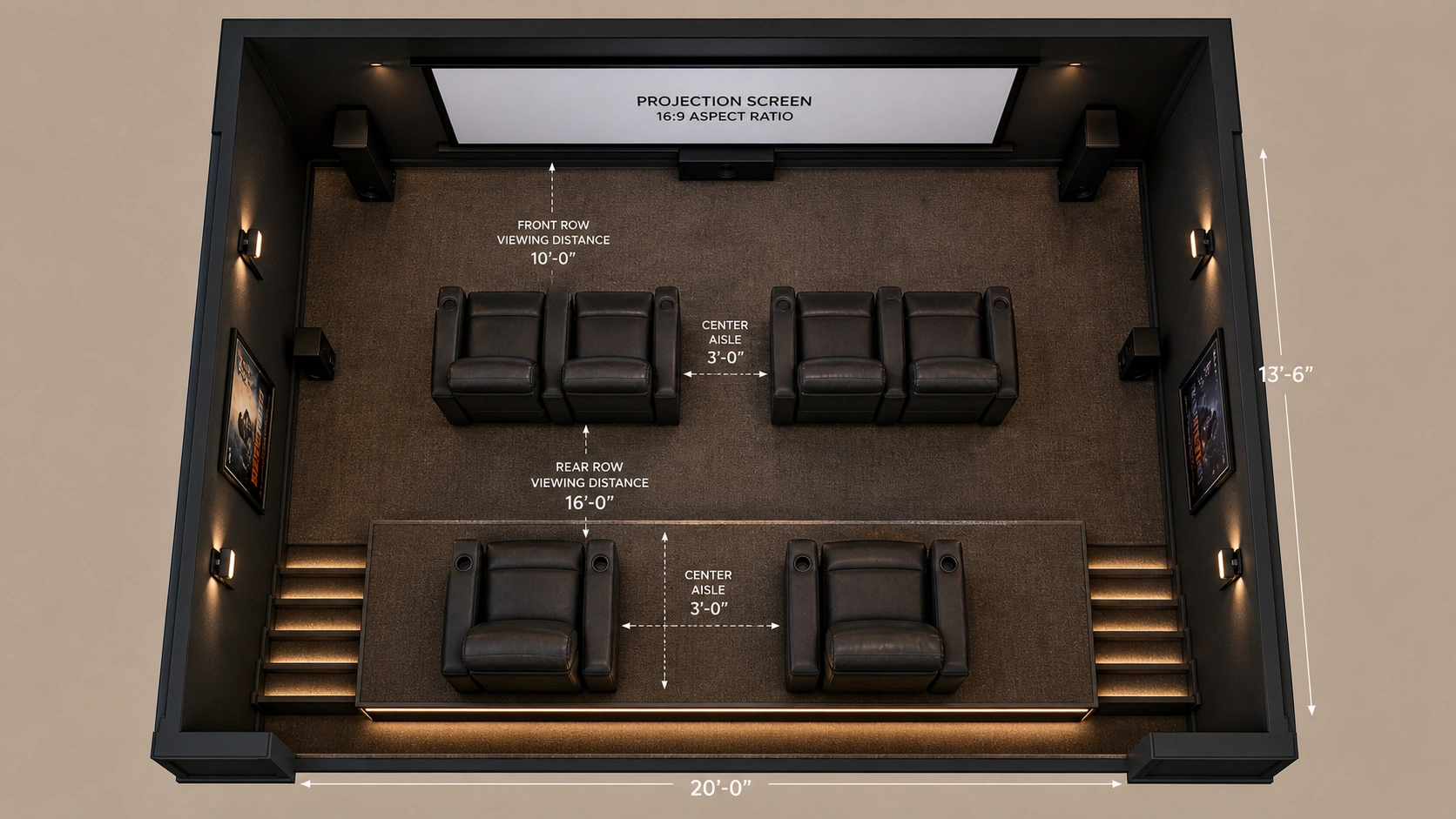
The best sofa in the world will disappoint if it is positioned incorrectly relative to your screen. Proper layout planning ensures every viewer gets an optimal experience regardless of where they sit. This is especially important if you are setting up seating in a basement theater where room shape and columns may constrain your options.
Viewing Distance Guidelines
- For 4K projectors and large TVs (100–120 inches): Front row should be 8–10 feet from the screen. Middle row at 12–14 feet. Back row at 16–18 feet.
- For 65–85 inch TVs: Front row at 6–8 feet. Second row at 10–12 feet. Avoid going beyond 14 feet for screens under 85 inches.
- General rule: The viewing distance should be roughly 1.2 to 1.5 times the screen diagonal for a comfortable cinematic experience. Refer to our size and room guide for detailed calculations.
Row Spacing and Clearance
- Leave at least 36 inches between sofa rows to allow comfortable passage. If recliners fully recline, increase this to 48–60 inches.
- Leave 18–24 inches of clearance behind the back row for wall access and to prevent the reclined back from hitting the wall.
- Include at least one aisle for easy entry and exit — a center aisle works best for odd-numbered rows, while side aisles work for even-numbered configurations.
- Consider layout principles for optimizing traffic flow in multi-purpose rooms.
Screen Height Relative to Seating
Your eyes should be level with roughly the bottom third of the screen when seated normally. If your sofa is too low or too high relative to the screen, you will experience neck fatigue within the first hour. For a firm sofa, your seated eye height is relatively predictable. For plush or deep-seat sofas, you may sink several inches lower — account for this when mounting your screen.
6. Recliners vs Standard Sofas: Which Is Right for Your Theater?
This is the single most important decision for home theater seating. A recliner sofa offers dramatically better comfort for extended viewing, but it also requires more space, costs more, and may not suit every room type. Here is a clear comparison to help you decide:
Our recommendation: If your home theater is in a dedicated room — particularly a basement or spare room — recliners are worth every penny. The comfort difference becomes obvious within the first 30 minutes of any movie. If your theater shares space with a living room, a sectional with one or two reclining seats offers the best compromise between daily functionality and movie-night comfort.
7. Multi-Row Seating for Dedicated Home Theaters
If you are building a serious home theater that seats more than four people, multi-row seating becomes a design challenge. Proper planning at this stage prevents costly mistakes — like realizing your second row cannot see the bottom of the screen, or that there is no walking space between rows.
Platform and Riser Planning
- Second row needs a raised platform: The second row should be elevated 10–14 inches above the first row so viewers can see over the heads of front-row occupants. This is typically achieved with a custom-built riser platform.
- Third row needs additional elevation: Each subsequent row needs another 10–14 inches of elevation. A three-row theater typically has the back row 20–28 inches higher than the front.
- Platform depth matters: The riser must be deep enough to accommodate the reclined sofa fully extended. Measure the sofa's fully reclined depth and add 6 inches of clearance.
- Consider curved sectionals: Curved seating wraps around the room and provides better viewing angles for side seats compared to straight rows.
Seating Capacity Planning
For large room theaters, consider using a combination of individual recliners in the front row and a modular sofa in the back row to maximize flexibility and accommodate different group sizes.
8. Budget Planning and Value Tiers
Home theater seating ranges dramatically in price. Understanding what you get at each tier helps you spend wisely and avoid overpaying for features you will not use, or under-spending and ending up with seats that need replacement within a few years. Our sofa budget guide provides a comprehensive framework for planning.
Tier Breakdown
- Budget Tier ($300–$800 per seat): Manual recline, basic cushioning, cup holders. Adequate for casual viewers. Look for budget-friendly options with solid frames — do not sacrifice structural quality for features.
- Mid-Range Tier ($800–$1,500 per seat): Power recline, adjustable headrests, USB ports, LED lighting, better foam quality. This is the sweet spot for most home theater enthusiasts. Comfort and durability are both well-represented at this level.
- Premium Tier ($1,500–$3,500+ per seat): Full motorization (recline, headrest, lumbar), premium leather, memory foam cushioning, heated seats, massaging functions, built-in subwoofers. Designed for luxury theater installations where cost is secondary to experience.
Where to allocate your budget: Prioritize the frame quality and cushion foam density first — a recliner with a weak frame or low-density foam will sag and break down regardless of how many electronic features it has. Features like USB ports and LED lighting can be added later with accessories, but structural quality cannot be upgraded after purchase. Follow the price vs quality principle: spend more on what cannot be changed, less on what can.
9. Common Mistakes to Avoid
After years of seeing home theater setups — both well-planned and poorly executed — these are the mistakes that come up most often. Avoiding them will save you money and significantly improve your viewing experience:
DO This
- Measure your room and plan layout before buying any seating
- Account for full recline depth when calculating row spacing
- Choose dark-colored, light-absorbing materials
- Test seating in person if possible — sit for at least 15 minutes
- Elevate second and third rows on proper risers
- Choose solid hardwood or kiln-dried frames
- Plan for side tables or built-in storage for snacks and remotes
- Consider future expansion when choosing modular or individual seats
DON'T Do This
- Buy seating without measuring the room first
- Place the front row too close to the screen
- Choose light-colored or shiny fabrics that reflect screen light
- Sacrifice frame quality for electronic features
- Forget to check wall clearance for reclined positions
- Use a standard living room sofa for a dedicated theater
- Skip the riser on second-row seating
- Ignore weight capacity if you have heavier viewers
Before finalizing any purchase, use our sofa quality checklist to evaluate the construction. For measuring guidance, see how to measure a sofa properly. And if you are comparing options, knowing how much a good sofa should cost prevents you from overpaying for marketing features that add little real value.
10. Frequently Asked Questions
Ready to Upgrade Your Home Theater Experience?
Browse our curated selection of home theater sofas, recliners, and media room seating — all chosen for comfort, durability, and cinema-ready features.
View Recommended Theater Sofas