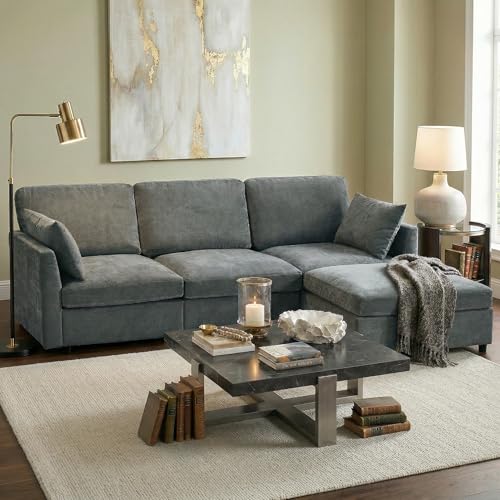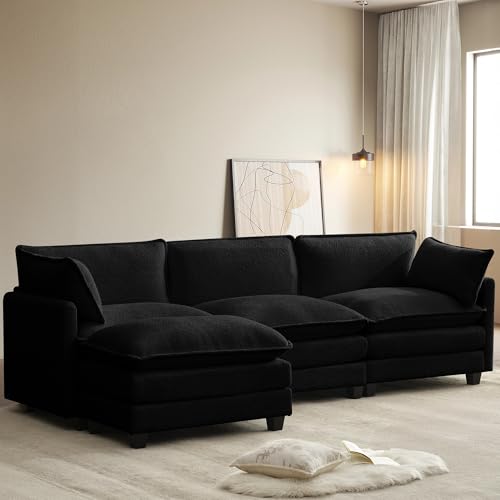
Sofas with Ottoman: The Complete Buying Guide
Discover how the right sofa-ottoman combination can transform your living space with unmatched comfort, flexibility, and style
VIEW TOP PICKSA sofa with ottoman is one of the most versatile seating configurations available for modern homes. Unlike a standard sofa that forces you into a single seating posture, the addition of a matching ottoman opens up a world of comfort possibilities — from elevating your feet after a long day to providing extra seating when guests arrive, or even serving as a makeshift coffee table in a pinch.
What sets this combination apart from other enhanced seating options like a sofa with chaise lounge is its inherent flexibility. While a chaise is permanently attached to one side of the sofa, an ottoman is a standalone piece that can be repositioned, moved to another room entirely, or used independently. This makes it particularly appealing for households where room layouts change frequently or where multi-functional furniture is a priority.
In this guide, we break down every aspect you need to understand before purchasing a sofa with ottoman — from the different types available and the key factors that affect comfort and durability, to room placement strategies and material selection. Whether you are outfitting a spacious living room or a compact apartment, this resource will help you make a confident, well-informed decision.

Why Choose a Sofa with Ottoman?
Superior Leg Comfort
Elevating your legs reduces pressure on your lower back and improves circulation. An ottoman provides the ideal footrest height that fixed sofa seats simply cannot match, making it essential for anyone who spends extended periods seated.
Flexible Positioning
Unlike a built-in chaise, an ottoman can be placed on either side of the sofa, centered in front, or moved to a corner. This adaptability lets you refresh your room layout without buying new furniture — a major advantage over fixed configurations.
Extra Seating
When hosting guests, the ottoman instantly becomes an additional seat. Most ottomans comfortably accommodate one adult, effectively increasing your seating capacity without the footprint of a separate chair. This is especially valuable for frequent hosting scenarios.
Hidden Storage
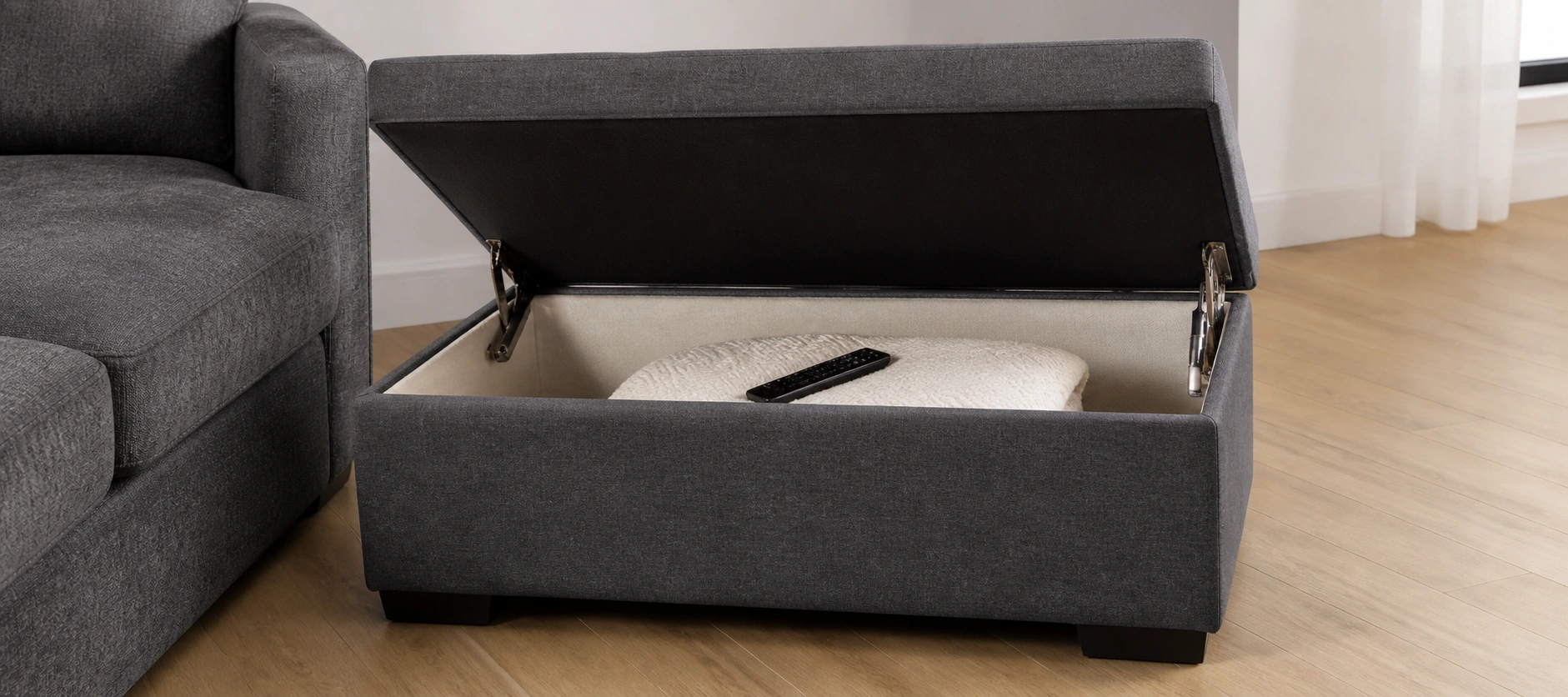
Many ottomans feature a lift-top or compartment design, providing concealed storage for blankets, remotes, magazines, or board games. This dual-functionality is a game-changer for sofas with storage needs in smaller homes.
Coffee Table Alternative
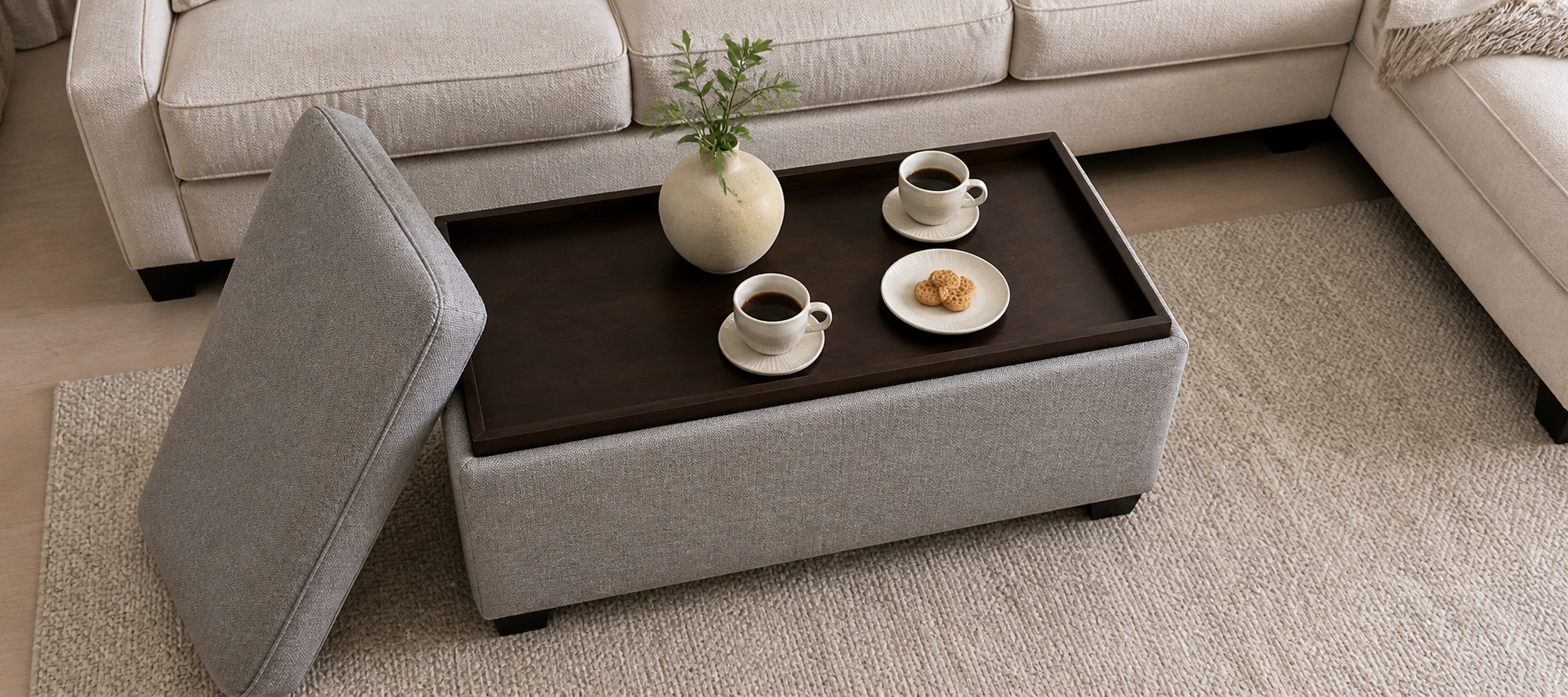
With a firm, flat top — and in some cases a reversible tray surface — the ottoman can serve as a casual coffee table. Some homeowners skip a traditional table entirely, using the ottoman as their primary surface for drinks and snacks, which works particularly well in small spaces.
Design Cohesion
Purchasing a matching sofa and ottoman set guarantees visual harmony in your room. The coordinated fabrics, colors, and proportions create a polished, intentional look that can be difficult to achieve when mixing pieces from different collections.
Types of Sofas with Ottoman
Not all sofa-ottoman combinations are created equal. The type you choose should align with your room size, lifestyle, and aesthetic preferences. Below are the most common configurations available on the market today.
Sectional Sofa with Ottoman
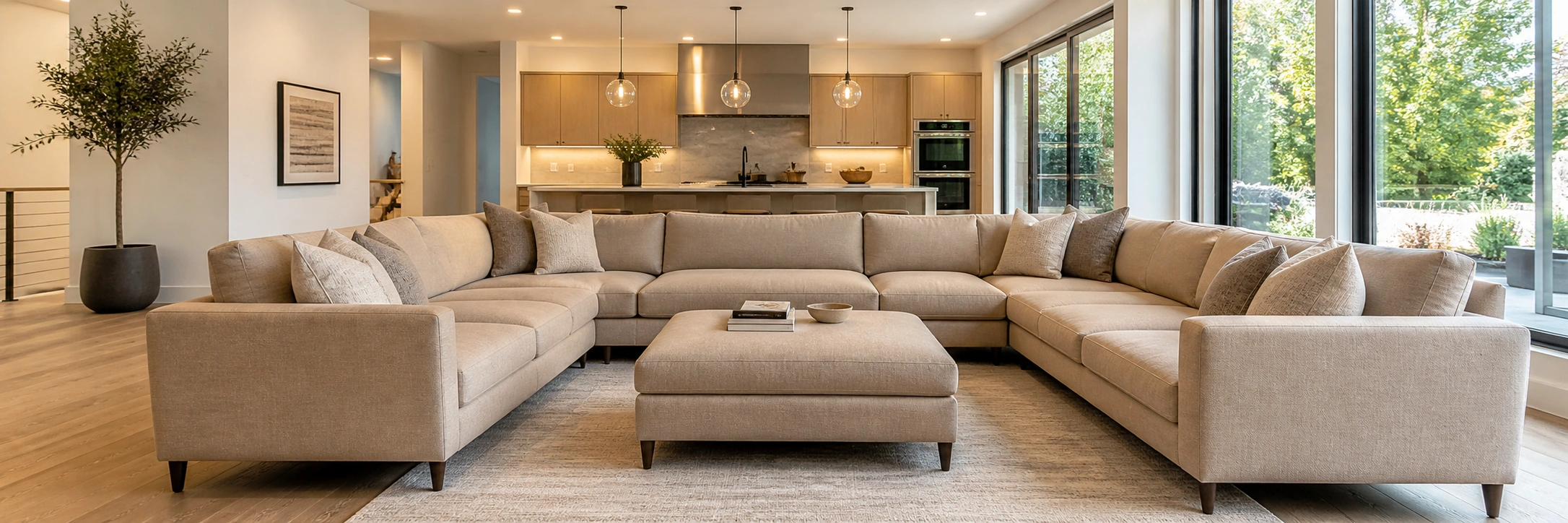
The most popular configuration for large living spaces. A sectional sofa paired with a coordinating ottoman fills out a room beautifully, creating an expansive seating zone. The ottoman can bridge the gap between the sectional and other furniture, or float freely in the center of the arrangement. Ideal for families and open-concept layouts.
Learn more about sectionals →
Recliner Sofa with Ottoman
For those who prioritize relaxation above all else, a recliner sofa with ottoman delivers the ultimate lounging experience. The ottoman allows you to fully extend your legs while the recliner back supports your upper body at the perfect angle. Commonly found in home theaters, family rooms, and dedicated reading nooks.
Learn more about recliners →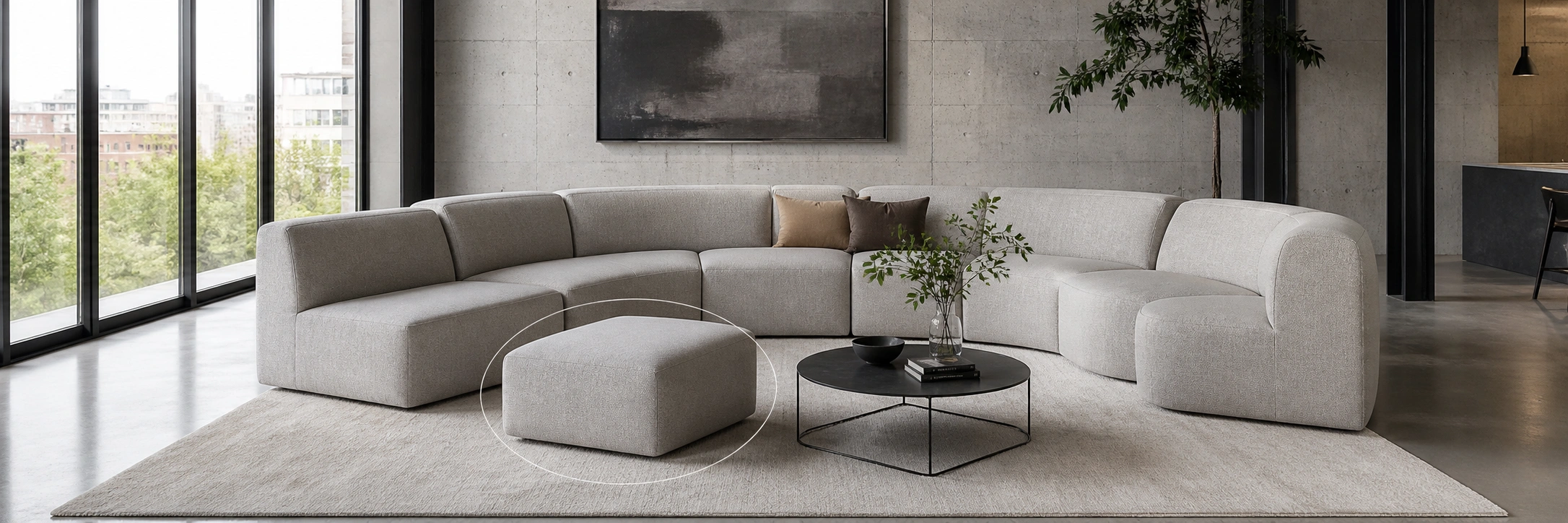
Modular Sofa with Ottoman Piece
A modular sofa system often includes an ottoman module that can be integrated into the arrangement or used independently. This is the most flexible option — you can reconfigure the entire setup as your needs evolve, adding or removing pieces including the ottoman component. Perfect for people who move frequently or enjoy redesigning their space.
Learn more about modular sofas →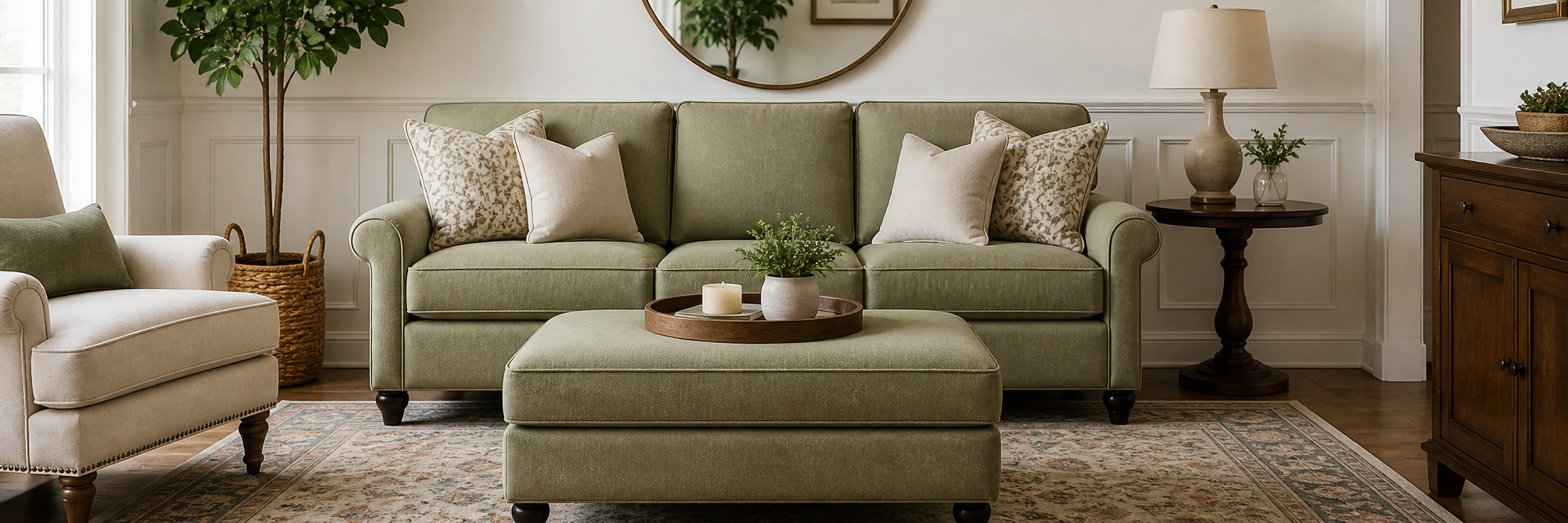
Standard Sofa with Ottoman
The classic pairing: a 3-seater sofa (or 2-seater) with a freestanding ottoman. This is the most versatile and widely available combination, suited for virtually any room size. The ottoman typically matches the sofa in upholstery and scale, creating a cohesive look without the commitment of a sectional or modular system.
Explore sofa sets →Ottoman vs. Chaise Lounge: Which Is Right for You?
One of the most common dilemmas buyers face is choosing between a sofa with ottoman and a sofa with chaise lounge. Both serve the purpose of extending your comfort zone, but they differ significantly in practical terms. The table below breaks down the key differences to help you decide based on your specific situation.
| Feature | Sofa with Ottoman | Sofa with Chaise Lounge |
|---|---|---|
| Flexibility | Ottoman can be moved anywhere, used separately, or repositioned to either side | Chaise is fixed to one side; cannot be moved without rearranging the entire sofa |
| Extra Seating | Doubles as an additional seat for guests | Limited — only usable as a lounging surface, not a proper seat |
| Storage Option | Many ottomans offer hidden storage inside | Rarely available; chaise cushions are not designed for storage |
| Space Efficiency | Requires additional floor space for the ottoman piece | More compact; extends directly from the sofa without extra footprint |
| Visual Cohesion | May look slightly less integrated if ottoman is placed far from sofa | Seamless, built-in appearance that looks like one continuous piece |
| Best For | Large rooms, multi-functional spaces, frequent hosts | Small to medium rooms, minimalist layouts, fixed arrangements |
| Price Range | Typically $50–$200 more than sofa alone | Usually $100–$400 more than standard sofa due to extended frame |
Key Factors to Consider Before Buying
📐 Room Dimensions & Layout
Measure your room carefully before shopping. Account for the sofa footprint plus the ottoman's dimensions plus at least 18 inches of clearance around the ottoman for foot traffic. Use our sofa measurement guide for precise techniques. If you are unsure what size sofa fits your room, our size recommendation tool can help.
🧵 Upholstery Material
The material affects both comfort and longevity. Leather is easy to wipe clean and resists pet hair but can feel cold initially. Fabric options like microfiber are soft and stain-resistant. For a detailed material breakdown, see our materials explained guide. Consider durability ratings using the Martindale test standard.
🛋️ Seat Depth & Cushion Fill
The right seat depth depends on your height and sitting preference. A deeper seat suits taller individuals and casual lounging, while a shallower seat is better for formal settings and shorter users. Pair this with the right cushion fill — high-density foam offers firm support, while down-filled cushions provide a plush sink-in feel.
💰 Budget & Value
Sofa-ottoman sets range from under $500 for budget models to over $3,000 for premium brands. Understanding the price breakdown helps you identify where your money goes — frame construction, upholstery grade, and cushion quality are the biggest cost drivers. Set a realistic budget using our sofa budget guide and balance cost against expected lifespan.
🔧 Frame Construction
A sturdy frame is the foundation of any durable sofa. Kiln-dried hardwood (oak, maple, birch) is the gold standard, while softwood and plywood frames are less durable. For a comprehensive overview of frame materials and what to look for, read our frame materials guide. Also pay attention to the spring system — eight-way hand-tied springs offer the best support.
🏠 Household Needs
If you have pets, prioritize pet-friendly fabrics and scratch-resistant upholstery. Families with young children should consider family-proof options with washable or stain-resistant covers. For elderly household members, look for senior-friendly designs with appropriate seat height and firm cushion support for ease of standing.
Ottoman Styles: Finding the Right Match
The ottoman portion of your set is just as important as the sofa itself. Different ottoman designs serve different purposes, and choosing the wrong style can undermine the entire setup. Here are the most common ottoman types you will encounter.
Storage Ottoman
Features a hinged or lift-top lid that reveals a hollow interior. Ideal for stowing blankets, pillows, remotes, and toys. The storage capacity typically ranges from 2 to 5 cubic feet depending on size. Best for small spaces where every inch counts.
Tray-Top Ottoman
Has a reversible cushion — one side padded for footrest use, the other side a flat tray surface for holding drinks and snacks. This dual-purpose design eliminates the need for a separate side table in compact arrangements.
Pouf / Round Ottoman
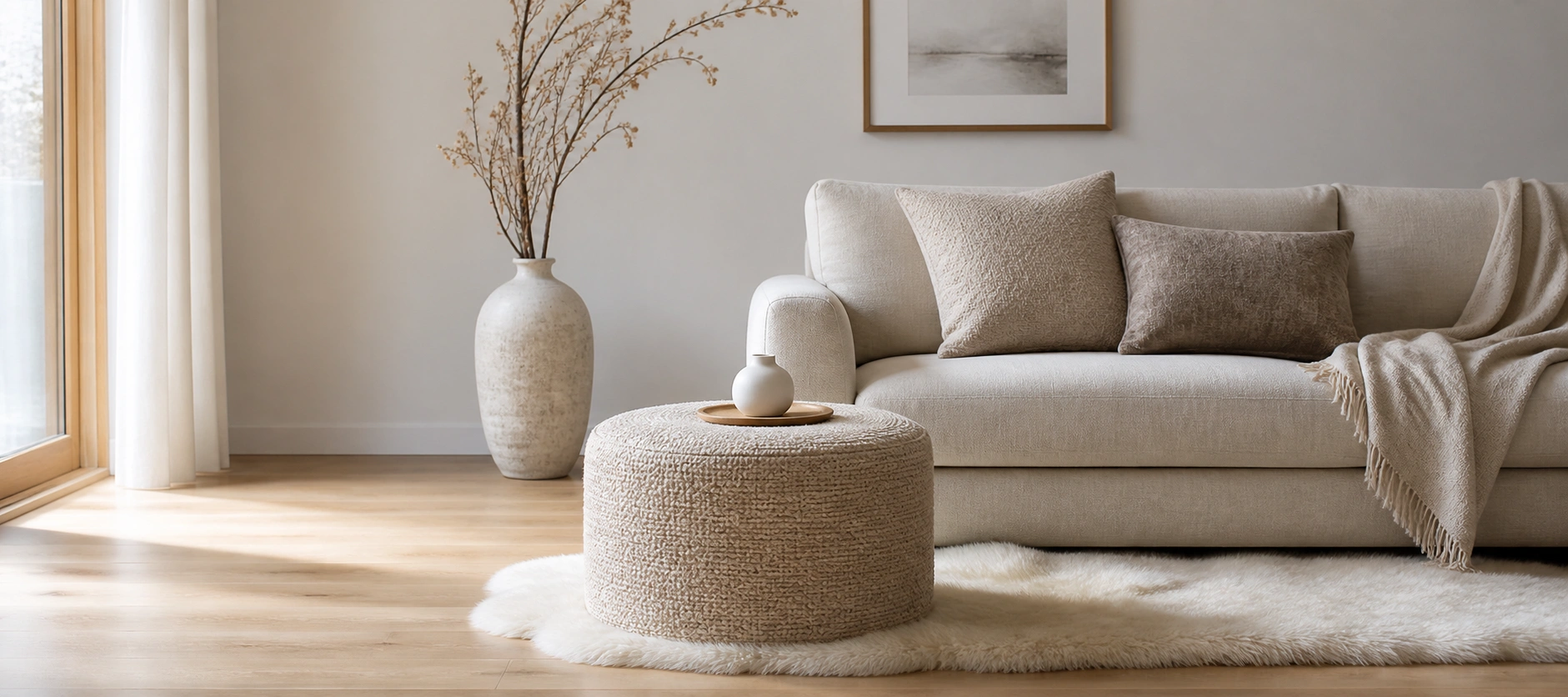
A smaller, often round or cylindrical ottoman that adds a casual, contemporary vibe. While it lacks the surface area of a rectangular ottoman, it is lightweight, easy to move, and works well as an accent piece in modern and bohemian interiors.
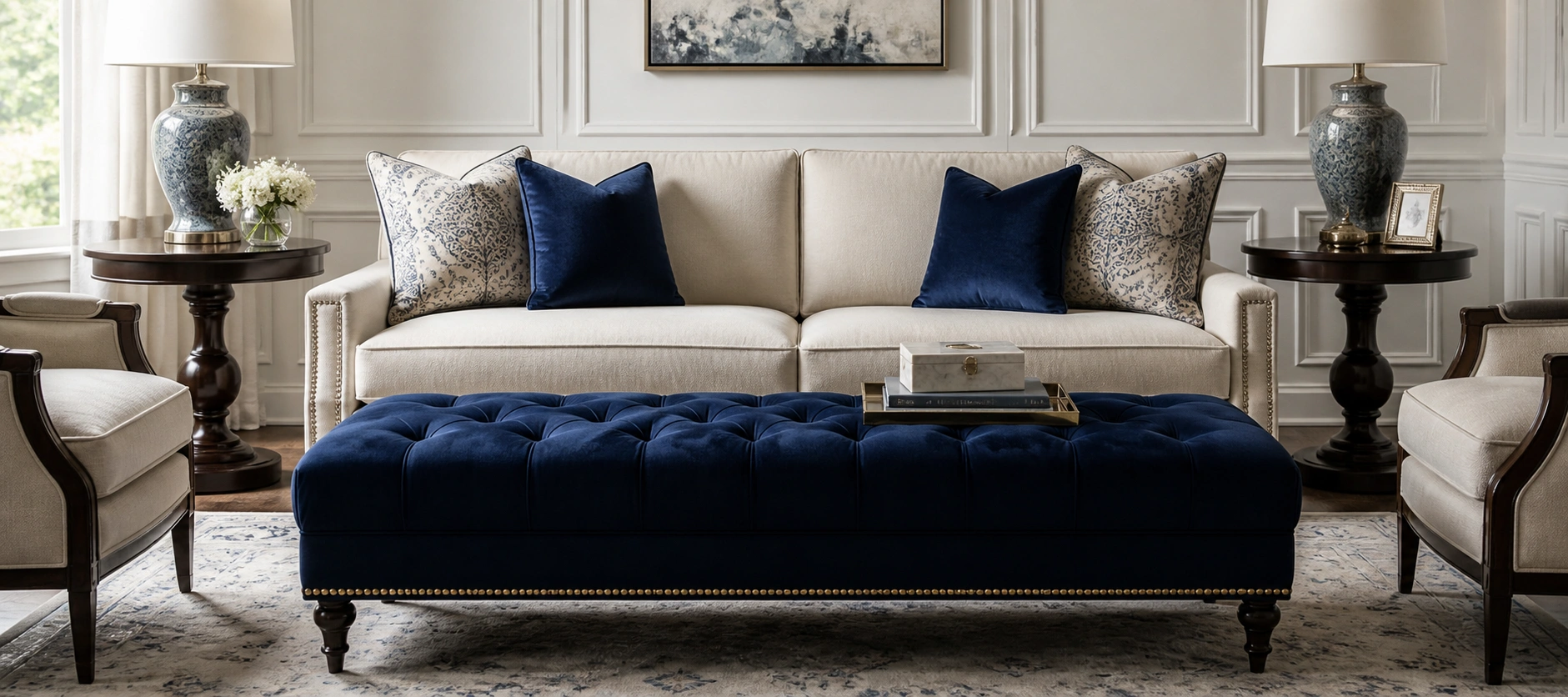
Bench Ottoman
Rectangular and elongated, bench ottomans provide generous footrest space for multiple people. They work especially well with 3-seater and 4-seater sofas. Their larger surface area also makes them more effective as impromptu coffee tables.
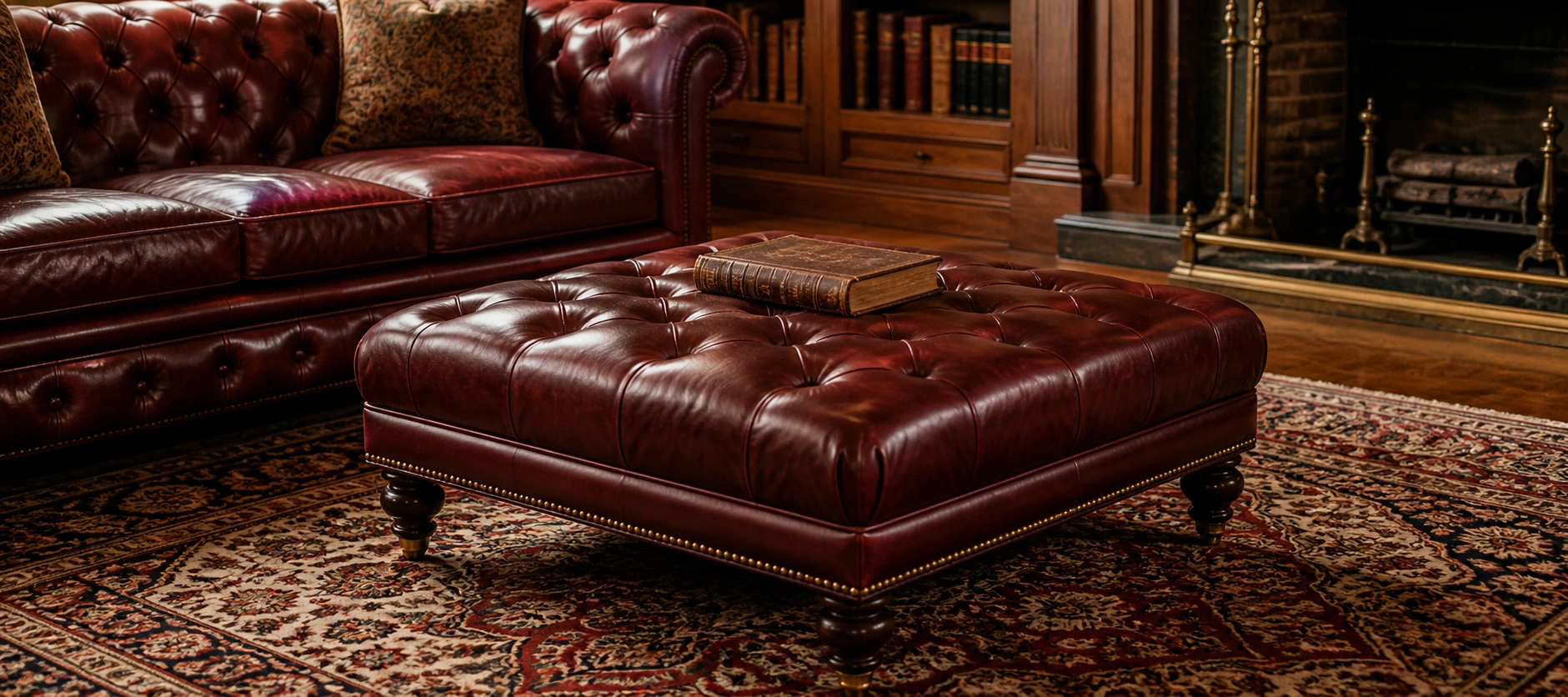
Tufted Ottoman
Features button or blind tufting that adds texture and a traditional, tailored appearance. Tufted ottomans pair beautifully with Chesterfield sofas and tufted sofa designs. The tufting also helps keep the padding evenly distributed over time.
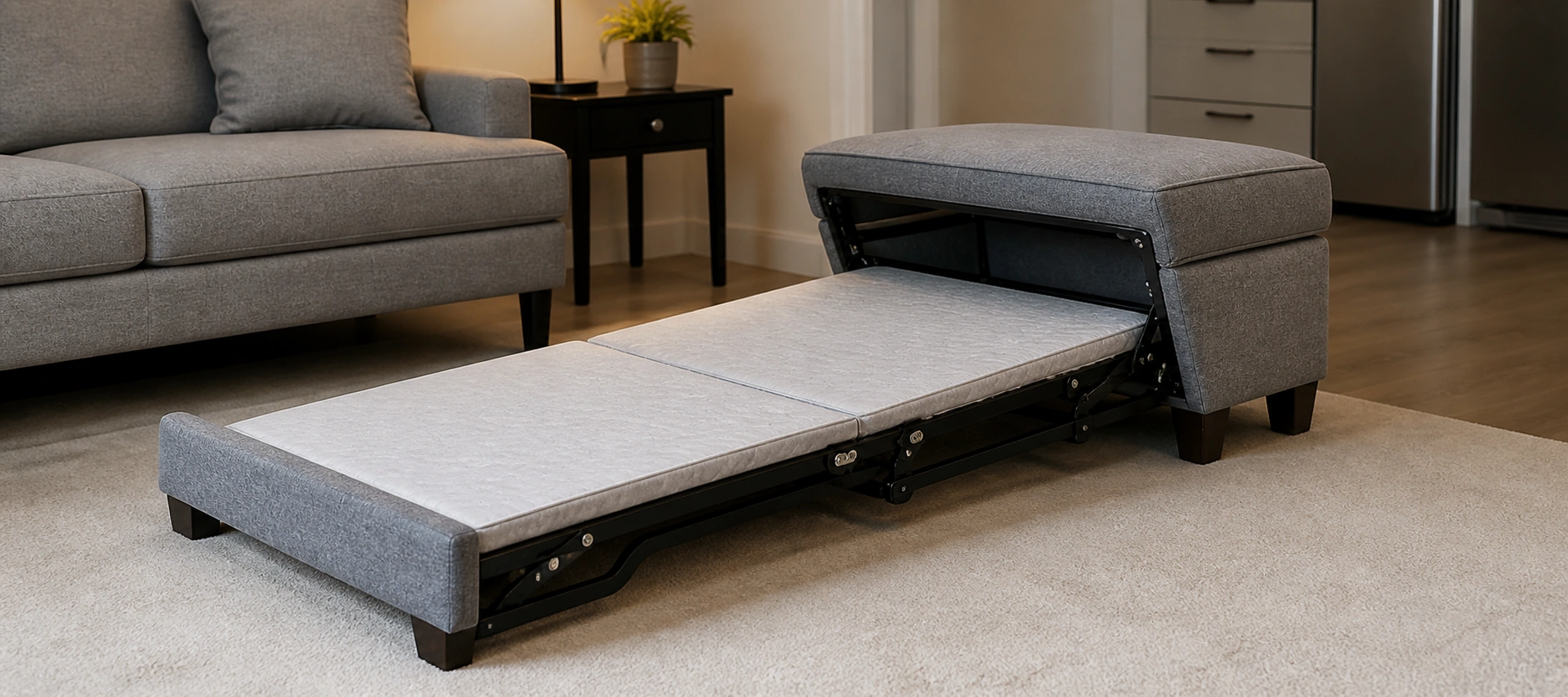
Sleeper Ottoman
A specialized ottoman that unfolds or expands into a small sleeping surface, similar to a futon but on a smaller scale. Perfect for guest rooms and studios where occasional sleeping accommodation is needed without dedicating space to a full bed.
Material Considerations for Sofa-Ottoman Sets
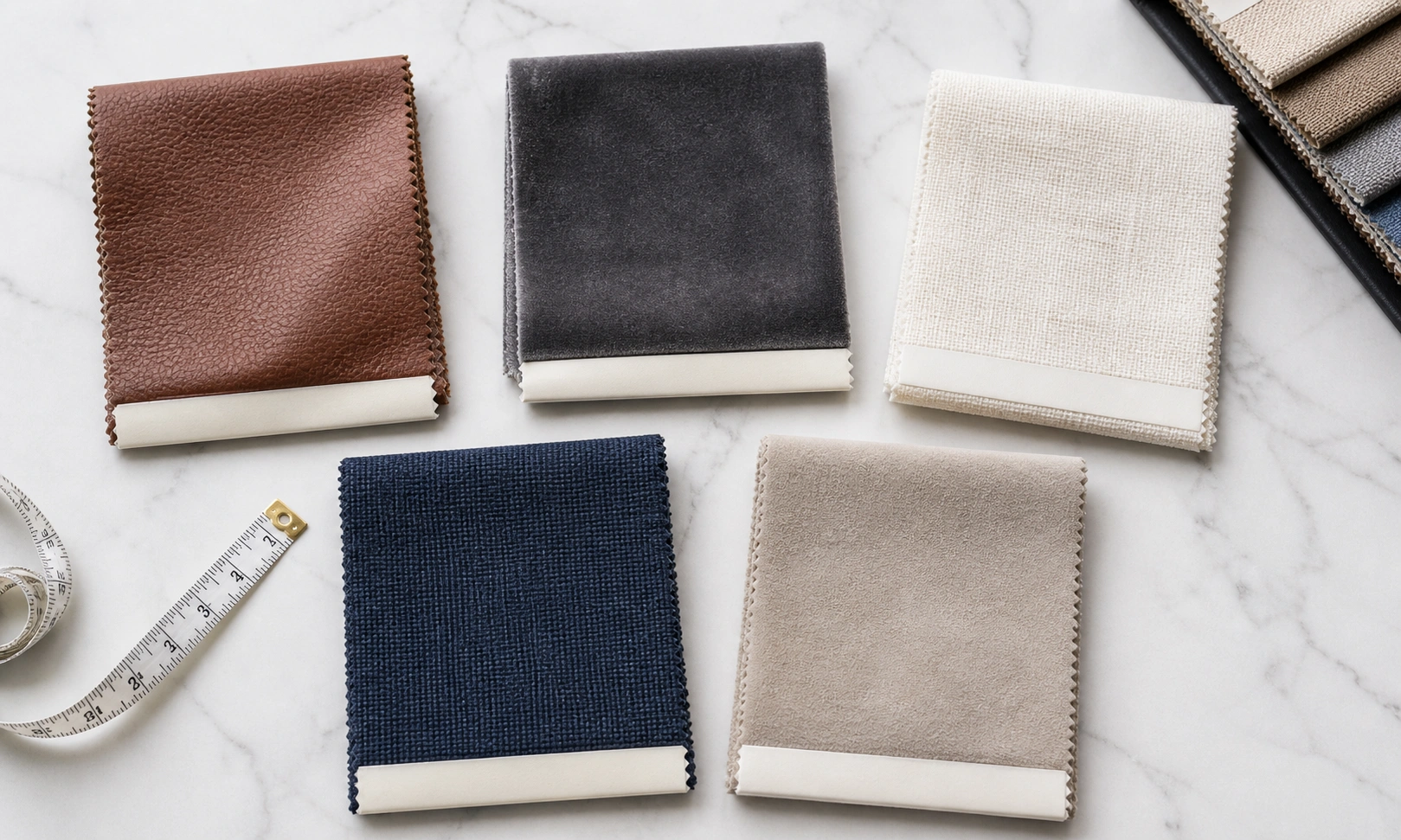
When purchasing a sofa and ottoman as a set, both pieces share the same upholstery, which means your material choice affects the entire configuration. The ottoman, in particular, faces unique wear patterns because it serves as a footrest, occasional seat, and sometimes a table surface — so durability matters even more here than on the sofa alone.
Leather is the top choice for households seeking low maintenance. Full-grain and top-grain leather develop a beautiful patina over time and can be cleaned with a damp cloth. However, pet claws can scratch the surface, and leather can feel hot in summer. For leather care, see our leather cleaning guide and conditioning tips.
Performance fabrics (such as crypton, revolution, or sunbrella) offer excellent stain resistance and durability, making them ideal for families with children. These fabrics are engineered to resist spills, pet stains, and fading — often outperforming natural fibers in real-world testing.
Velvet and linen deliver a luxurious aesthetic but demand more careful maintenance. Velvet shows marks from foot placement and requires regular brushing, while linen wrinkles easily and stains more readily. If you choose these materials, invest in a quality fabric protection treatment and consider using a sofa cover for the ottoman specifically, since it bears the brunt of foot traffic.
Room Placement Strategies
How you position the ottoman relative to the sofa has a significant impact on both comfort and traffic flow. A poorly placed ottoman can make a room feel cramped or create awkward navigation paths. Here are proven placement strategies for different room types.
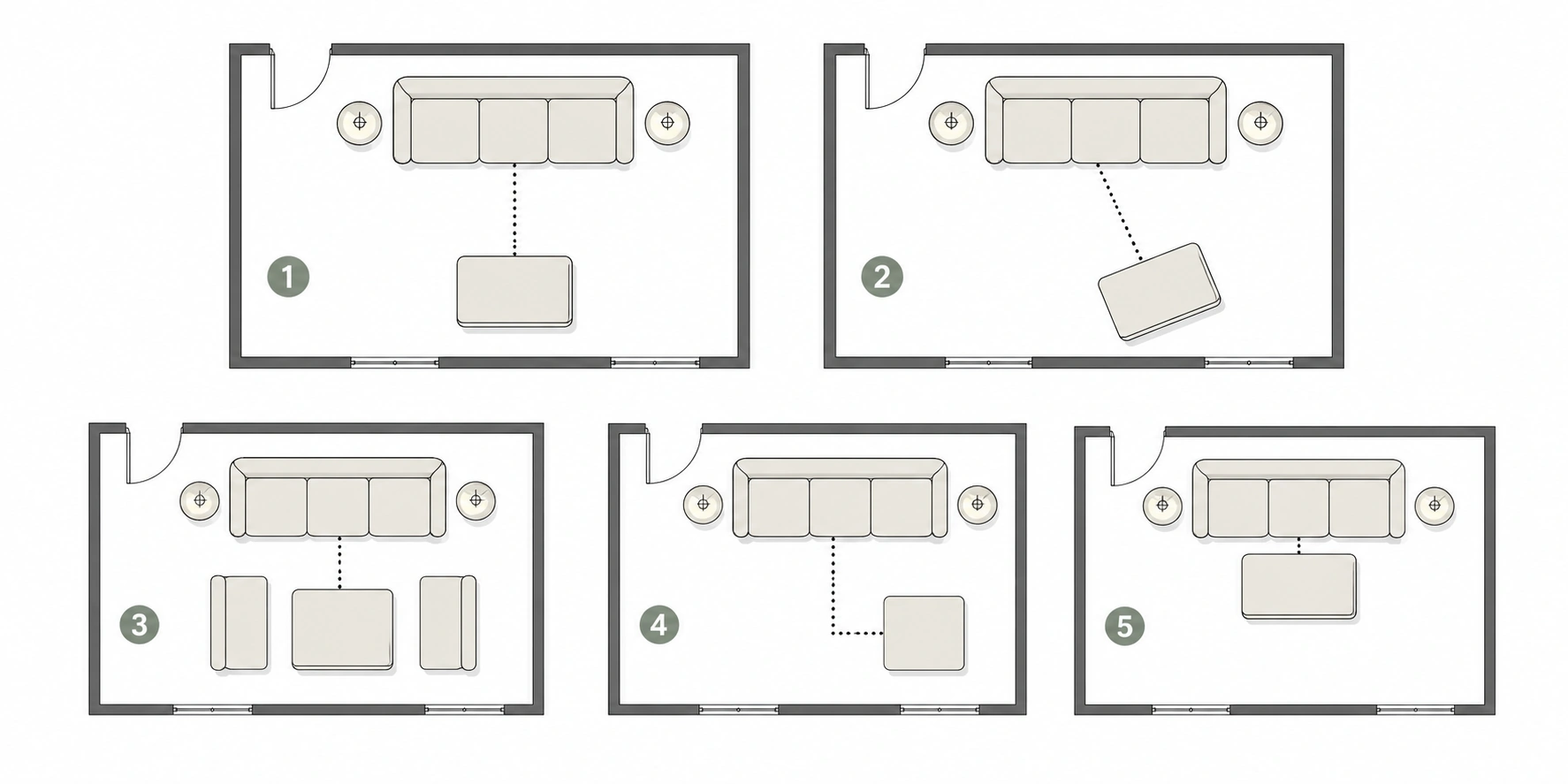
- Center Float Placement: Position the ottoman directly in front of the sofa with 12–18 inches of gap. This is the most common arrangement for primary living rooms and creates a symmetrical, balanced look. Ensure there is at least 30 inches of walkway behind the ottoman for traffic flow.
- Side Angle Placement: Place the ottoman at a 45-degree angle to one arm of the sofa. This works well in large rooms where the ottoman can serve as a visual bridge between the sofa and an adjacent accent chair or sofa table.
- L-Shape Bridge: When paired with an L-shaped or sectional sofa, position the ottoman to complete the U-shape arrangement. This creates an intimate conversation zone ideal for movie marathons and family room settings.
- Offset Placement: In smaller rooms, shift the ottoman slightly to one side rather than centering it. This asymmetric approach keeps walkways clear and prevents the space from feeling overcrowded. Particularly effective in apartment and studio layouts.
- Dual-Purpose Placement: If using the ottoman as a coffee table substitute, center it closer to the sofa (8–12 inches away) and add a decorative tray on top. This arrangement maximizes function in small spaces where a separate coffee table would crowd the room.
Balancing Comfort and Durability
One of the trickiest aspects of choosing a sofa with ottoman is finding the sweet spot between immediate comfort and long-term durability. Sofas that feel luxuriously soft in the store may lose their shape within months, while extremely firm options might never feel truly inviting. Understanding the comfort vs durability tradeoff is essential.
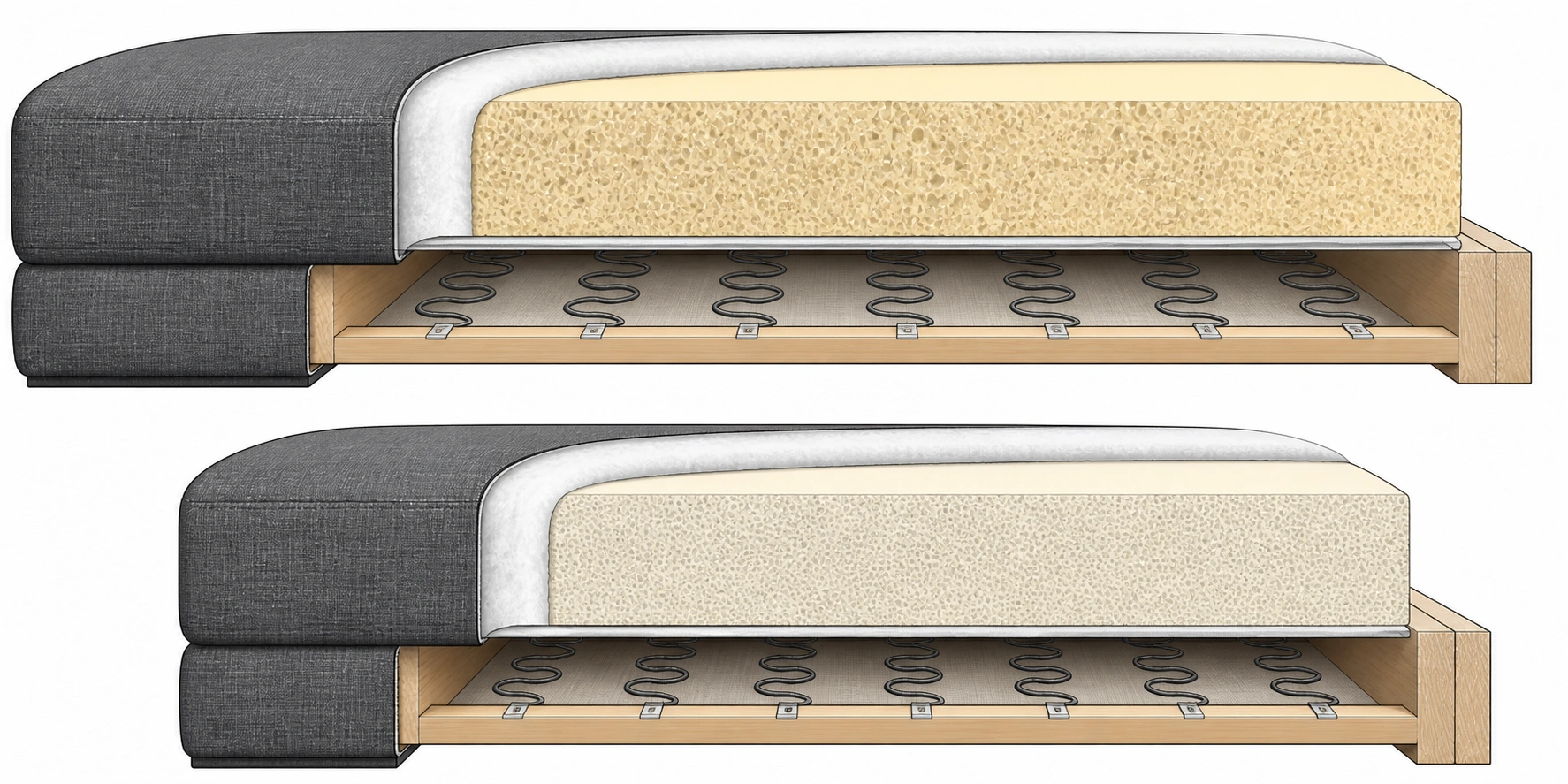
For the sofa cushions, look for a high-resiliency foam core (density of 1.8 lb/ft³ or higher) wrapped in a soft polyester or down layer. This combination delivers the "sink-in" feel you want while maintaining structural integrity over years of use. Our foam density guide explains how to evaluate cushion quality by the numbers.
For the ottoman specifically, opt for firmer cushioning than the sofa. Since the ottoman functions as a footrest and occasional table, softer fills will compress permanently under the weight of legs and feet. A medium-firm foam (2.0–2.5 lb/ft³ density) provides the right balance — supportive enough to maintain its shape but still comfortable enough for resting your feet.
Suspension quality is equally important. The suspension system beneath the cushions determines how the sofa feels when you sit and how well it holds up over time. Eight-way hand-tied springs are the gold standard but come at a premium price. Sinuous wire springs (also called zigzag or serpentine springs) offer good performance at a lower cost and are found in most mid-range sofas with ottoman.
Before committing to a purchase, learn how to test sofa comfort in person or evaluate it thoroughly when shopping online. Pay special attention to how the ottoman feels underfoot — it should feel substantial and supportive, not mushy or hollow.
Frequently Asked Questions
A sofa with ottoman provides versatile footrest functionality, extra seating for guests, and in many cases hidden storage. The ottoman can be repositioned to suit different activities like lounging, reading, or entertaining, making it more flexible than a fixed chaise lounge. It also serves as a visual anchor that completes the sofa grouping, giving your room a more furnished, intentional appearance compared to a standalone sofa.
Choose an ottoman if you want flexibility — it can be moved, used as extra seating, or provide storage. Choose a chaise lounge if you prefer a seamless, built-in look that saves space and doesn't require repositioning. Ottomans work better in larger rooms where you have the floor space to accommodate a separate piece, while chaise lounges suit compact layouts where every inch matters. If you frequently host guests, the ottoman's dual-purpose as extra seating gives it a clear advantage.
Plan for the sofa footprint plus an additional 18 to 30 inches for the ottoman, depending on its size. You also need clearance space around the ottoman for movement — ideally 12 to 18 inches on at least one side. A typical 3-seater sofa (around 85 inches wide) with a standard ottoman (around 35 x 25 inches) requires roughly 100 to 130 inches of total wall or floor space. Always measure your room and walkways before purchasing.
Yes, many ottomans are designed with a firm, flat top surface that works well as a casual coffee table. Some models include a reversible tray top specifically for holding drinks and snacks. However, ottomans generally sit lower than standard coffee tables (typically 15–18 inches vs. 18–20 inches), which may affect comfort when reaching for items. If you plan to use your ottoman as a table, look for a tray-top model or add a decorative tray to protect the upholstery surface.
Leather is highly durable and easy to clean, making it ideal for households with children or pets. Performance fabrics like microfiber and polyester blends offer stain resistance at a lower price point. Velvet adds luxury but requires more maintenance and shows foot impressions. For the ottoman specifically, prioritize durability since it doubles as a footrest and occasional table surface — firmer, tighter-weave fabrics hold up better to the repeated pressure of feet than soft, loosely woven materials.
Routine maintenance involves weekly vacuuming with an upholstery attachment, prompt spot-cleaning of spills, and periodic rotation of cushions. For fabric sofas, follow our fabric cleaning guide. For leather, use a damp cloth for regular cleaning and apply conditioner every 6–12 months per our leather care instructions. The ottoman top should be wiped down more frequently since it contacts shoes and bare feet — consider using a washable cover or throw blanket on the ottoman surface for easy maintenance.
A quality sofa with ottoman typically costs between $800 and $2,500, depending on size, materials, and brand. Budget options under $500 exist but often compromise on frame quality and cushion durability. Mid-range sets ($800–$1,500) offer the best value with solid hardwood frames and decent upholstery. Premium sets ($1,500–$3,000+) feature top-grain leather, high-density foam, and eight-way hand-tied springs. For a detailed breakdown of what drives sofa pricing, see our guide on how much a good sofa should cost.
Yes, many manufacturers sell ottomans as standalone pieces. However, if you want a perfectly matched look, buying a sofa-ottoman set is the safest route. Mixing an ottoman from a different collection with your existing sofa can work if you coordinate colors and proportions carefully — choose an ottoman in a complementary solid color or a neutral tone that ties in with your sofa's upholstery. For more on mixing and matching, read about different sofa configurations.